No single nation can tackle the crisis alone: Ismail Serageldin urges joint littoral state action to save the Caspian Sea
Accelerating climate change has dramatically amplified global environmental volatility, driving up the frequency and intensity of extreme weather events, prolonged droughts, and severe floods while critically depleting available water resources.
Sea-news.az reports that Ismail Serageldin, Co-chair of the Board of Trustees of the Nizami Ganjavi International Center and former Vice President of the World Bank, highlighted these pressing risks during panel discussions at Baku Climate Action Week.
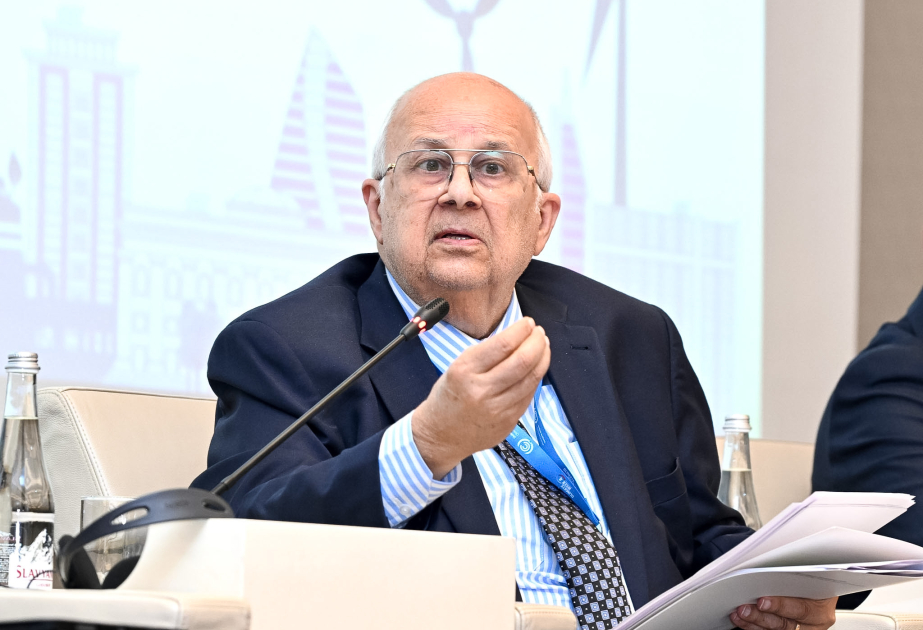
Serageldin stressed that the ongoing regression of the Caspian Sea level is an indisputable reality carrying profound, long-term consequences: “This is far more than an ecological issue. These structural shifts impact ecosystems, biodiversity, coastal zones, local communities, maritime ports, and the foundational economic stability of all regions bordering the Caspian basin.”
According to the prominent expert, isolated national policies are completely ineffective against transboundary environmental threats. He emphasized that active, coordinated cooperation among all five littoral states—Azerbaijan, Iran, Kazakhstan, Russia, and Turkmenistan—is an absolute necessity.
Serageldin noted that Azerbaijan is uniquely positioned to assume a leading, catalytic role in orchestrating this regional collaboration, calling for the prompt design of a comprehensive, multi-pillar joint action plan.
“This strategic program must integrate multiple core dimensions: ecological, economic, infrastructural, and social. Incorporating local communities into the social pillar is vital, as practical experience demonstrates that grassroots engagement yields the most resilient and sustainable solutions,” he added.
Concluding his remarks, the Nizami Ganjavi International Center Co-chair reiterated that the mounting pressures facing the Caspian basin must not be downplayed as short-term environmental anomalies, but rather recognized as complex, regional structural challenges requiring unified, long-term commitment from all stakeholders.