
Caspian Sea challenges serve as a vital blueprint for vulnerable inland water bodies worldwide, highlights Deputy Minister Rauf Hajiyev
Rapid climate change is exerting mounting pressure on water security across multiple regions of the globe. Rising temperatures, shifting precipitation patterns, altered river flows, and accelerated evaporation are disrupting water resources, biodiversity, and delicate ecosystems while posing profound new challenges to public welfare, food security, and sustainable economic development. The Caspian Sea stands out as one of the clearest and most urgent manifestations of these compounding pressures.
Sea-news.az reports that Deputy Minister of Ecology and Natural Resources Rauf Hajiyev made these remarks during his address at the session titled “Challenges Posed by Climate Change in Inland Water Bodies: The Case of the Caspian Sea” on the second day of Baku Climate Action Week 2026 (BCAW2026).
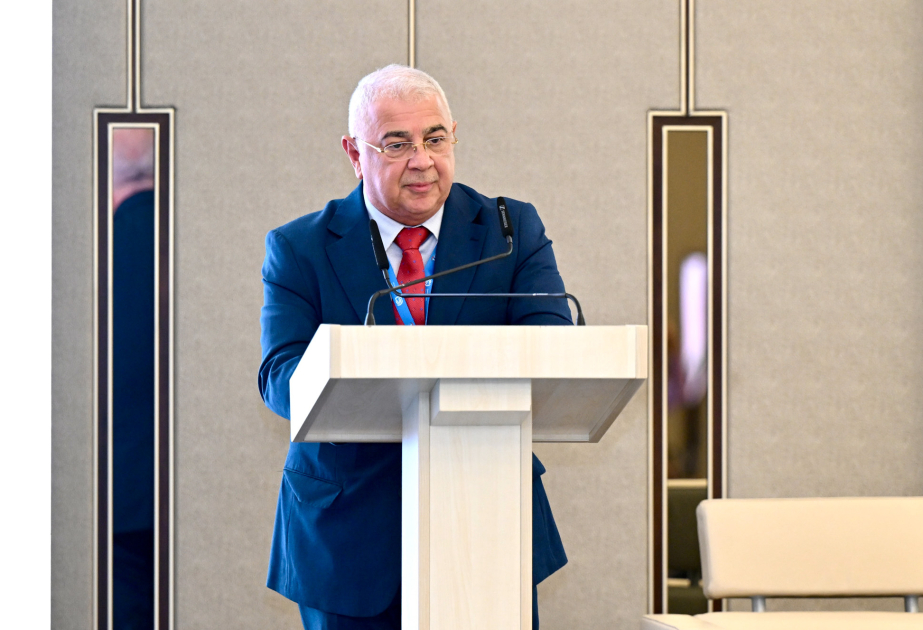
The Deputy Minister emphasized that the continuous drop in the Caspian Sea’s water level over recent decades is no longer a matter of distant future projections, but an undeniable reality unfolding today. The regression of the shoreline, shifting coastal zones, shrinking habitats and ecosystems, and mounting risks to endangered endemic species—such as the Caspian seal and sturgeon populations—are direct ecological consequences of this phenomenon.
At the same time, the impacts extend far beyond the natural environment. The shallowing of the Caspian threatens coastal communities, urban infrastructure, maritime transit, port operations, and broader littoral economic activities. Consequently, future investment and developmental frameworks must be systematically re-evaluated through the lens of climate risk adaptation.
“The complexity of this process lies in the fact that its drivers and impacts transcend national borders. Alongside climate change, anthropogenic factors further exacerbate existing vulnerabilities. Therefore, an effective response to the future of the Caspian cannot be confined to unilateral national measures,” Hajiyev noted.
As a shared water basin, the protection, ecological resilience, and climate adaptation of the Caspian Sea require unified, collaborative efforts among all littoral states.
In this context, integrating scientific research findings more effectively into policy-making and decision-making processes is of paramount importance. It is equally critical to accurately assess varying water-level scenarios and expand local capacities to design and implement practical adaptation measures.
“I believe that the challenges facing the Caspian can serve as a valuable operational template and source of experience for other inland water bodies vulnerable to climate change. I am confident that the discussions held here will generate actionable insights fostering broader regional and international cooperation,” Hajiyev concluded.