Member of Parliament calls for the reinstatement of the Hydrometeorological Research Institute amid alarming Caspian Sea regression trends
A proposal has been put forward to restore the Hydrometeorological Research Institute, which operated for over half a century before halting its activities in 2019.
Sea-news.az reports that the initiative was voiced by Member of Parliament Sadiq Gurbanov during panel discussions titled “Climate Change Challenges in Inland Water Bodies: The Case of the Caspian Sea,” held within the framework of Baku Climate Action Week 2026.

The lawmaker stressed that significantly greater attention must be devoted to drafting collaborative action programs addressing the future of the Caspian basin.
“In an era marked by intensifying hydrometeorological processes, escalating climate variability, and shrinking water resources, comprehensive scientific research into the Caspian Sea and broader hydro-environmental processes has acquired critical importance for Azerbaijan,” Gurbanov emphasized.
According to the deputy, Azerbaijan’s average long-term temperature rose by 1.3 degrees Celsius above historical norms between 2007 and 2025, with the anomaly spiking to 1.8 degrees Celsius in 2025 alone. He noted that peak temperature records over the past six years reached 44.2 degrees Celsius in 2021 and 42.9 degrees Celsius in 2025.
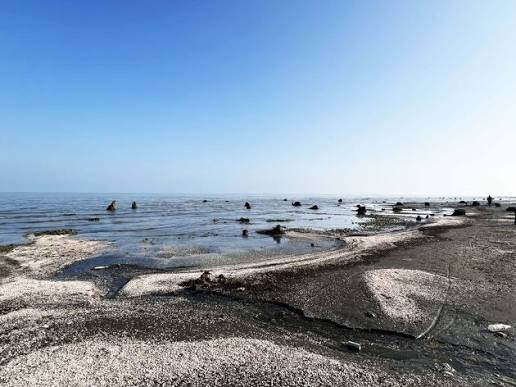
Gurbanov underscored that long-term scientific projections regarding future fluctuations in the Caspian Sea level demand immediate, focused attention. He warned that if the ongoing decline in water levels continues down to minus 30 meters relative to mean sea level, the retreat of the shoreline across various sectors of the Azerbaijani sector of the Caspian could span several kilometers.
According to projections presented by the MP, shoreline regression could reach:
- 4 to 5 kilometers in the Nabran-Shabran zone;
- 10 to 12 kilometers in the Sangachal-Alat zone;
- 2 to 3 kilometers in the Lankaran-Astara zone.
Gurbanov concluded that strengthening specialized hydrometeorological research is vital to accurately mapping environmental shifts in the Caspian Sea, proactively identifying structural risks, and formulating effective mitigation strategies.