
Changes observed in the global logistics system since the late second decade of the 21st century—particularly the crisis caused by the COVID-19 pandemic, the Russia-Ukraine war, increasing security risks in the Red Sea basin, and uncertainties arising in traditional transport routes—have sharply increased the importance of alternative trade routes in the Eurasian space. In this context, the Trans-Caspian International Transport Route (Middle Corridor) is becoming not only an alternative, but also one of the most promising and reliable logistics platforms between Europe and Asia.
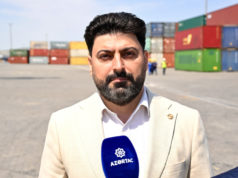
Sea-news.az reports that member of the Milli Majlis Azer Karimli stated this.

“One of the main factors determining the success of the Middle Corridor is the long-term transport policy implemented by Azerbaijan. Even before today’s geopolitical processes began, Azerbaijan had declared the development of the country’s transit potential as one of the priority directions of state policy. Large-scale infrastructure projects implemented over the past two decades form the main pillars of the Middle Corridor today.
Among these, special attention is drawn by the creation of the Baku International Sea Trade Port, the commissioning and modernization of the Baku-Tbilisi-Kars railway, the expansion of the modern ferry fleet in the Caspian Sea, the renewal of main highways, the establishment of logistics and cargo processing centers, and the digitalization of customs and border procedures. As a result of all this, Azerbaijan has consolidated its status not just as a transit country between Europe and Asia, but also as a regional logistics center,” A. Karimli emphasized.
According to the deputy, the main task currently facing the Middle Corridor is not only the expansion of infrastructure. The primary goal is the formation of a unified logistics system among all countries along the route. Azerbaijan has put forward a number of important initiatives in this direction in recent years. The Action Plan covering the years 2024–2026 defines increasing transit potential, optimizing logistics services, and strengthening international coordination as priorities. Along with this, railway cooperation with China is expanding, new agreements are being reached to increase cargo transportation along the Baku-Tbilisi-Kars line, joint action plans aimed at eliminating bottlenecks among Azerbaijan, Kazakhstan, and Georgia are being implemented, and port and shipping capabilities are being enhanced to raise the efficiency of transport via the Caspian Sea.
“The application of digital logistics platforms, the expansion of electronic document turnover, and the creation of a unified information environment are considered key directions that increase the speed and transparency of cargo transportation. In the modern system of international relations, transport corridors are not only considered an economic category. They have become an important factor determining the geopolitical weight of states. From this perspective, the Middle Corridor, while being an important element of Europe’s energy and logistics security, expands Central Asia’s access opportunities to world markets, strengthens economic integration in the South Caucasus, serves to deepen transport relations within the Turkic world, and forms an alternative and sustainable trade route in the Eurasian space. For this reason, the cooperation model forming around the Middle Corridor is gradually turning into one of the main elements of the new regional economic architecture.
Azerbaijan, on the other hand, performs the function not only of a transit country in this process, but also of a regional coordinator, logistics center, and strategic partner. Infrastructure projects implemented in recent years, digitalization, the expansion of international cooperation, and political stability further strengthen Azerbaijan’s position as a leading participant in the Middle Corridor. The Middle Corridor serves to form a new system of economic relations in the Eurasian space, increase the resilience of supply chains, and deepen cooperation among regional states. Azerbaijan, thanks to its farsighted transport policy, modern infrastructure projects, and active international diplomacy, is at the center of this process. Precisely for this reason, our country’s role in the Middle Corridor will be assessed in future years not only by its transit capabilities, but also by its contribution to the formation of Eurasia’s new economic map,” he added.