
Azerbaijan is progressively modernizing and replacing its aging transport fleet in the Caspian Sea with vessels featuring increased capacity, higher speed, and improved technical characteristics.
According to sea-news.az specializing in transport corridors and urban transport mobility, analyzing issues related to the development of the Middle Corridor in terms of logistics and urban planning. Investigating transport systems and infrastructure at macro and micro levels.
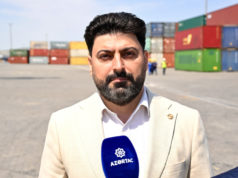
Azerbaijan is in the phase of forming a modern logistics center – Rauf Agamirzayev, a well-known Azerbaijani expert in the field of transport and logistics, shares his views on this issue.

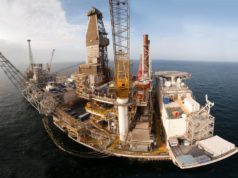
After reading this analytical material, the reader of our page will clearly see the systematic steps taken by neighboring Azerbaijan in its shipping sector, and will be able to compare Azerbaijan’s efforts to establish itself as a logistics center with the country’s investment opportunities relative to Georgia. Naturally, the reader of our page will ask the question: does this step by neighboring Georgia prompt the intensive implementation of many projects that have been stalled and delayed for a long time, first and foremost the Anaklia port project? Azerbaijan’s advantage is not limited to cargo transportation alone; thanks to the capabilities of the Baku Shipyard and ship repair base, the country can generate additional economic revenue not only from transport operations along the Middle Corridor, but also from the construction and maintenance of vessels operating along this route. The modernization of the fleet of the Azerbaijan Caspian Shipping Company (ASCO) is an important milestone in the development of Azerbaijan’s maritime transport sector. However, the success of the Middle Corridor is determined not only by the number of vessels, but also by their carrying capacity, speed, technical capabilities, and ability to operate uninterruptedly in the Caspian Sea. At the same time, when designing new vessels, the issue of falling water levels in the Caspian Sea must be taken into account, and dredging works and navigation capabilities in the ports must be improved in parallel. Also, the transition to alternative fuel technologies is inevitable – the application of methanol, electric, hybrid, and in the future hydrogen technologies must be planned comprehensively by integrating the shipbuilding process with fuel production and the development of appropriate infrastructure. Over the past 10 years, the Azerbaijan Caspian Shipping Company (ASCO) has been implementing a planned strategy for modernizing the maritime sector by gradually decommissioning nearly 60 inefficient vessels and replacing them with new ones. To seamlessly transport the growing cargo flow along the Middle Corridor, the main issue for Azerbaijan at the current stage is not to increase the total number of ASCO-owned vessels, but to utilize them efficiently in Caspian cargo transportation depending on their capacity, speed, and technical characteristics. As of today, according to information provided by ASCO, the company’s fleet currently consists of 258 vessels for various purposes. Of these, 56 units are part of the maritime transport fleet, and 202 units are part of the Caspian oil and gas extraction fleet. Based on this division, it would not be correct to consider all 258 vessels as part of the transport capacity of the Middle Corridor. The specialized vessels of the Caspian oil and gas extraction fleet are mainly engaged in offshore oil and gas operations, platform supply, diving, crane operations, and specialized services such as towing. It should be noted that compared to shipping, the specialized vessels of the Caspian oil and gas extraction fleet are no less profitable from a financial standpoint.
From the perspective of international transport, the foundation of the Azerbaijan Shipping Company is formed by ferries, Ro-Pax type vessels, tankers, and dry cargo ships belonging to the country’s maritime transport fleet. Although ASCO is the main maritime carrier in the Caspian Sea basin, given the expected growth in cargo turnover along the Middle Corridor, the expansion of Azerbaijan’s transport fleet is a necessity. It is common knowledge that the Caspian Sea is one of the weakest links in the Middle Corridor; therefore, the number of orders for newly modified vessels must increase synchronously with the growth of cargo flow. This assessment coincides with the results of studies conducted by the World Bank regarding the Middle Corridor, which identified the shortage of vessels in the Caspian Sea and the low speed of existing vessels as the main obstacles to the route. According to the Azerbaijan Shipowners Association (ASCO), 40 new vessels have been added to the fleet over the past 12 years. 16 of them were built at the Baku Shipyard, and 24 were acquired from various foreign markets. Currently, another 11 vessels are being built at the shipyard by ASCO’s order. At the same time, it has been decided to collectively write off (decommission) more than 60 technically obsolete vessels due to high operating costs. As a result, this process should lead to a decrease in the average age of the fleet, as well as fuel consumption and maintenance costs. For example, a single new Ro-Pax vessel or a large tanker can replace several older vessels due to its cargo-carrying capacity. Accordingly, to evaluate the modernization of the fleet, it is necessary to consider not only increasing the number of vessels, but also indicators such as total deadweight, wagon and truck capacity, number of voyages, waiting time at ports, and annual cargo turnover. The involvement of a third Ro-Pax vessel in the Middle Corridor for the transport of goods and passengers is a step responding to the urgent needs of the corridor. For information, two Ro-Pax vessels have been in operation in recent years, and a third is under construction.
Fall in the water level of the Caspian Sea – In recent years, a key limiting factor for the maritime section of the Middle Corridor has been the drop in the level of the Caspian Sea. This process makes it difficult to enter the port water areas, which prevents vessels from being fully loaded and increases the costs of dredging operations. According to the Azerbaijani expert, the factor of the falling Caspian Sea level will be taken into account when designing new vessels, and the hull design and draft depth of the vessels must be adapted to the new conditions. Practical examples of this approach already exist. For instance, the new 8,000-dwt tankers built for ASCO have been designed to enter the shallow ports of Caspian countries at full capacity. However, the problem cannot be solved solely by adapting the vessel’s structure. In parallel, work must be done to deepen the port water areas, adapt shore protection structures, and maintain navigation channels. Technical coordination must also be ensured between the ports of Aktau, Turkmenbashi, and Baku. A recent World Bank study on the Middle Corridor also notes that the drop in the Caspian Sea level affects port operations, and it is necessary to additionally increase the strength of near-shore reefs (outfalls/breakwaters) and equip them with modern equipment. Transition to alternative fuel technologies – ASCO’s long-term strategy includes the acquisition or construction of methanol-powered and all-electric vessels, as well as the modernization of existing vessels through the introduction of new technologies. According to the company’s announced plan, these measures will be implemented in 2027–2030. Rauf Agamirzayev believes that the transition to methanol fuel should be carried out in coordination with SOCAR. “Currently, there is no problem with the production and storage of diesel fuel in the country. However, methanol is a new type of fuel, and ensuring production in accordance with the number of vessels and their needs is an important issue. Electric or hybrid options also belong to a new category,” the expert states. According to the Azerbaijani expert, another issue is the use of hydrogen-powered vessels. According to DNV experts, one of the most influential classification societies in the maritime sector globally, building a vessel powered by alternative fuel does not mean its operation will be economically profitable. When designing a vessel, factors such as fuel price, availability, bunkering infrastructure, and long-term supply contracts must be taken into consideration. According to DNV reports, electric and hybrid systems can be useful for ferries, port vessels, and auxiliary fleets operating on short, stable routes. Although projects involving hydrogen- and ammonia-powered vessels are expanding worldwide, safety standards, fuel infrastructure, and commercial viability are still taking shape. “On a global scale, aviation and maritime transport are the highest-emitting sectors. Because Azerbaijan participates in international transport, it must meet these requirements.” Despite the Caspian Sea being an enclosed water basin, the country must take care to modernize the existing fleet and adapt new vessels to modern standards. Benefits derived from shipbuilding – The modernization of Azerbaijan’s fleet will not only impact shipping. Having the Baku Shipyard and ship repair facilities allows Azerbaijan to generate revenue from the Middle Corridor in two directions – both through cargo transportation and through the construction and repair of service vessels. One of Azerbaijan’s main advantages is precisely this industrial base.
The main bottleneck in the Middle Corridor is the limited number of vessels. Increasing the number of vessels in the Caspian Sea is tied to time constraints. As the cargo stipulated in contracts materializes, the number of vessels will increase, and orders in this sector will multiply. Azerbaijan’s main advantage lies in possessing ship repair and shipbuilding bases. This will allow the country to generate revenue and, accordingly, see additional benefits from both production and cargo transportation via the corridor. The main question regarding the next phase of ASCO’s fleet modernization should not be “how many vessels will be built,” but rather “for which routes, what type of cargo, and what fuel infrastructure they will be built.” Ultimately, to increase Azerbaijan’s competitiveness as a state with logistical capabilities in the Middle Corridor, new vessels must be created within an integrated system framework covering port, railway, customs, and cargo planning operations. Otherwise, despite the technical modernization of the fleet, waiting times and logistics costs while crossing the Caspian Sea may still remain high.