Recent events worldwide and across the region have significantly highlighted the importance of diversifying transport routes, developing alternative connections, and building more flexible logistics systems.
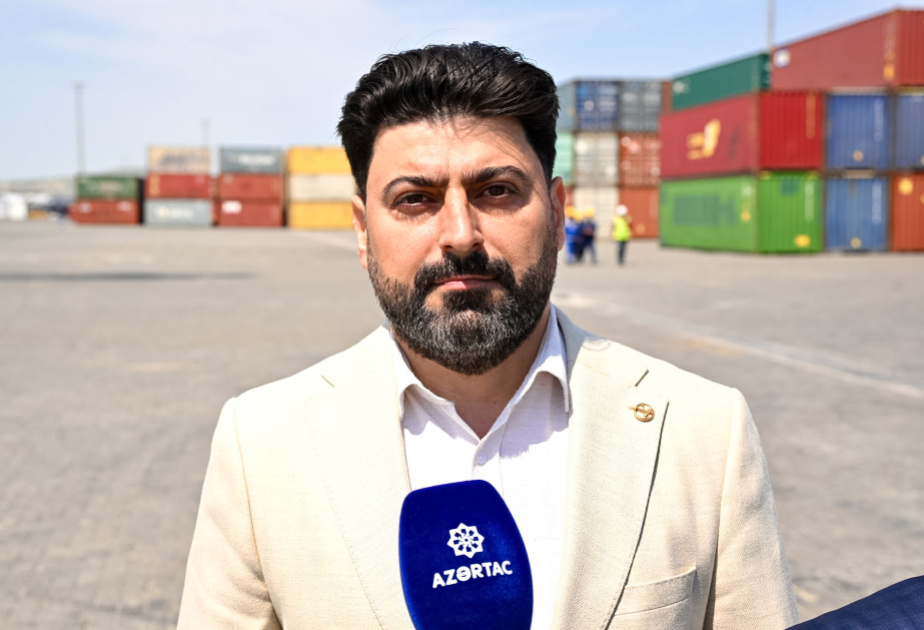
Sea-news.az reports transport expert Rauf Agamirzayev made these remarks in a statement to AZERTAC.
The expert noted that the situation in the Red Sea, the Russia-Ukraine war, and ongoing conflicts in the Middle East have directly impacted route selection for international freight and the organization of supply chains. According to him, these developments have underscored the urgency of developing alternative and more resilient overland transport routes.
R. Agamirzayev highlighted that from this perspective, optimizing the capabilities of the Middle Corridor is of paramount importance.
“It is crucial to develop the corridor not merely as a collection of standalone infrastructure projects, but as a unified, integrated transport and logistics system. Fully leveraging the potential of the Middle Corridor requires expanding port infrastructure in the Caspian Sea, completing ongoing projects, commissioning new vessels, and increasing fleet capacity. Alongside this, ensuring greater efficiency from already established infrastructure is essential. Here, adopting digital tools, accelerating data exchange, and strengthening coordination among various transport stakeholders play a vital role,” the expert emphasized.
According to the expert, expanding the capacity of railway infrastructure in response to growing cargo flows must also remain a top priority: “Increasing capacity at individual stations and along railway tracks can facilitate faster cargo movement and prevent potential delays along the route. The integration of the North-South and East-West transport corridors creates new opportunities for regional logistics. Particularly within the context of the Zangezur Corridor, the intersection and mutual alignment of these two vectors can contribute to the formation of a unified transport system. Enabling the shared use of the same infrastructure for both East-West and North-South movements can boost overall efficiency. Achieving this requires strengthening corridor coordination, properly planning freight flows, and proactively factoring in infrastructural throughput capacities.”
Rauf Agamirzayev added that completing several key infrastructure projects along the North-South and East-West corridors should be a top priority in the next phase. According to him, reinforcing rail connections, finalizing individual segments of the Middle Corridor, and accelerating the execution of other transport projects will ensure the uninterrupted operation of these routes.
“Three primary focus areas can be identified here: ensuring infrastructure continuity, expanding the implementation of digital tools, and boosting the throughput capacity of existing infrastructure. Implementing these measures in parallel will significantly enhance both the speed and efficiency of freight transportation. Moving forward, the primary goal is not only to create new infrastructure, but to manage the existing operational transport network more efficiently and cohesively. Step-by-step execution of tangible projects, expanding digitalization, and enhancing inter-state coordination will help solidify Azerbaijan’s position in regional and international transport and logistics networks,” the expert stated.