
Azerbaijan has become a key transport, energy, and logistics hub not only in the South Caucasus but also within the Eurasian space. The country is situated at the intersection of the East-West (Asia-Europe) and North-South (Russia-Iran-Indian Ocean) transit corridors. This geographical reality enables Azerbaijan to play a pivotal role in international cargo transportation.
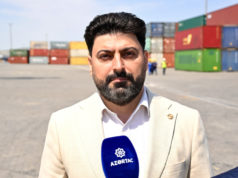
According to sea-news.az that these remarks were made by Mahira Amirhuseynova, Chairperson of the “Women of the 21st Century” Public Union.
She noted that significant steps have been taken in recent years to realize this potential: the construction of the Baku-Tbilisi-Kars railway, the modern terminal of the Baku International Sea Trade Port, the Heydar Aliyev International Airport, and new highways along the East-West corridor. At the same time, the operations of the Middle Corridor (Trans-Caspian International Transit Route) have led to a significant increase in cargo flow between China, Central Asia, the Caucasus, and Europe. Leveraging these opportunities, Azerbaijan serves not only as a transit country but also as an active participant in addressing international security, energy security, and economic integration issues.
Describing Azerbaijan-Türkiye relations as a unique model of genuine partnership in international affairs, the Chair of the Public Union noted that these ties, strengthened by the Shusha Declaration and subsequent strategic partnership agreements, manifest in joint military exercises, defense industry cooperation, intelligence sharing, and mutual assistance mechanisms during emergencies. These are not merely protocol agreements but represent real, functional cooperation. Economic relations are supported by global projects such as TANAP, TAP, and the Baku-Tbilisi-Ceyhan pipeline. Both countries are partners, supporting each other and defending mutual interests in the international arena. Azerbaijan-Türkiye relations are a living testament to true brotherhood, trust, and shared historical memory.
“Azerbaijan is open to bilateral cooperation with the European Union and European institutions as a whole. However, in recent years, these relations have been put to the test. Factions within the European Commission, the European Parliament, and PACE, which are hostile toward Azerbaijan, are systematically damaging bilateral relations. The actions of Josep Borrell, his relationship with Ocampo—a former judge of the International Court of Justice accused of corruption—and the double standards of the EU have caused dissatisfaction in Azerbaijan. In particular, Azerbaijan is calling for the restoration of the immunity of its delegation members in PACE; otherwise, the country is considering withdrawing from the Council of Europe. This is an extreme measure taken in response to the biased and politically motivated pressure exerted by the Council against Azerbaijan. The new leaders of the European Commission—Ursula von der Leyen, Kallas, and Costa—are offering opportunities for constructive dialogue, but this is possible only on the condition that Europe abandons its double standards,” M. Amirhuseynova added.
She emphasized that the visit of President Ilham Aliyev to the USA in August 2025 marked the beginning of a new era in bilateral relations, resulting in the signing of a Joint Declaration on Strategic Partnership. The visit of U.S. Vice President Vance to Baku confirms this new level of cooperation. Despite these positive developments, Section 907 of the Freedom Support Act, a biased amendment targeting Azerbaijan, remains an unresolved issue. This section was effectively suspended during President Obama’s administration, even after Azerbaijan removed all transit restrictions through Armenia. Under President Trump, a new approach has emerged that acknowledges peace and cooperation as the foundation for new opportunities in the South Caucasus. Expectations from the Trump administration include the repeal of Section 907, an admission of error by Congress, and adherence to the geopolitical realities on the ground.
“In the modern international relations system, the influence and leverage of states are changing rapidly. Against this backdrop, Azerbaijan is no longer just a regional leader; it is emerging as a ‘middle power’ with weight and strategic moves in the global arena. The country’s rise to this level is a logical consequence of its well-considered policy and its national power indicators. One of the most important pillars of Azerbaijan’s formation as a ‘middle power’ is its pursuit of a completely independent foreign policy. Baku makes sovereign decisions based solely on its national interests, without falling under the pressure or influence of any foreign power center. This independent line is also clearly visible in the country’s activities on global platforms. Azerbaijan acts not only as an active participant in influential international forums such as the UN, the Organization of Turkic States, and the Non-Aligned Movement but also as an initiator that defines the global agenda and contributes to the resolution of crises,” M. Amirhuseynova stated.
She noted that this determination in foreign policy is backed by the factor of real power. In recent years, the modernization of the army, the development of the domestic military-industrial complex, and the unique military experience gained on the modern battlefield have become Azerbaijan’s most important strategic assets. It is precisely because of this military-political might that the country’s influence has transcended its geographical borders, gaining the ability to directly affect geopolitical processes in the South Caucasus, the Caspian basin, and the Middle East. Nevertheless, Azerbaijan uses its strength not only to ensure its sovereignty but also to contribute to regional stability. By acting as a guarantor of peace, security, international transport corridors, and economic prosperity in the region, the country demonstrates high responsibility. Consequently, criteria such as independent policy, a strong defense industry, regional influence, and global responsibility present Azerbaijan as a reliable, predictable, and important actor that major powers must reckon with.
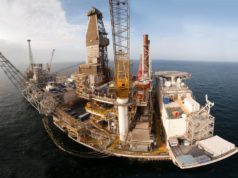
She stated that Azerbaijan ranks first in the world in terms of the geographical scope of its natural gas exports via pipelines. Exporting gas to 16 countries, the country is recognized in Europe as a reliable and predictable alternative supplier in the region. Against the backdrop of the Russia-Ukraine war, Europe’s interest in Azerbaijani gas has increased significantly. Azerbaijan’s energy strategy is aimed not only at increasing exports but also at diversifying the market. Syria is also already receiving Azerbaijani gas. Azerbaijan’s energy companies are collaborating with partners such as SOCAR and bp on the exploration of new fields, the development of renewable energy projects, and the integration of renewable energy sources.
Discussing Azerbaijan-China relations and the Middle Corridor, the Chair of the Public Union pointed out that President Ilham Aliyev’s visit to China in 2025 and the signing of the Joint Declaration on Comprehensive Strategic Partnership opened a new chapter in bilateral relations. Chinese companies are investing in Azerbaijan’s infrastructure, logistics, energy, and agricultural sectors. The volume of goods transported through Azerbaijani territory to Europe has increased significantly. The Middle Corridor—the China-Kazakhstan-Caspian Sea-Azerbaijan-Georgia-Europe route—is recognized worldwide as a secure and alternative transport corridor, especially in the context of conflicts between the EU and Iran, and Russia and Ukraine. Azerbaijan is investing heavily in the development of the corridor and ensuring its compliance with international standards.
“Azerbaijan and the Central Asian countries possess a rich history, culture, language, and economic ties. Today, these relations are being enriched with new content. The Azerbaijan-Central Asia format promotes regional integration through joint projects in the fields of logistics, energy, security, and the digital economy. This format facilitates the effective operation of the Middle Corridor, the access of Central Asian countries to European markets, and the expansion of transit opportunities. Azerbaijan contributes to the formation of a unified economic and political platform in this space,” she noted.
Mahira Amirhuseynova emphasized that the messages addressed by President Ilham Aliyev to all segments of society are based on national unity, internal stability, and self-confidence. In the current geopolitical situation, characterized by wars, hybrid threats, and economic shocks, he emphasizes that only unity can protect the country. The President calls on the youth to be patriotic, resilient, brave, and proud of their homeland: “National identity, national dignity, and independence must be above all else. Future generations must be raised with these values to ensure the continuous rise of Azerbaijan in the future.”