
For decades, global trade has primarily relied on a few strategic maritime routes—the Strait of Hormuz, the Red Sea, and the Suez Canal. However, recent events have demonstrated that this system is not as resilient as once thought. Rising military risks in the Middle East, attacks on commercial vessels, and geopolitical tensions are forcing leading international carriers to seek alternative routes.
According to sea-news.az that one of the most significant examples of this trend is the launch of a new multimodal route between Europe and Saudi Arabia by MSC (Mediterranean Shipping Company), the world’s largest container shipping line. By organizing part of the route via land, the company reduces its dependence on high-risk maritime areas.
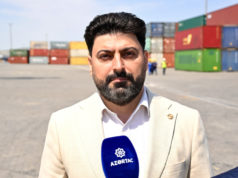
In an interview with the newspaper “Baku Worker” transport and logistics expert Rauf Agamirzayev stated that this decision is not merely a commercial move by a single company, but an indicator of fundamental shifts occurring in the global logistics system.

According to the expert, while the primary criteria in the past were the cost and speed of shipment, the resilience of the logistics chain has now come to the forefront.
“For businesses, the timely and safe delivery of cargo is now more important than a few days’ difference in transit time. This is precisely why major carriers are diversifying their routes,” the expert emphasized.
Agamirzayev noted that this approach applies not only to the Strait of Hormuz but, following the events in the Red Sea, to the entire global logistics system. The world is gradually returning to a model where, instead of a single path, several reliable transport routes exist between Europe and Asia.
In these circumstances, the importance of the Middle Corridor—passing through Kazakhstan, the Caspian Sea, Azerbaijan, Georgia, and Turkey—is increasing even further.
The expert believes that events in recent months have significantly strengthened Azerbaijan’s role in Eurasian logistics. While a few years ago the Trans-Caspian International Transport Route was viewed as an alternative, today it is becoming one of the most promising routes between Asia and Europe.
According to him, this is driven by sanctions applied to northern routes, instability in southern sea lanes, and the business community’s desire to diversify supply chains.
Agamirzayev stressed that Azerbaijan is at the center of this system. The country hosts rail and maritime routes, operates the Baku International Sea Trade Port, is developing the Baku–Tbilisi–Kars railway, and is expanding its transport infrastructure to meet modern requirements.
The expert believes that competition is no longer between individual ports or railways, but between entire logistics ecosystems.
“The winner is the route with fast, transparent procedures, stable tariffs, and predictable delivery times.”
He noted that Azerbaijan, Kazakhstan, and Georgia are currently working together to implement unified tariff mechanisms, the digitalization of shipments, and stronger coordination along the route, which enhances the competitiveness of the Middle Corridor.
Addressing the interest shown by global giants like MSC, the expert stated that this is a very serious signal for the market.
MSC is the world’s largest container shipping company, with a fleet of approximately 1,000 ships and an annual volume of nearly 30 million TEUs.
“Such companies do not change their routes by accident. Every decision is based on a detailed analysis of risks, costs, and long-term perspectives.”
This means growing international interest in the Caspian region, port infrastructure, terminals, railways, and multimodal transport.
The expert noted that Azerbaijan’s advantage is no longer limited to its geographical location. The prompt passage of cargo, digital solutions, modern port infrastructure, and the ability of the transit countries to function as a unified system are becoming increasingly vital factors.
Agamirzayev stated that the success of the Middle Corridor depends on the coordination of all participating countries.
Azerbaijan, Kazakhstan, and Georgia are already forming a unified development model and tariff policy, a topic also addressed by the President of Kazakhstan, Kassym-Jomart Tokayev, in his speeches.
Furthermore, joint projects are underway to increase cargo capacity in the Caspian, expand the merchant fleet, perform dredging works, and modernize ports.
The expert also highlighted the role of Turkey. According to him, the Baku–Tbilisi–Kars railway, the Marmaray Tunnel, the Yavuz Sultan Selim Bridge, the ports of Mersin and Filyos, as well as the development of intermodal terminals and rail networks, form an uninterrupted multimodal chain between Asia and Europe.
Thus, the Middle Corridor is evolving from a separate route into a unified transport product.
Agamirzayev believes that global logistics is experiencing its most serious transformation in the last 70 years.
In his opinion, the previous revolution occurred in 1956 with the introduction of container shipping by Malcom McLean. Today, a new phase is beginning.
“While the main goal used to be to minimize transportation costs, the priority is now the resilience of the logistics chain.”
The expert noted that modern logistics companies are no longer content with just shipping. They are striving to manage ports, railways, road transport, air logistics, and terminals as a unified system.
According to him, the growth of container shipments in the Middle Corridor, the expansion of the Baku International Sea Trade Port, the modernization of rail infrastructure, and digitalization create vast opportunities for Azerbaijan to become one of the main logistics hubs of Eurasia.
In this context, the initiative of the President of the European Commission, Ursula von der Leyen, to hold an Investment Conference on Regional Transport Connectivity in Baku is considered another indicator of the international recognition of Azerbaijan’s strategic importance.
Agamirzayev recalled that Azerbaijan’s role is not accidental. Since the TRACECA (Transport Corridor Europe–Caucasus–Asia) program was created in 1993, Baku has been one of the primary centers and has hosted the organization’s headquarters.
The expert emphasized that today, it is no longer just about transit. Modern logistics is becoming a synthesis of transport, digital technologies, investments, and regional integration, and the European Union’s new initiatives are a logical continuation of this strategic concept, which has been taking shape for decades.