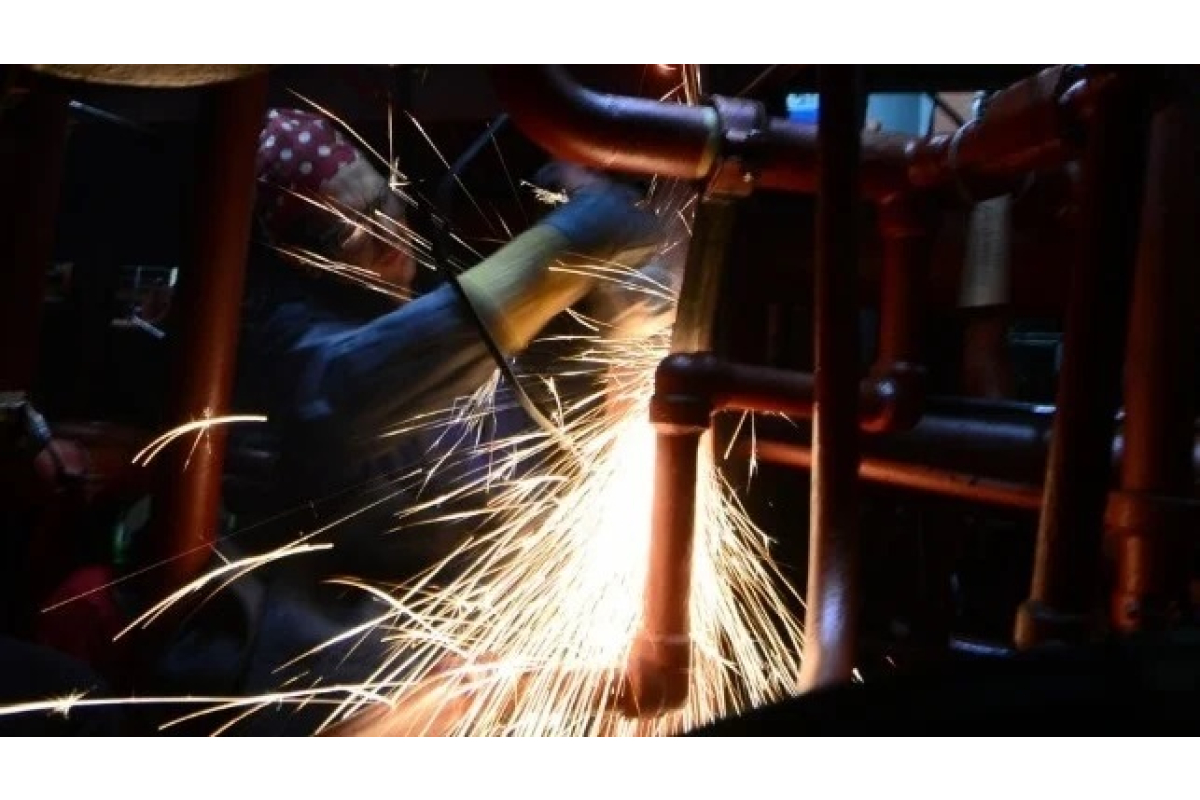
While hull assembly is considered a relatively straightforward stage in shipbuilding, the outfitting process — involving the installation of pipelines, cable systems, electrical equipment, and other onboard infrastructure — is far more complex. Errors during this phase often lead to costly and time-consuming rework.
To address these challenges, a new system based on artificial intelligence and autonomous robotics is being developed to detect and resolve defects during the ship outfitting process.
Researchers from the University of Michigan and the Massachusetts Institute of Technology are working on an intelligent platform capable of comparing a vessel’s actual internal structure with its “digital twin.”
Under the project, autonomous robots operating inside ships under construction will collect data using LiDAR sensors and cameras. The gathered information will then be analyzed by an AI model and compared with the original design plans to identify possible discrepancies.
The system will be able to detect incorrectly installed pipelines, deviations in assembly sequences, and other technical defects at an early stage, while also providing shipyard personnel with reports and alternative solutions.
The project, financed by a $6.2 million grant from Japan’s Ministry of Land, Infrastructure, Transport and Tourism, is being managed by the Monohakobi Technology Institute of NYK Line. It is expected to significantly reduce both construction time and operational costs in future shipbuilding projects.