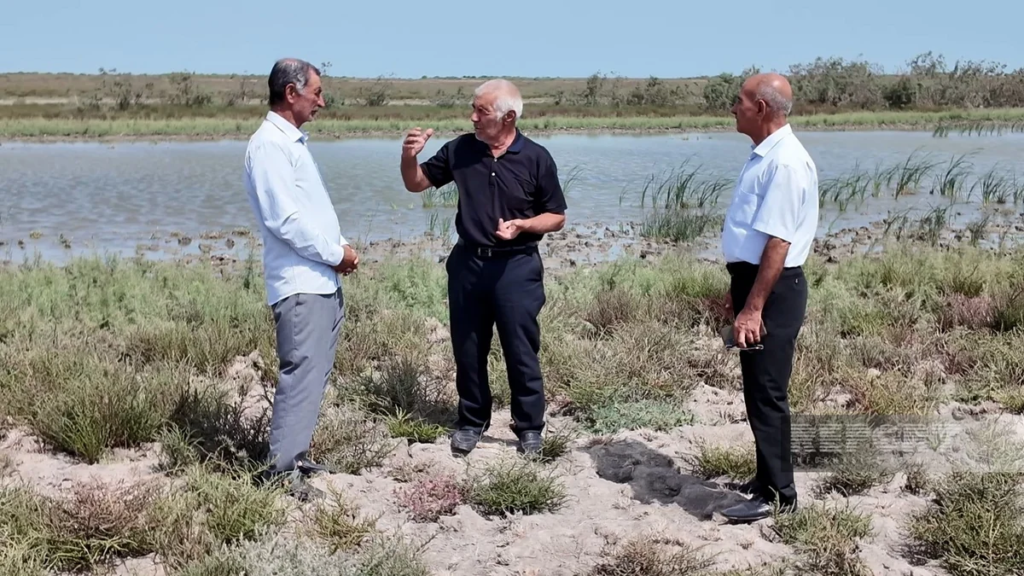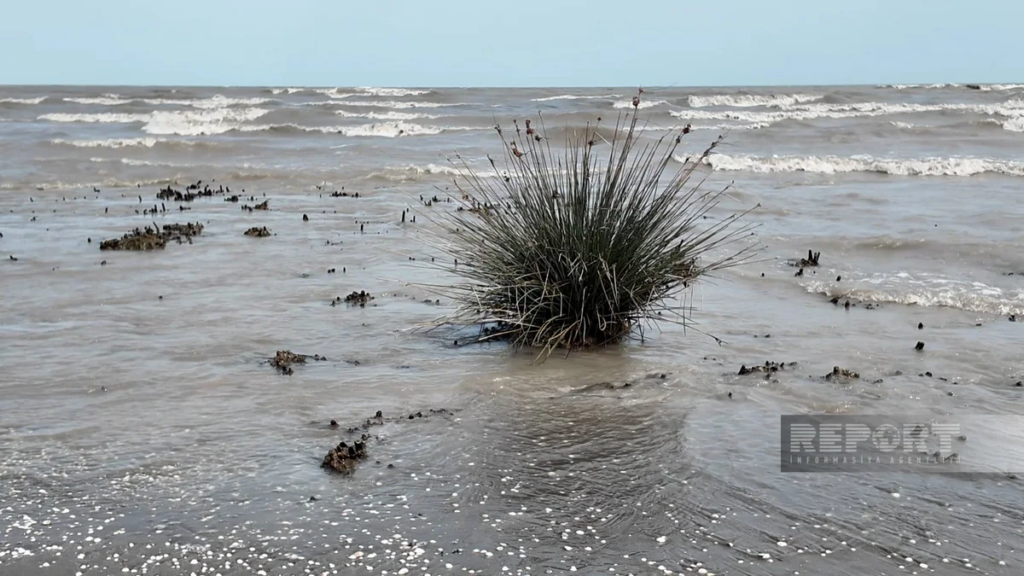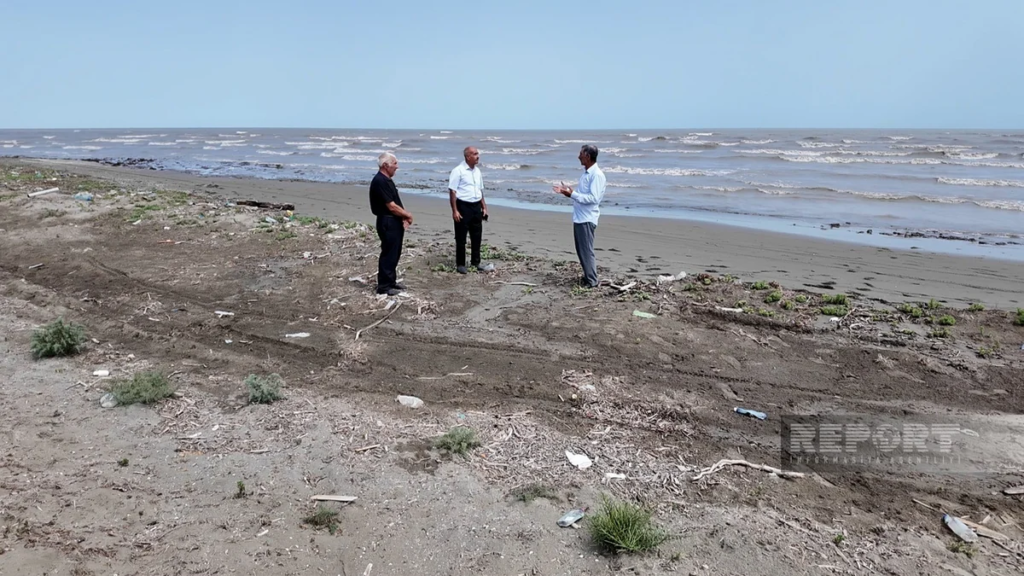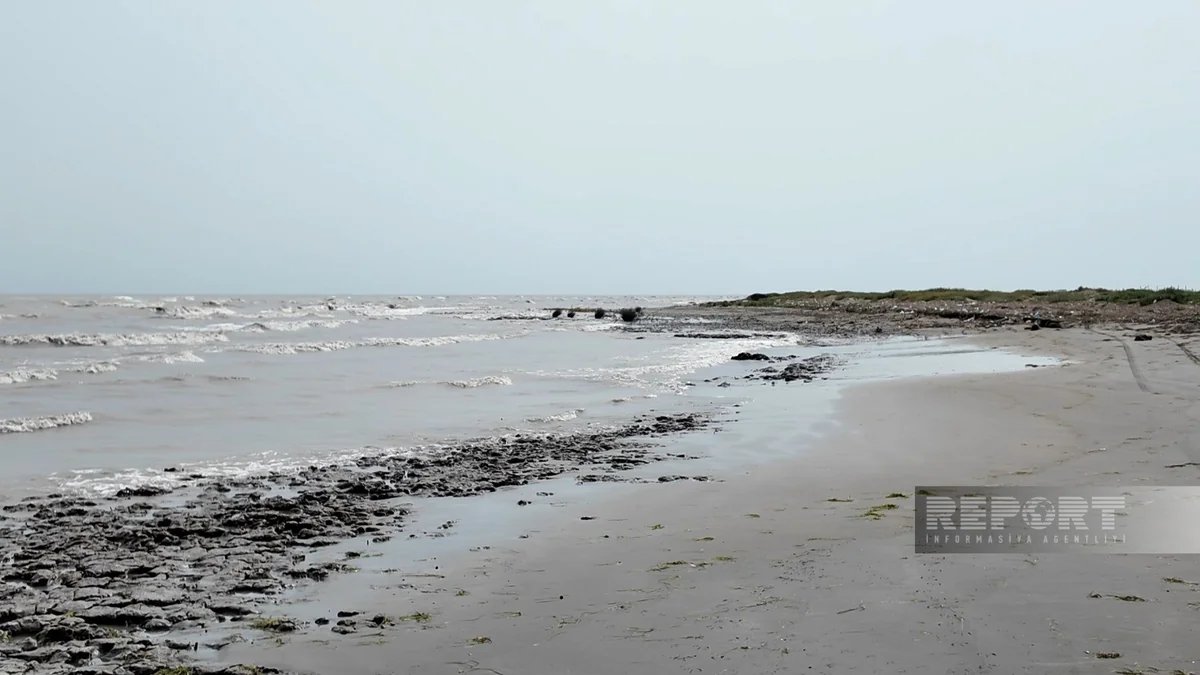
Traces of the ancient main riverbed of the Kura River, which once flowed into the Caspian Sea, have re-emerged in the area of the Ikindji Mayak village in the Neftchala district.
Sea-news.az citing Report, news agency, reports that the bed of the Kura River passing through this area was once considerably deep and water-rich.
According to local residents, the depth of the river reached 7 meters in some parts during the middle of the last century. The area was considered a vital waterway for both fishermen and vessels navigating between the river and the sea.
A 56-meter-high lighthouse constructed in 1965 in Ikindji Mayak village, located at the Kura’s exit to the Caspian Sea, also played a crucial role in guiding vessels navigating the region during that era.
Currently, the majority of the Kura’s ancient main bed has dried up and become covered with sand and sediment.
Fakhreddin Orujov, a resident of Ikindji Mayak village, noted that approximately 20 years ago, the Kura passed through this area and emptied into the Caspian Sea via seven branches.
According to him, the weakening of the river flow led to the rapid siltation of the riverbed:
“As the sea level rose, the flow of the Kura diminished and receded. There was a low-lying area about 4 kilometers from the village toward the sea, where seven branches formed. The emergence of these branches caused a reduction in water flow along the main channel of the Kura. Approximately 80 percent of the water flowed through those branches. As the water’s force decreased here, siltation accelerated, leaving the bed in its current state.”
Residents stated that in a subsequent phase, a new channel was dug toward the north to replace the main riverbed. Constructing a new branch approximately 2 kilometers long in place of the old riverbed—which measured over 7 kilometers—redirected the water flow and helped mitigate flood risks to a certain extent.