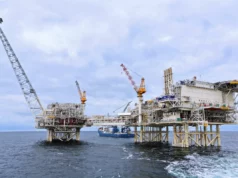
During the third quarter of 2026, transportation of oil and gas via subsea pipelines from the Azeri-Chirag-Gunashli (ACG) and Shah Deniz fields to the Sangachal Terminal continued uninterrupted.
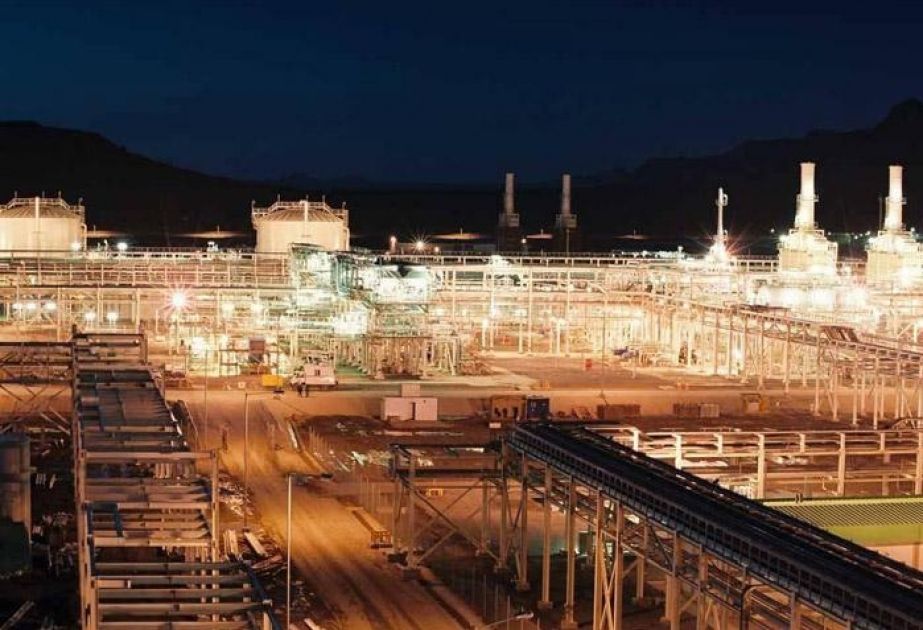
Sea-news.az reports citing bp’s third-quarter 2026 results report, that the technical processing capacity of the terminal’s systems is currently 1.2 million barrels of oil and condensate per day, and approximately 81 million standard cubic meters per day for Shah Deniz gas. Total gas processing and export capacity (including ACG associated gas) stands at roughly 100 million standard cubic meters per day.
During the first three quarters, the terminal exported approximately 138 million barrels of oil and condensate, all of which was transported via the Baku-Tbilisi-Ceyhan (BTC) pipeline.
Gas is exported from the terminal mainly via the South Caucasus Pipeline (SCP), including the South Caucasus Pipeline Expansion (SCPX) system, as well as through the Azerbaijani state-owned pipeline connecting the terminal’s gas processing facilities to the Azerigas distribution system.
Over the first three quarters, an average of approximately 73.4 million standard cubic meters (about 2.611 billion standard cubic feet) of Shah Deniz gas was dispatched from the terminal daily.
In Q3 2026, progress on the Sangachal Terminal Electrification (STEL) project advanced successfully, reaching an overall completion rate of 90 percent by the end of the quarter.
The transition from the primary construction phase to commissioning and readiness-for-start-up operations progressed at the terminal’s Shah Deniz 2 area, while construction activities continued in the ACG area. Upgrade works on the state power grid infrastructure owned by AzerEnerji outside the terminal boundaries have been completed.
During the quarter, several key installation and testing milestones were achieved, operational commissioning tests commenced, and power supply system modernizations continued in support of full terminal electrification. As part of planned start-up preparations, an independent internal assurance review was also completed.
Executing commissioning activities and grid integration in phases while ensuring uninterrupted operational continuity at the terminal remains the project’s central priority.
Project completion is scheduled in two phases: Phase 1 by mid-2027 and Phase 2 by the end of 2028.
The $230 million STEL project will connect the Sangachal Terminal to the national power grid operated by AzerEnerji OJSC. New infrastructure is being constructed both inside and outside the terminal site to facilitate this connection.
The STEL project is structurally tied to the “Shafaq” Solar Project—which entails the construction of a 240 MW AC solar power plant in the Jabrayil district—via a novel commercial model known as a “virtual power transfer mechanism.” Under this framework, the Shafaq plant will generate electricity and deliver it to AzerEnerji in Jabrayil, whereupon AzerEnerji will transfer an equivalent volume of electricity to the Sangachal Terminal. According to current projections, the combined implementation of the Shafaq and STEL projects will reduce operational emissions at the Sangachal Terminal by approximately 50 percent over its future operating life.
Currently, the terminal relies on 7 gas turbines to meet its internal power demands. Following full electrification, these turbines will be decommissioned in phases, allowing saved fuel gas volumes to be redirected to export markets.