



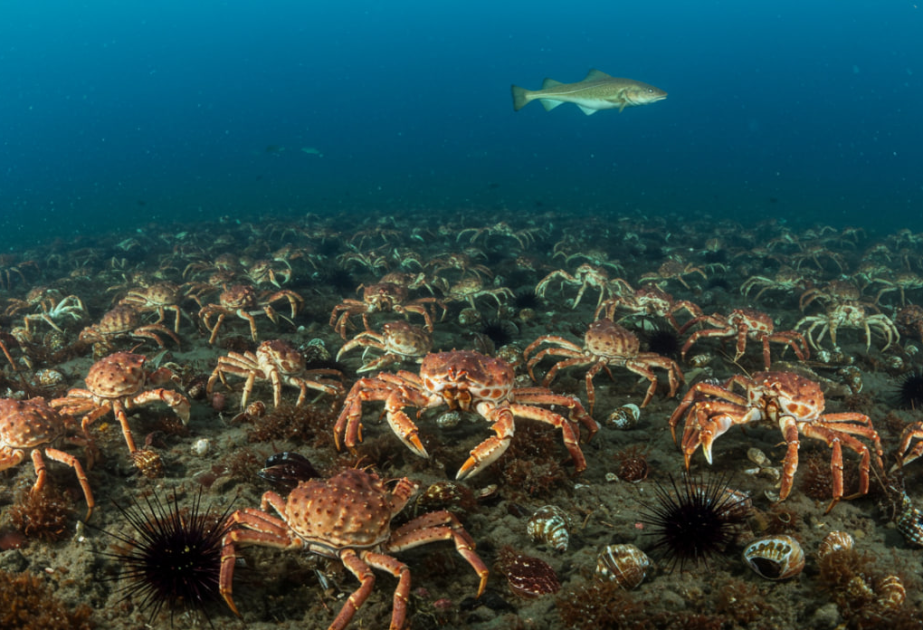
Rising sea levels could unlock new opportunities for the spread of non-native marine species, enabling them to colonize coastal areas that are currently dry land. By the mid-to-late 21st century, the area of potentially suitable habitats for such species could reach approximately 290,000 to 470,000 square kilometers.
Sea-news.az citing the journal Nature Ecology & Evolution, reports that these findings were obtained by an international team of researchers from the South China Sea Institute of Oceanology, Chinese Academy of Sciences.
The study examined 122 non-native marine animal species already established outside their natural ranges. Scientists evaluated data regarding the distribution and environmental requirements of these species against forecasts of coastal inundation.
According to the modeling results, more than two-thirds of the inundated coastal areas adjacent to existing established regions could potentially prove suitable for colonization by these species. The most vulnerable regions identified include the southeastern coast of China, northern Australia, and the Gulf Coast of the United States.
Researchers paid special attention to estuaries—transitional zones where river water mixes with seawater. Proximity to river mouths is associated with an increase in the extent of future inundated habitats suitable for non-native species.
The scientists emphasize that the study assesses the potential for colonization rather than predicting a certainty. The authors suggest incorporating these newly inundated zones into biological invasion monitoring and conservation planning strategies.



