On the occasion of World Maritime Day, celebrated on September 24, issues surrounding the protection of the hydrosphere and the efficient use of its biological resources are in the spotlight of the international community. This date serves as a reminder of the vital role the World Ocean plays in maintaining ecological balance and sustaining life on the planet.
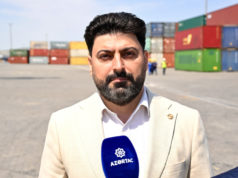
Sea-news.az reports that although the ocean possesses immense resilience, its capacity is not unlimited. In an interview with AZERTAC’s correspondent, Ronnie Berndtsson, Professor of Water Resources Engineering at Lund University, Sweden, and Director of the Center for Advanced Middle Eastern Studies, spoke about the impacts of climate change and water pollution on marine ecosystems, as well as the risks these present to global food security.

According to the professor, one of the primary priorities for protecting marine ecosystems must be the simultaneous reduction of multiple stressors affecting the ocean, with a particular focus on climate change.
“Reducing greenhouse gas emissions is of fundamental importance. Ocean warming and acidification are ultimately linked to the accumulation of greenhouse gases in the atmosphere,” R. Berndtsson stated.
In his view, preventing the overexploitation of marine resources, managing fisheries in line with changing ecosystem conditions, and protecting and restoring vital coastal habitats such as coral reefs, mangroves, seagrasses, salt marshes, and kelp forests are equally essential.
The professor also emphasized the necessity of reducing land-based pollution entering the sea, particularly nutrients, wastewater, plastic debris, and agricultural chemicals.
He noted the importance of translating commitments under international agreements into practical action. According to R. Berndtsson, the gap between international commitments and their implementation must be bridged, with increased focus on alignment with national legislation, enforcement, training, and practical measures.
According to the professor, marine protected areas are an important tool, but merely declaring them is not enough. Effective management of these areas is also a crucial condition. He noted that assessments by the United Nations Environment Programme (UNEP) highlight the need to expand protected areas to achieve the global goal of protecting 30 percent of marine areas by 2030.
How does ocean warming affect ecosystems?
R. Berndtsson stated that rising water temperatures push marine life close to the limits of their physiological tolerance. Coral reefs serve as one of the most vivid examples of this.
According to him, a temperature rise of just 1–2 degrees Celsius above normal can cause widespread coral bleaching and mortality. The degradation of reefs impairs their ability to support biodiversity as well as protect coastlines from waves and storms.
Warming is also shifting the distribution ranges of marine species, with many migrating toward higher latitudes or deeper, cooler waters. This process can alter food webs and the structure of coastal ecosystems.
Decreased oxygen levels in warmer water and enhanced water stratification pose additional challenges, making it harder for oxygen to reach deeper water layers.
The professor noted a direct link between ocean warming and sea level rise. Warmer water expands—a process known as thermal expansion. Furthermore, the melting of land-based glaciers and ice sheets is another major contributor to rising sea levels.
According to him, this creates a compound impact on coastal communities: ocean warming weakens natural coastal defenses, while sea level rise increases pressure on those very ecosystems and communities.
Climate change also impacts fish stocks
According to R. Berndtsson, serious risks to food security lie ahead; however, he noted that presenting the situation as “fish will disappear from the oceans” is inaccurate.
The professor explained that climate change affects fish habitats, growth rates, reproduction cycles, and the productivity of various ecosystems. Certain fish species are shifting toward cooler waters, which may alter fishing opportunities across different regions.
R. Berndtsson stated that while northern fisheries may benefit from species migrating toward the poles, fisheries in tropical and subtropical regions could face substantial losses. This situation poses a particularly severe problem for countries and coastal communities that rely heavily on local fisheries for their diets and economies.
Changes in ocean chemistry create further risks. Increasing levels of atmospheric carbon dioxide absorbed by the ocean lead to a decline in water pH and reduced availability of carbonate ions. As a result, oysters, mussels, corals, and other calcifying organisms may find it increasingly difficult to build shells and skeletons.
The professor also noted that effective fisheries management can play a vital role in enhancing resilience to changing climate conditions.
According to assessments by the Food and Agriculture Organization of the United Nations (FAO), global aquatic animal production has reached record levels, with aquaculture output exceeding 100 million tonnes for the first time in 2024. Nevertheless, ensuring sustainability and equitable resource distribution remains a key challenge ahead.
According to R. Berndtsson, climate change complicates this task even further. An FAO 2026 assessment cited by him indicates that if warming continues at its current rate, the volume of fish that can be sustainably harvested in some regions could decrease by more than 10 percent by 2050.
Currently, over 3.1 billion people rely on aquatic organisms for at least 20 percent of their animal protein intake. Therefore, protecting marine ecosystems is not merely an environmental issue, but a critical matter tied to global food security and social well-being.