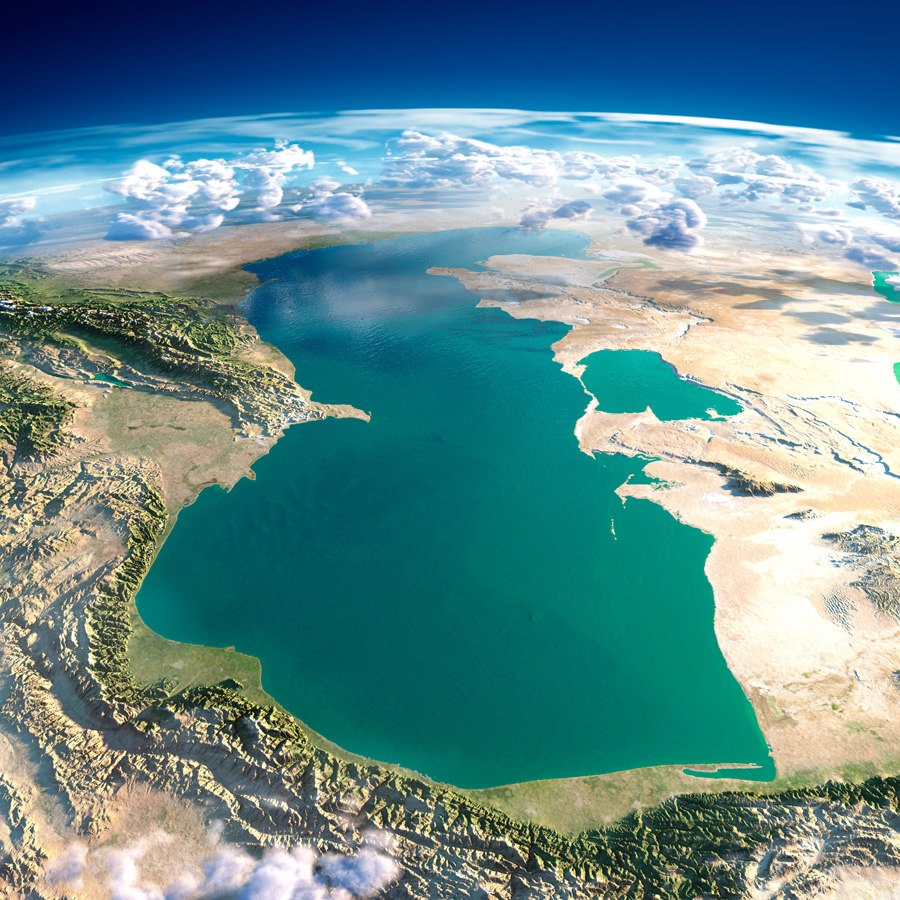
The ecological problems of the Caspian Sea arise from two main reasons. The first of them is the pollution of the Caspian Sea, and the second is the drop in its level as a result of the decrease in the amount of water flowing into the sea.
Sea-news.az reports that Professor Amir Aliyev, a leading researcher at the Laboratory of Caspian Sea Geography of the Institute of Geography named after Hasan Aliyev of the Ministry of Science and Education, stated this in a statement to AZERTAC.
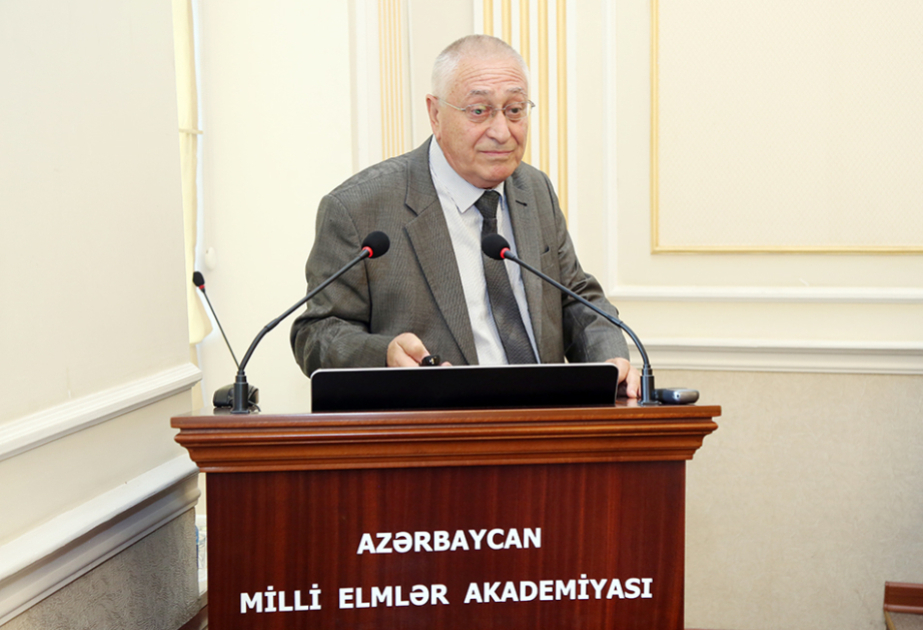
He noted that pollution in the Caspian Sea is mainly related to oil extraction from the sea. During this process, a certain amount of pollutants can flow into sea water within the limits of standards. From this point of view, the presence of pollution in the Caspian Sea is possible. In addition, as a result of the movement of ships and tankers, a certain amount of oil products and other pollutants can enter the Caspian. Also, rivers flowing into the Caspian bring various pollutants with them.
According to the professor, the construction process in coastal areas also does not pass without affecting the sea. Thus, the population is growing, urbanization processes are taking place, and a certain amount of pollutants enters the Caspian Sea from here. Therefore, special attention must be paid to the infrastructure built on the coast of the Caspian so that it does not pollute the sea: “I think that the level of pollution of the Caspian Sea will increase even more over the next 10-15 years. This makes the implementation of urgent measures inevitable.”
Speaking about the level fluctuations of the Caspian, Amir Aliyev said that the process is periodic in nature. He brought to attention that over the last 4,000 years, the periodicity in the level of the Caspian has been approximately 200-250 years, and the last highest level was observed around 1805-1810. Since that time, the level of the Caspian has been in a dropping phase. “Although there are some rises from time to time, the general period is a decline cycle, which will continue until approximately 2040-2050. After that, the level of the Caspian will begin to rise again. Currently, the level of the Caspian is -29 meters according to the Baltic system. In the next 10-15 years, the level of the Caspian is forecasted to drop by another 1-1.5 meters. The amount of water brought by rivers flowing into the Caspian, especially the Volga River, has decreased by up to 25-30 percent in recent years, which is the main reason for the drop in the level. Compared to 1995, as a result of the drop and retreat of the Caspian’s level, up to 40,000 hectares of territory in the coastal zone surrounding Azerbaijan have emerged from under the water. If this continues, the area of territories emerging from under sea water will increase. If the littoral countries do not take measures, the ecological condition of the Caspian Sea could be even more severe than it is today,” he emphasized.
It should be noted that August 12 is Caspian Day or Caspian Environment Protection Day. After the “Framework Convention for the Protection of the Marine Environment of the Caspian Sea” entered into force precisely on this day in 2006, August 12 is celebrated annually as Caspian Day.