
When will Pirallahı, which has a nearly two-century-old oil history, be included in tourism routes?
According to sea-news.az that in many cities around the world, boat or ship tours to islands in seas or lakes are considered among the most popular routes for tourists. The Princes’ Islands in Istanbul and the Toronto Islands in Toronto are among the most frequented spots by both locals and foreign guests.
Although there are islands near Baku, located on the shores of the Caspian Sea, they are not included in tourism routes and remain inaccessible. During my visit to Pirallahı, the largest island of the Caspian, I tried to find an answer to the question: “Why aren’t the islands around Baku turned into tourism routes?”
At first glance, the Pirallahı district draws attention with its tranquility and natural beauty. Clean streets, neat residential buildings remaining from the Soviet era, and paintings reflecting the promotion of the island on roadside fences evoke a somewhat nostalgic feeling in a person. As one approaches the seashore, one feels how favorable the district’s opportunities are for tourism.
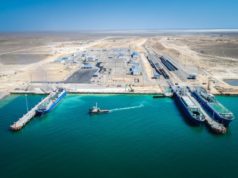
Pirallahı was once known as “Artyom Island”. Later, the island’s historical name was restored to it. According to sources, the island has been an ancient pilgrimage site. It became famous from the times when the Nobel brothers extracted oil from the first offshore well in the country. Today, the island still holds a special place in our country’s oil history. The island’s rich natural resources and the necessary climatic conditions for human habitation have allowed for the construction of new facilities and the establishment of a new settlement in the area. The territory, which once played an important role in the development of the country’s oil industry, still preserves the traces of that era. Today, rigs operating day and night in the sea remain active.
The road and the dam-like bridge-causeway connecting the district, which was previously separated from the mainland, to the Absheron Peninsula now serve to facilitate travel to the island.
Currently, 20,000 people live on the island. There are also Russians among the island’s residents. They have integrated well with the local population. Residents say that everyone has become like family here, greeting one another regardless of whether they know each other, closely participating in joys and sorrows, and never leaving each other alone.
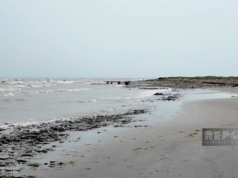
Pirallahı’s coastline has great potential for tourism. The sea view, quiet environment, and its close proximity to Baku make it attractive as a recreation spot. The island is also interesting from a natural perspective. The Caspian coastal ecosystem, sandy beaches, and sea views create opportunities for ecotourism. The main problem is the gap between this potential and its promotion. Although the island possesses advantages in terms of sea, history, and geography for tourism, hotels, quality catering facilities, entertainment venues, and strong promotional opportunities are not yet sufficiently developed.
The island’s historical oil facilities and industrial heritage present interesting opportunities for the creation of special tourism routes. Tourism experts also state that the island’s oil-related industrial heritage could be an interesting direction for tourism. For example, old oil installations and locations reflecting industrial history can be used for thematic tours. Unfortunately, systematic work in this direction is not being carried out.
One of the main problems catching attention on the island is the weakness of tourism infrastructure. Except for a few countable hostels, there are no hotels or other accommodation facilities for tourists wishing to stay overnight. Limited transportation options are also a factor affecting the number of visitors.
The number of catering facilities operating along the coastline is very small. Existing cafes and restaurants do not fully meet the demands of tourists. The absence of services related to entertainment, recreation, and marine tourism also hinders tourist attraction.
Emil Mustafayev, who was born and raised in Pirallahı, notes that the island with its ancient history is a unique place with its peculiar features: “Pirallahı is an interesting place. It has its own customs. It simply has not been developed for tourism.” Mentioning transportation problems, E. Mustafayev stated: “Although buses operate to the district, to get to the city from certain areas of the island, you have to go to the Turkan settlement and change buses there. Residents are forced to use taxi services. This, of course, comes at a high cost. When ordering from taxi companies, you sometimes have to wait for more than an hour. It is difficult to find a taxi on the island.” E. Mustafayev states that there is also a shortage of cafes on the island to serve tourists: “Cafes are few and expensive. If you don’t eat at a cafe, you cannot order tea. Infrastructure must exist to attract tourists.”
Domestic tourism manager Vasif Yadigarov states that there are currently no domestic tours to Pirallahı: “Unfortunately, the island has no advertising for domestic tours. Perhaps if it were advertised and researched, potential could be found. For this, it is necessary to create a facility in the form of a museum for tourists near the oil wells on the island. Also, there should be places for tourists to relax by the seaside and restaurants for dining.”
Tourism expert Aytac Nazarova also states that Pirallahı is currently not recognized as a touristic point: “Some guides or tourism professionals go to Pirallahı. The island can also be interesting for those fond of fishing. But currently, Pirallahı is not a touristic point. For example, my guests have not shown interest in the island up to now. Because the island has neither promotion nor proper conditions for tourists… A lot of work must be done in the direction of opening the island to tourism and promoting it.”
It appears that we have been unable to promote the features of the island, which has a nearly two-century-old oil history, not only to foreign tourists, but even to our own people.