The military-security cooperation established between Azerbaijan and Turkey over many years is entering a new geoeconomic phase in accordance with the requirements of the modern era. The alliance between the two countries is no longer just a guarantor of regional stability, but also a key driving force reshaping global logistics and energy maps.
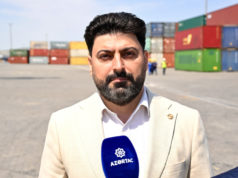
According to sea-news.az that Serkan Gundogdu, an expert in political science and international relations, stated that in the modern world, the power and influence of states are determined not only by their military arsenal but also by the significant roles they play in international logistics chains and energy corridors.
According to the expert, in the face of geopolitical upheavals occurring worldwide—particularly against the backdrop of the Russia-Ukraine war—there is a necessity to diversify global trade routes. In this landscape, the Middle Corridor and Zangezur Corridor projects have transcended the status of mere regional routes:
- Strategic Connectivity: Among the alternative transport lines stretching from China to Europe, the relevance of the Middle Corridor has increased sharply.
- Strengthening Positions: This geographical necessity strengthens Azerbaijan’s position as a primary transit hub, while further highlighting Turkey’s status as the main logistics gateway to Europe. Thus, the Baku–Ankara alliance is evolving into a global strategic axis that ensures the economic security of the entire Eurasian continent.
S. Gundogdu noted that Azerbaijan’s natural resources and Turkey’s transit potential have created a powerful balance in the global energy market. Energy projects implemented, primarily the Southern Gas Corridor, play a crucial role in Europe’s energy security and increase Baku’s diplomatic weight in the international arena.
These strong bilateral relations are also spreading to a broader geography within the framework of the Organization of Turkic States (OTS). In the modern era, the power of international organizations is measured not only by common historical roots but also by real economic projects. In this sense, the steps taken by Azerbaijan and Turkey in the fields of transport, digitalization, customs, and investment are the main locomotives accelerating the geoeconomic unity of the entire Turkic world.
Reminding that the South Caucasus has always been a field of clashing interests for major powers, the expert emphasized that Azerbaijan’s primary goal in the next stage is to transform its historical military victories into sustainable diplomatic and institutional successes. On this path, close coordination with Ankara in the military sphere must be complemented by deeper integration in areas such as digital infrastructure, high technologies, and the defense industry.
“The Azerbaijan–Turkey strategic partnership is a unique example of an alliance based not on unilateral interests, but on mutual trust. This alliance not only serves the prosperity of the two brotherly countries but also plays a decisive role in establishing a new, sustainable security system in the South Caucasus and creating new economic connections across the Eurasian geography,” Serkan Gundogdu stated.