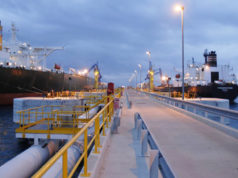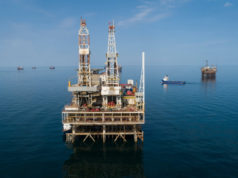

To date, nearly 559 million tons of Azerbaijani oil and condensate have been exported via the BTC pipeline.
According to sea-news.az that the realization of the Baku-Tbilisi-Ceyhan (BTC) main export oil pipeline is the result of the successful continuation and implementation of the oil strategy conceived by National Leader Heydar Aliyev for several decades. Today, Azerbaijan is recognized and accepted in the world community as a powerful state with growing political and economic development and an increasing ability to influence global events. It can be stated with confidence that the term “global project,” which was widely used to describe the Baku-Tbilisi-Ceyhan—often called the “Legend of the Three Seas” and considered one of the greatest oil export routes of the millennium—has been fully validated over the past period.
Baku-Tbilisi-Ceyhan: The cornerstone of the East-West energy corridor
With the signing of the “Contract of the Century,” which formed the foundation of the new oil strategy developed under the leadership of National Leader Heydar Aliyev, the national oil strategy of the independent state of Azerbaijan began to be realized. It was precisely after this contract that the world’s interest in the Azerbaijani economy grew, providing a strong impetus for the expansion of our country’s international relations. One of the essential components of the “Contract of the Century” was the creation of a multi-variant pipeline transport infrastructure that would ensure the transportation and export of extracted oil to foreign markets in cooperation with international companies. The Great Leader demonstrated determination in this matter, putting forward the idea of the Baku-Tbilisi-Ceyhan main export oil pipeline, which would deliver Azerbaijani oil to world markets via the Mediterranean Sea. Despite the attempts of certain forces that did not want to accept this idea, the project received the “green light” as a logical result of the National Leader Heydar Aliyev’s efforts and the intense negotiation process. Thus, at the OSCE summit held in Istanbul on November 18, 1999, a declaration on the construction of the Baku-Tbilisi-Ceyhan main export pipeline was signed. Consequently, the legal basis for turning the BTC project into reality was established. Later, negotiations were held to clarify some details of the project and to identify the necessary financial sources.
BP was selected as the operator of the project, and the “BTC Co.” company was established for the construction and operation of the pipeline. Its shareholders included BP (30.1%), SOCAR (25%), Chevron (8.9%), Statoil (8.71%), TPAO (6.53%), Eni (5%), Total (5%), Itochu (3.4%), Inpex (2.5%), ConocoPhillips (2.5%), and Amerada Hess (2.36%). To participate in the Baku-Tbilisi-Ceyhan project, the State Oil Company of the Republic of Azerbaijan established the subsidiary “AzBTC Co.”, which acquired a 25% stake in the “BTC Company” created by the consortium of oil companies participating in the project. All participants, including “AzBTC Co.”, decided to finance 30% of the project’s value from their own funds, while the remaining 70% was to be financed through loans attracted from international financial institutions, export credit agencies, and commercial banks. The financing of Azerbaijan’s stake in “BTC Co.” on behalf of the state was carried out by the State Oil Fund. On July 30, 2002, President of the Republic of Azerbaijan Heydar Aliyev signed a Decree “On financing the participation share of the State Oil Company of the Republic of Azerbaijan in the Baku-Tbilisi-Ceyhan main export pipeline project.” That Decree reflected issues related to fulfilling obligations to ensure Azerbaijan’s participation in the BTC project, including the financing of the country’s share.