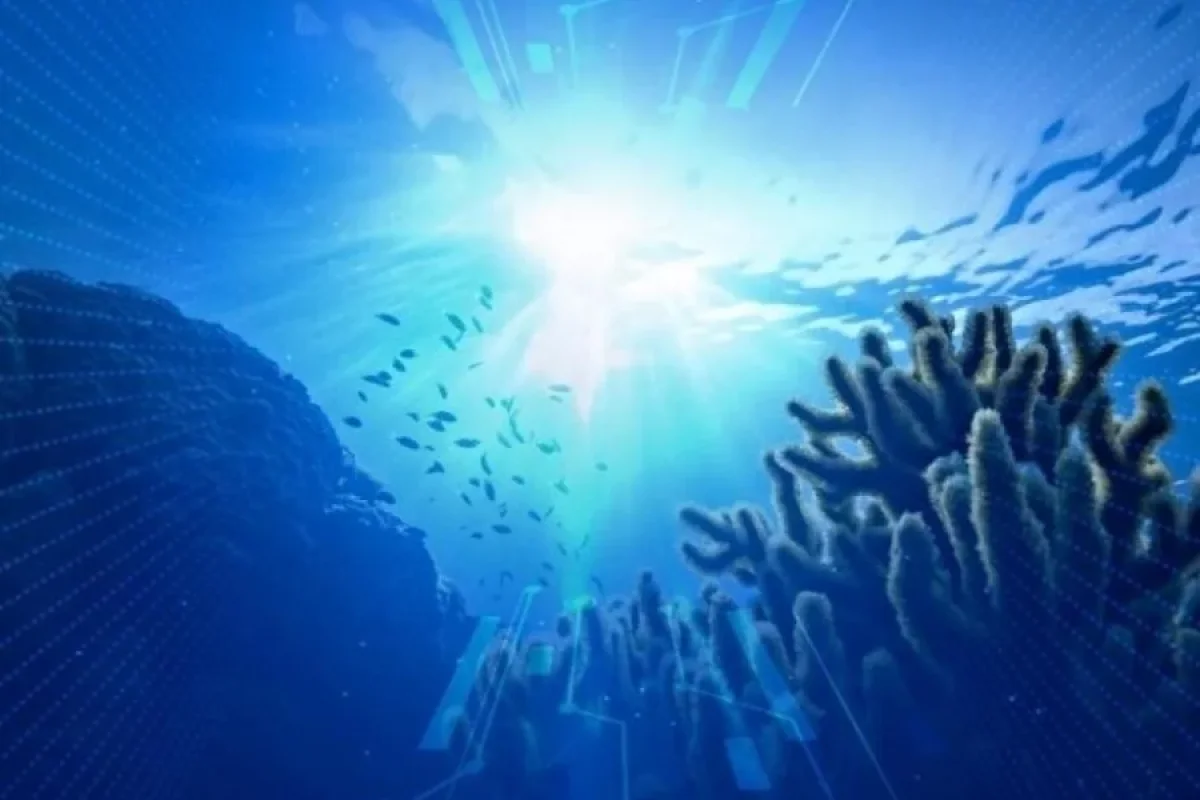
An international group of scientists has discovered 73 volcanic calderas hidden in the depths of the ocean using neural networks and artificial intelligence.
According to sea-news.az that RuNews24 provided this information.
The research was led by volcanologist Andrea Verolino, a specialist from the University of Paris-Saclay. Experts used program algorithms originally created to study the surface of Mars to map the relief of the ocean floor.
Previously, only about 30 such low-activity structures were known to the scientific world. The latest research proves that the number of underwater volcanic objects is significantly higher than previously thought.
The formation process of calderas is linked to violent volcanic eruptions. During these events, the magma chamber empties, the upper layer collapses, and a massive depression is formed. These structures are indicators of the presence of magmatic chambers that could potentially become active in the future.
According to the researchers, the greatest danger of underwater volcanoes lies in the difficulty of predicting the moment they might erupt. Sudden eruptions can trigger devastating tsunamis and powerful seismic waves capable of striking coastal zones.
Experts are paying special attention to seven of the 73 objects found, as they consider them to have higher potential activity. At the same time, scientists emphasize that even volcanoes considered completely extinct should be under regular monitoring.
The initiators of the research are confident that this scientific discovery once again confirms the importance of continuous monitoring of the ocean depths and extensive research into underwater volcanic systems.