



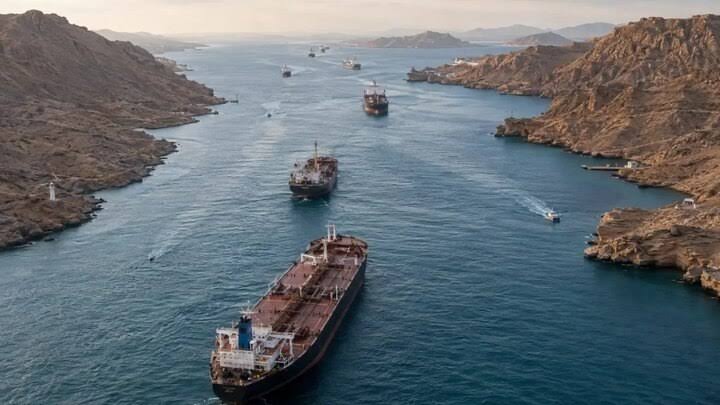
According to shipping data disclosed on October 5, Middle East crude oil exports exceeded pre-war levels on four out of seven days during the final week of September, despite ongoing attacks on vessels navigating the Strait of Hormuz.
Sea-news.az citing Reuters, that according to preliminary data from ship-tracking firm Kpler, crude oil exports from the region surpassed pre-war benchmarks on September 24 and from September 27 to 29. During those days, export volumes fluctuated between 19.5 million and 22.5 million barrels per day (bpd).
Prior to the war with Iran—specifically before February of this year—average crude oil exports from the Middle East stood at 18 million bpd.
Data indicates that as of October 1, the seven-day moving average for crude oil exports reached 18.5 million bpd. This figure encompasses transit via the Strait of Hormuz and the Red Sea, terminal exports, and ship-to-ship transfer operations in the Gulf of Oman.
According to Kpler, the aggregate volume of crude oil, refined products, chemicals, and non-gas liquid products averaged 22.4 million bpd during the seven-day period ending September 30.
In September, liquefied natural gas (LNG) shipments transiting the Strait of Hormuz also rose, reaching their highest monthly level since February.
It is noted that the figures do not account for vessels that may have transited the strait with their Automatic Identification System (AIS) transponders disabled to evade detection.
Prior to February 28, the onset of the war with Iran, an average of approximately 125 large commercial vessels—including crude tankers, gas carriers, dry bulkers, and container ships—passed through the Strait of Hormuz daily, accounting for roughly 20 percent of global daily crude oil and LNG supplies.



