Despite two unmanned aerial vehicle attacks on Iranian ships in the Caspian Sea, the development of the Trans-Caspian International Transport Route (TITR, or the Middle Corridor) has not slowed down; on the contrary, it has accelerated further. According to experts, the growing interest of international logistics companies in the route and large-scale investments directed at port infrastructure give reason to say that cargo volumes in the coming years will exceed previous forecasts.
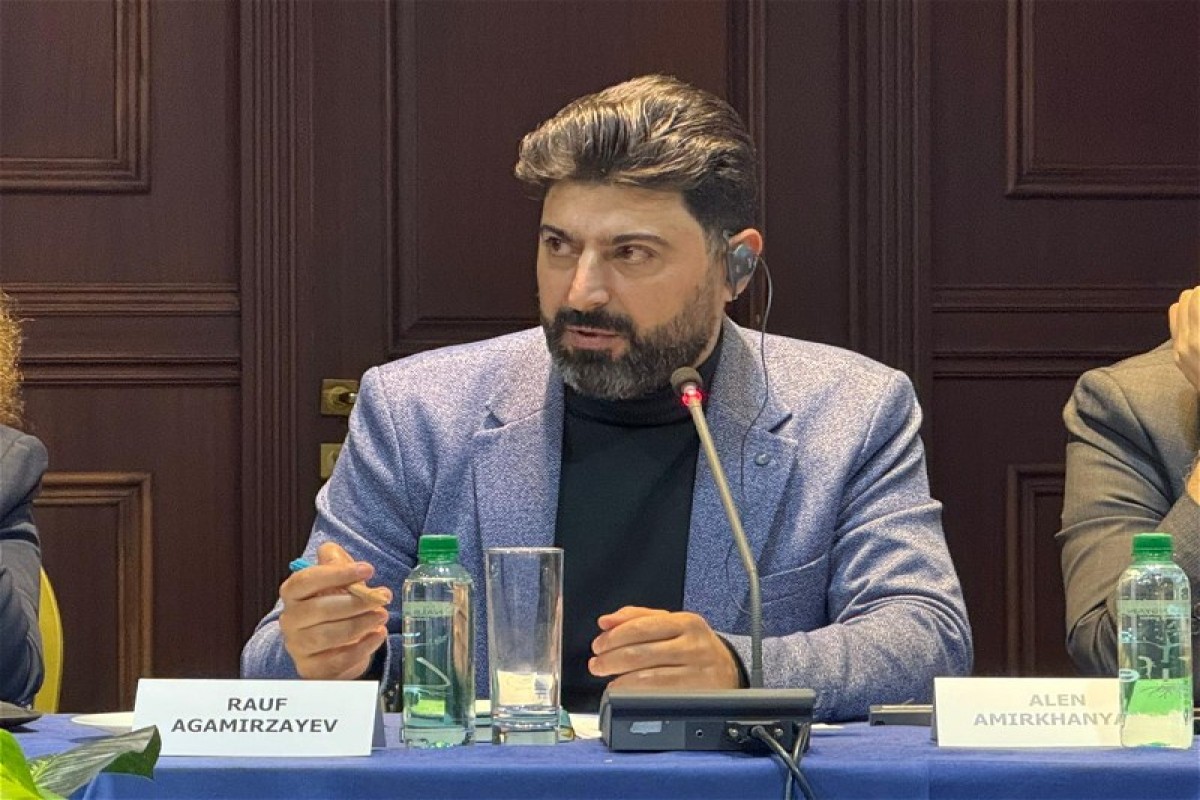
Azerbaijani transport and logistics expert Rauf Agamirzayev told Vesti.az that the Middle Corridor remains a safe route for cargo senders and receivers.
“The development dynamics of the Middle Corridor show that within the next 3–4 years, more cargo than previous forecasts – over 11–12 million tons per year – will be transported via this route.”
According to sea-news.az that, according to the expert, two drone attacks carried out against Iranian ships in the Caspian in recent months will not affect the operation of the Middle Corridor.
“The route is safe and continues to develop at a high pace. However, the full utilization of the Caspian section of the ‘North-South’ international transport corridor may cause certain concerns among cargo senders.”
Transport continues uninterrupted
In April of the current year, an Israeli-owned unmanned vehicle struck an Iranian ship in the Caspian. On July 25, a Ukrainian drone attack resulted in the death of an Iranian sailor.
Nevertheless, cargo transportation from the ports of Kazakhstan and Turkmenistan in the direction of Baku and vice versa has continued uninterrupted. The variety of transported goods remains broad, ranging from petroleum products to containers, bulk, and oversized cargo.
Container transport is growing rapidly
In the early years of the Middle Corridor, which has been operating since 2014, the main type of cargo consisted of oil and petroleum products. According to the State Statistics Committee of Azerbaijan, oil cargo currently accounts for 40.6 percent of goods transported by sea.
At the same time, a serious increase is observed in TEU (twenty-foot equivalent unit) transport thanks to the use of feeder vessels.
This development more actively attracts large exporting countries like China to the Middle Corridor, as well as states like Uzbekistan, which, despite having no access to the Caspian, is ready to build ships for the Caspian together with Azerbaijan.
Baku port’s capabilities are expanding
According to Rauf Agamirzayev, the container handling capacity of the Baku International Sea Trade Port located in Alat has already reached 154,000 TEUs.
“By the end of 2026, this figure is expected to rise to the level of 260,000 TEUs.”
The expert believes that the total container handling capacity of the Alat, Hovsan, and Zira ports in Baku could reach 500,000 TEUs by 2030.
Larger cargo flow in 2030
In the expert’s opinion, by 2030, the volume of cargo transported via the Middle Corridor will exceed the previously forecasted 11.4 million tons.
“Current trends show that cargo flow will rise rapidly, especially driven by the growth of high-yielding containerized transport.”
Currently, sulfur, nitrogen fertilizers, and other chemical products, as well as bulk and oversized cargo, are also transported to Western markets via the Middle Corridor.
Expanding the railway fleet is a necessity
Azerbaijan Railways (ADY), along with the Alat port incorporated into its structure, is successfully coping with the growing cargo flow.
In January–June 2026, ADY transported 8.78 million tons of cargo, which is 340,000 tons more compared to the same period last year.
However, against the background of increasing the annual cargo throughput capacity of the Alat port from 15 million tons to 25 million tons, the expansion of the locomotive and rolling stock fleet will also be required. Negotiations are underway with foreign financial institutions and companies in this regard.
European Union support
In July, European Commission President Ursula von der Leyen announced during a speech in Baku that 200 million euros in grants will be allocated for the development of transport and digital connectivity in the South Caucasus.
The Alat port holds a special place among priority projects.
Calling the South Caucasus one of the most important global hubs connecting Europe, the Caspian basin, and Central Asia, von der Leyen noted that the strategic importance of the region is growing rapidly.
According to her, transport and energy projects will allow the attraction of up to 2 billion euros in investments by the public and private sectors, and Azerbaijan will be one of the main links in this process.
New logistics centers are being established
In recent days, the Trans-Caspian operations center of the international company Neptune Logistics, operating along the China–Central Asia–Caspian–South Caucasus–Europe route, was commissioned in Baku.
At the same time, an agreement was reached in Kazakhstan’s Kuryk port with the Chinese company Guoyou Materials Group on the construction of a multifunctional marine terminal worth 1 USD billion in 2026–2028.
The terminal’s initial throughput capacity will be 15 million tons per year, and from 2031, 25 million tons, which is comparable to the design capacity of the Alat port.
Coordination of Caspian ports is a key condition
Rauf Agamirzayev emphasized that the success of the East-West international transport corridor directly depends on the coordinated operation of Caspian ports.
According to him, Azerbaijan, Kazakhstan, and Turkmenistan are cooperating closely on dredging works in the ports.
“The parties have agreed on the joint construction of a powerful specialized dredger to carry out large-scale dredging works in the ports of Baku, Turkmenbashi, Kuryk, and Aktau.”
Rahman Hummatov, Azerbaijan’s Deputy Minister of Digital Development and Transport, also emphasized the necessity of coordination between Azerbaijan, Kazakhstan, and Turkmenistan for the development of the Middle Corridor.
Main targets until 2030
The international consulting company Elevate Crossroads believes that the implementation of the following measures can increase the volume of cargo transportation to at least 12 million tons per year in 2030–2031:
- digitalization of border and customs procedures;
- modernization of the port of Aktau;
- expansion of Georgia’s Port of Poti;
- increasing the rolling stock of Azerbaijani and Georgian railways;
- construction of the new Uzbekistan–Kazakhstan railway line;
- construction of the Almaty railway circular line;
- modernization of the Sivas–Kars and Akhalkalaki–Turkey railway sections in Turkey.
In the long-term perspective, the expansion of port and railway infrastructures in Bulgaria and Romania is also envisaged.
Conclusion
The geostrategic importance of the Middle Corridor is increasing year by year. Investments in infrastructure projects, the expansion of ports, digitalization, and coordination among participating countries are turning this route into one of the main logistics arteries of the Eurasian space.
According to experts’ conclusions, the main condition for success is the joint activity of countries located in the Caspian and Black Sea basins and the development of these seas as a space of cooperation, stability, and prosperity.