
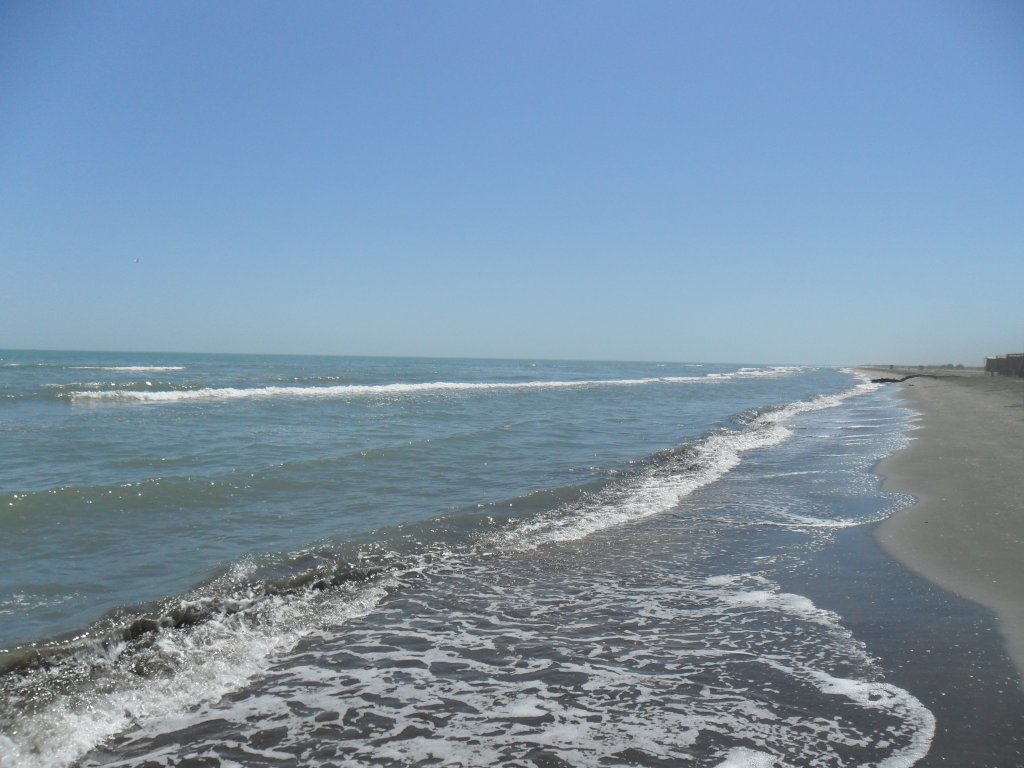
Fluctuations in the water level of the Caspian Sea continue to exert a profound impact on economic activities across coastal regions, generating complex socio-economic and environmental challenges. Although numerous scientific studies have analyzed historical sea-level dynamics, comprehensive long-term forecasts remain largely underdeveloped.
Sea-news.az reports citing AZERTAC that Hasan Nabiyev, senior researcher at the Climate Department of the Institute of Geography under the Ministry of Science and Education and PhD in Geography, stated that highlighted the long-term fluctuations recorded over the past century. Between 1930 and 1977, the Caspian Sea level experienced a steady decline, reaching a historic low of minus 29.0 meters in 1977. However, from 1978 to 1995, a rapid and dramatic rise was observed.

The subsequent drop in water levels in later years triggered coastal reshaping, accelerated desertification, and depressed groundwater tables. These environmental shifts created operational bottlenecks across marine-dependent economic sectors, including merchant shipping and fleet navigation.
According to Nabiyev, littoral nations that had adapted to declining water levels prior to 1978 were suddenly confronted with rapid flooding, which submerged extensive coastal zones. Since 1995, the sea level has resumed a downward trajectory, characterized by minor periodic oscillations.
The scientist emphasized that these ongoing transformations necessitate a deeper scientific examination of the Caspian’s level dynamics, systematic investigation of contributing climatic factors, and the creation of actionable long-term predictive models.