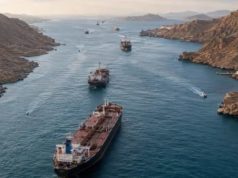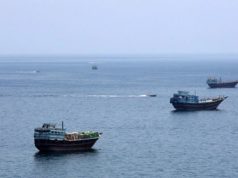
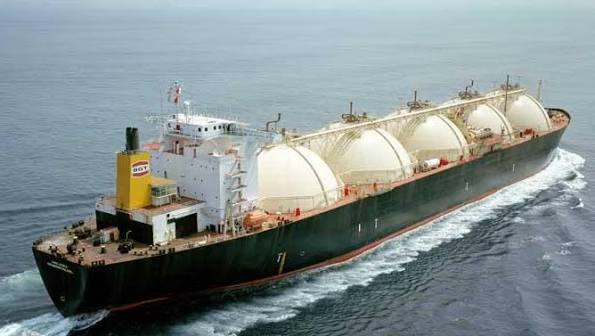
According to analytical firms, despite ongoing security concerns and market uncertainty, LNG shipments passing through the Strait of Hormuz in September reached their highest monthly level since the outbreak of the US-Iran war.
Sea-news.az citing Reuters, reports that according to S&P Global Energy, a total of 19 LNG cargoes passed through this strategic waterway in September.
Eric Yep, lead analyst at S&P Global Energy, stated that this figure represents an increase from the 15 shipments recorded in June, when the agreement between the US and Iran first came into effect.
According to him, LNG shipments through the Strait of Hormuz accelerated in the second half of September. If this trend persists in October, monthly transits are expected to recover to approximately 25 percent of pre-war levels.
Meanwhile, data from Kpler indicates that a total of 21 LNG cargoes passed through the Strait of Hormuz in September, representing an increase of 15 tankers compared to June figures.
Despite the conflict, an increased number of LNG vessels affiliated with QatarEnergy have transited the strait in recent weeks. Vessel-tracking data from Kpler and LSEG revealed that three additional LNG carriers loaded at Qatar’s Ras Laffan export terminal were tracked near the waterway this week. Two of these vessels—”Al Kharaij” and “Al Gharrafa”—are associated with QatarEnergy.
Several vessels navigating the strait are conducting “dark transits” by switching off their Automatic Identification System (AIS) transponders to avoid detection.
Eric Yep noted that the primary concern is whether LNG transit through the Strait of Hormuz will continue into the winter months. He explained that this will depend on whether Iran initiates a broader military escalation if it perceives higher export volumes through the strait as a loss of control, as well as the continuation of US Navy convoy escorts.
Prior to the outbreak of war on February 28, approximately one-fifth of global crude oil and LNG supplies passed through the Strait of Hormuz.