



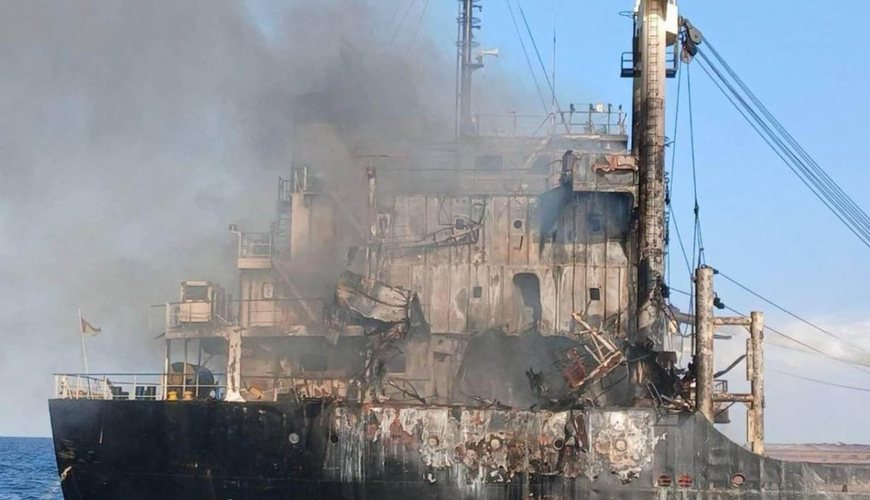
How many more of our citizens must lose their lives before more serious steps are taken to prevent this threat?
Sea-news.az reports that seafaring has always been a high-risk profession. Storms, technical failures, fires, piracy and other hazards have long been considered inherent risks of the profession. However, the risks faced by Azerbaijani seafarers today are fundamentally different from those of the past.
The issue is no longer limited to natural or technical hazards. Civilian vessels are increasingly becoming targets in areas affected by war and military operations.
The expansion of military operations in the Black Sea and the Sea of Azov has created serious risks for civilian shipping as well. Drone attacks are no longer limited to military targets; cargo vessels and tugboats are also becoming targets.
Azerbaijani families are already experiencing the tragic consequences of this threat.
In June this year, Azerbaijani seafarers were among those killed and injured in attacks on two foreign cargo vessels whose crews included a total of 25 Azerbaijani citizens.
Subsequent incidents have demonstrated that the threat remains ongoing. In August, the Volgo Balt 226, which had Azerbaijani seafarers among its crew, was targeted in a drone attack in the Black Sea.
On September 9, the Somali-flagged tugboat TEDY, operating near Odesa, was targeted in several drone attacks. Four Azerbaijani citizens were on board. As a result of the attacks, Aslan Aliyev and Asim Gasimov were killed, while Imran Novruzov and Rauf Aliyev were injured.
This is no longer merely a statistic. Two people have lost their lives, two families have suffered a devastating loss, and two other seafarers have been injured.
The Ministry of Foreign Affairs of Azerbaijan has repeatedly warned citizens against traveling to dangerous areas. The State Maritime and Port Agency has also called on seafarers to put their lives and health above all else.
However, the sequence of events shows that warnings alone may no longer be sufficient.
This situation presents a complex legal and social dilemma. The state cannot completely prohibit an adult Azerbaijani citizen from working abroad. Nor is it legally straightforward to tell a seafarer working on a foreign vessel, under every circumstance, “Do not take this route.”
At the same time, putting one’s life at risk cannot be regarded solely as a personal matter. Behind every seafarer are family members, children and others who depend on their income.
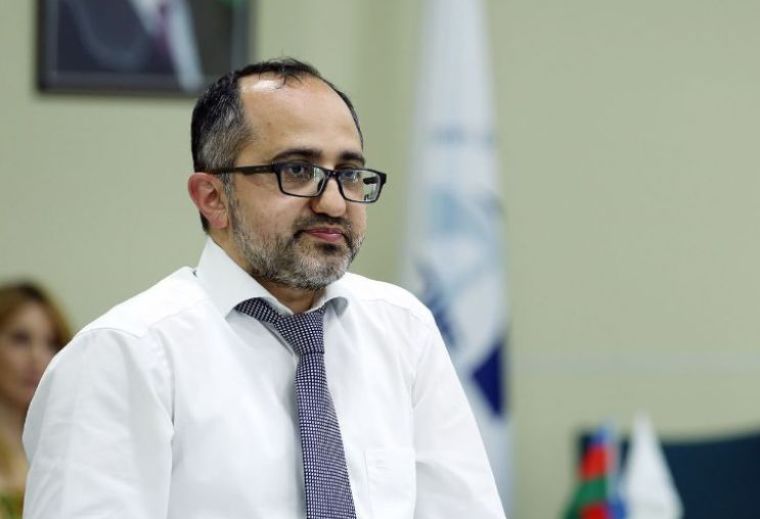
According to lawyer Akram Hasanov, one of the most realistic tools in addressing this issue is public awareness. He says that the state cannot completely prohibit citizens from traveling to certain countries or territories. In various countries around the world, warnings and information campaigns are also the primary mechanisms used in relation to travel to dangerous areas.
But one important question remains: Are warnings enough?
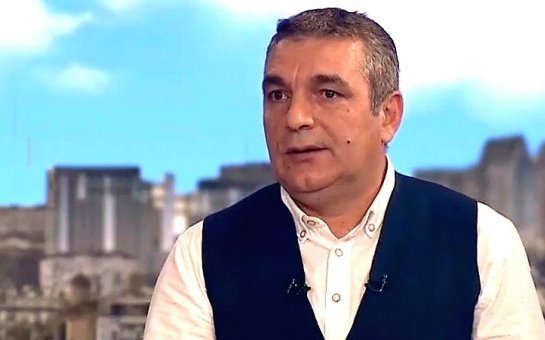
Economist Natig Jafarli believes that economic factors also lie at the root of the problem. In his view, seafarers may agree to work on high-risk routes because of higher wages. At the same time, the state cannot fully monitor where every citizen working abroad is employed, which vessel they are serving on or which route they are taking.
This reality must be taken into account. A seafarer does not choose a high-risk route simply because they enjoy taking risks. They support their families, think about their children’s future, cover household expenses and, in some cases, choose higher-paying jobs in order to repay debts.
But one question remains open:
Working in waters close to a war zone can no longer be regarded as an ordinary occupational risk. It is a special situation in which human life is directly under threat.
For this reason, more systematic mechanisms should be considered.
For example, a constantly updated “red zone” system could be established for maritime areas affected by war and military operations. Before accepting a job offer on a foreign vessel, an Azerbaijani citizen should be able to obtain official and up-to-date information about the risk level of the vessel’s intended route.
Shipping companies should also provide their employees with complete information about the route. If a vessel is expected to enter a high-risk area, the seafarer should be informed not at the last minute, but when signing the employment contract.
Another important issue is the seafarer’s right to refuse a dangerous route.
When a seafarer says, “I do not want to go to this area,” they should not have to fear losing their job. Refusing a route on safety grounds should become a legally protected choice. In addition, the establishment of an operational mechanism to coordinate Azerbaijani citizens working aboard vessels entering high-risk areas in the event of an emergency could also be considered.
This would not restrict a seafarer’s freedom. On the contrary, it would ensure their right to make an informed and safe choice. Of course, no one wants to deprive seafarers of their livelihood. Most of these people go to sea to support their families and secure a future for their children. It is not difficult to understand the social and economic reasons that lead them to accept risks.
However, working in waters close to a war zone can no longer be assessed as an ordinary risk of seafaring. Therefore, awareness efforts should be directed not only at seafarers themselves but also at their families. Family members should also know which route a seafarer is working on and what dangers that area may pose.
The main objective should be simple:
Protect the life of the next Azerbaijani seafarer before we have to see their name added to the list of the dead. Because a lost vessel can be rebuilt, financial losses can be compensated, and cargo can be transported again. But a human life once lost can never be brought back.



