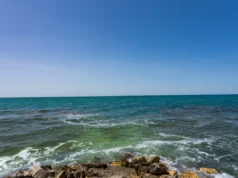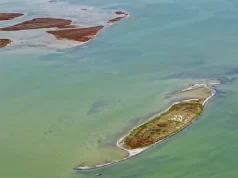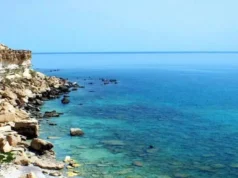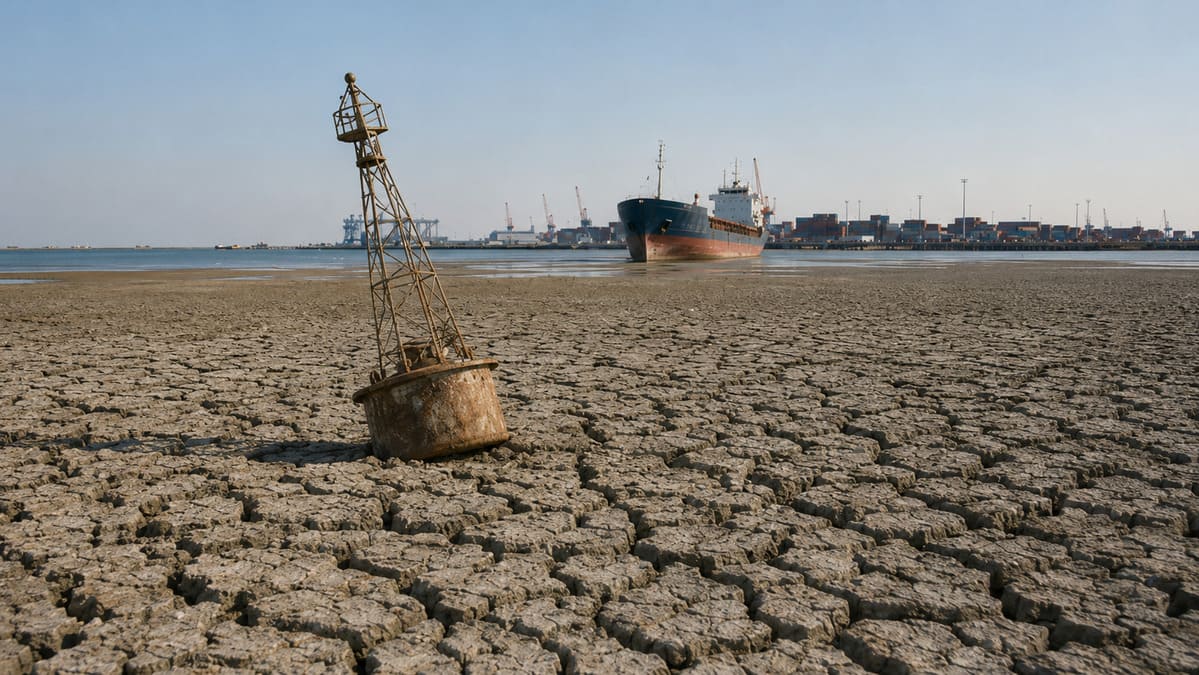
The ongoing drop in the level of the Caspian Sea has led to the emergence of thousands of hectares of new dry land along the coast. Beyond its ecological and geographical implications, the phenomenon has raised critical questions regarding the legal status of these newly exposed areas.
Sea-news.az reports that commenting on the issue to Modern.az, Member of Parliament Rovshan Muradov stated that the recession of the Caspian requires a novel legal approach.
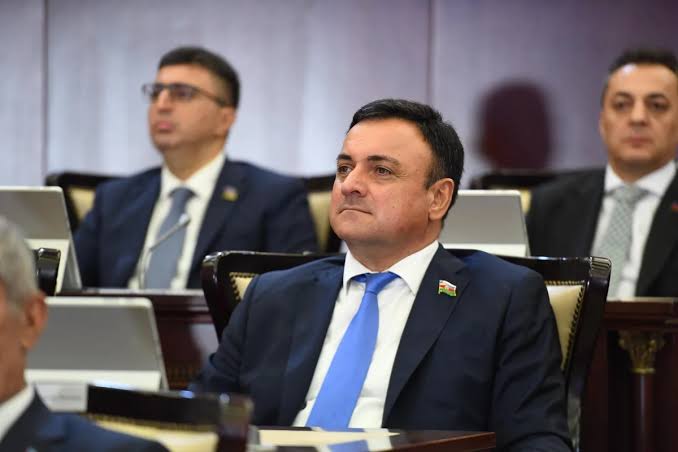
According to the MP, the legal status of the newly surfaced territories must be determined based on the requirements of land and water legislation. He noted that the parts of the Caspian Sea belonging to Azerbaijan, including water fund lands and the 20-to-50-meter coastal strip, fall under state ownership. Therefore, the retreat of water does not mean these areas automatically transition into private or municipal property.
Muradov believes that the new coastline must first be determined through geodetic measurements, newly exposed areas entered into cadaster records, and their ecological condition thoroughly assessed. Factors such as soil salinity, pollution levels, ground stability, impact on biodiversity, and the likelihood of future re-submersion must be taken into account. Only then can decisions be made regarding whether these lands should remain within the water fund, be included in protection zones, or be utilized for other purposes.
Lawyer Alimammad Nuriyev emphasized that the areas uncovered by the sea cannot be treated as “ownerless land.”
“The sea has retreated and land that was underwater until yesterday has turned into dry land, but this does not mean the property automatically belongs to anyone. An owner of land or a property on the coast cannot stake a claim of ownership to the new area in front of them. There is no legal basis for this,” the lawyer stressed.
Nuriyev noted that existing legislation does not fully regulate lands exposed by the natural recession of the sea as a distinct legal concept. In the initial stage, these areas must undergo inventory, their boundaries and coordinates defined, changes to the coastline formalized, and the data reflected in the State Land Cadaster.
The lawyer believes that if the drop in the Caspian’s level takes on a long-term character, the creation of a separate legal mechanism for these naturally exposed lands may come onto the agenda.
“I do not consider the creation of a separate government agency to be the primary issue right now. The main issue is defining the legal regime of these lands: which areas can be introduced into economic circulation, which parts should be protected for ecological and recreation purposes, where the new coastal strips should be calculated from, and where construction should be permitted,” Nuriyev said.
According to the legal expert, a weakening of control over the process could lead to spontaneous land seizures, illegal construction, and property disputes in the future. Once the state determines the legal status, formalizes boundaries, and decides on permissible land use, discussions regarding the leasing, construction, or other forms of utilization of these areas can proceed.