



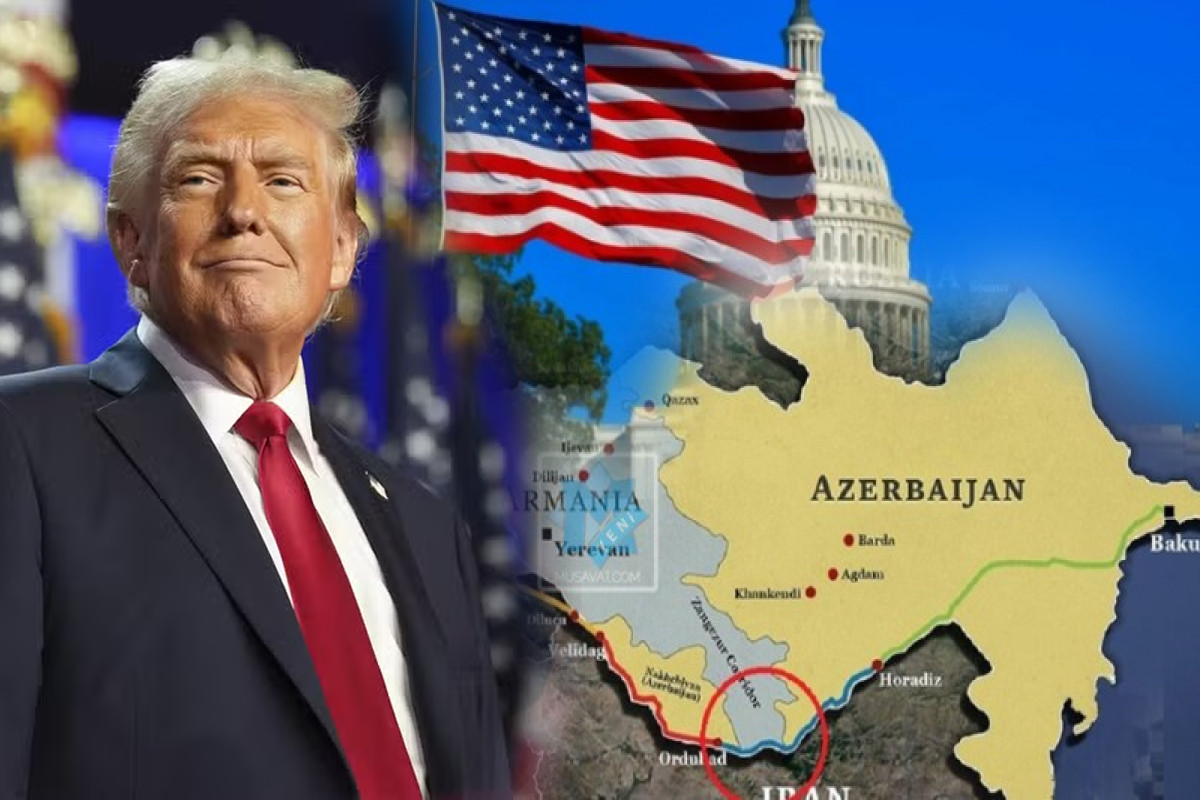
Sea-news.az presents an article from the Kaspi newspaper examining ongoing developments regarding the Zangezur corridor formally designated as the Trump Route for International Peace and Prosperity (TRIPP)—which serves as a key pillar in the normalization process between Azerbaijan and Armenia.
Recent high-level discussions, including the meeting between President Ilham Aliyev and Armenian Prime Minister Nikol Pashinyan in Bishkek, have heavily focused on advancing the corridor initiative.
Azerbaijani Foreign Minister Jeyhun Bayramov noted in a media statement that core negotiations regarding TRIPP are primarily conducted between the United States and Armenia, given that a segment of the project crosses Armenian territory. At the same time, U.S. partners maintain regular channels of communication, keeping Baku fully informed of progress. Because the corridor’s entry and exit points are anchored at the Azerbaijani border, execution remains impossible without Baku’s direct participation.
Highlighting the projected timeframe, the minister stated:
“Recent information indicates that the process will kick off in 2027.”
Minister Bayramov added that while certain preparatory agreements require time to formalize, Azerbaijan is actively pressing forward with its domestic obligations, including railway restoration work within the Nakhchivan Autonomous Republic ordered by the head of state. International partners interested in joining the infrastructure initiative are also engaged in ongoing talks.
A crucial component of the TRIPP framework involves the delimitation of state borders. While specific coordinates for the corridor’s entry and exit terminals are still under active discussion, the broader approach to border delimitation has been agreed upon by Baku and Yerevan.
According to the Foreign Ministry, both sides share a mutual understanding to advance delimitation systematically from north to south, starting from the more complex northern border point where the borders of Azerbaijan, Armenia, and Georgia intersect. Specific technical details concerning the corridor segments will be finalized through the joint work of the respective delimitation commissions.
Positive signals have similarly emerged from Yerevan. Speaking to journalists, Sargis Khandanyan, head of the Armenian parliament’s standing committee on foreign relations, acknowledged that partial local delimitation along prospective railway and pipeline paths could occur as TRIPP implementation moves forward, while maintaining the overall north-to-south regional framework.
The United States continues to play a leading diplomatic role in coordinating the TRIPP initiative. Washington’s active engagement has accelerated prospects for realizing the Zangezur corridor.
Diplomatic momentum was further underscored by recent high-level contacts. On September 8, Azerbaijani Deputy Foreign Minister Elnur Mamedov met with David Allen, U.S. Chargé d’Affaires in Armenia, to discuss bilateral normalization steps, long-term regional stability, and the establishment of the TRIPP Development Company, which will oversee infrastructure construction. Prior to visiting Baku, Allen—accompanied by State Department Senior Advisor for Policy Planning Jonathan Askonas—visited Armenia’s Syunik province to inspect route development and consult with local community representatives.
Through Baku’s steadfast political will, flexible diplomacy, and coordinated international engagement, the Zangezur corridor project continues to transition from concept to tangible regional reality.



