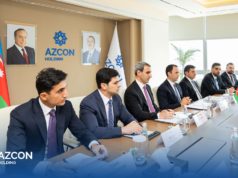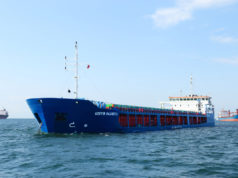

The U.S.-Georgia Business Council (AGBC), in partnership with the U.S.-Azerbaijan Chamber of Commerce (USACC), is set to host a high-level roundtable dedicated to development prospects for the Middle Corridor (Trans-Caspian International Transport Route).
Sea-news.az reports citing USACC, that World Bank Regional Director for the South Caucasus, Roland Price, will serve as the keynote speaker at the event.
Strategic Focus on the Trans-Caspian Route
Discussions will center on the growing significance of the Middle Corridor as a vital trade and transportation artery linking Central Asia, the South Caucasus, Turkey, and Europe. Participants will place special emphasis on strengthening regional connectivity, boosting trade and investment flows, and deepening economic cooperation among nations along the route.
The World Bank emphasizes that unlocking the full potential of the corridor requires targeted investments in railway infrastructure, port capacities, and intermodal logistics complexes. Key prerequisites also include streamlining border management procedures, enhancing logistical coordination, and accelerating the adoption of digital technologies.
Cargo Volume Growth and Projections
Statistical data from the Ministry of Transport of Kazakhstan highlight a steady upward trajectory in cargo traffic along the route:
- 2019: 759,000 tons
- 2020: 783,000 tons
- 2021: 586,000 tons
- 2022: 1.485 million tons
- 2023: 2.764 million tons
- 2024: 4.484 million tons
According to the Organization of Turkic States (OTS), cargo transport volumes along the Middle Corridor reached 4.7 million tons in 2025, with an anticipated 10% growth projected through 2027.
By 2027, the route’s throughput capacity is projected to reach 10 million tons per year, significantly strengthening Azerbaijan’s transit potential and laying the groundwork for fresh investments in regional infrastructure projects. The long-term target for freight transportation along the Trans-Caspian International Transport Route is set at 11.4 million tons by 2030.