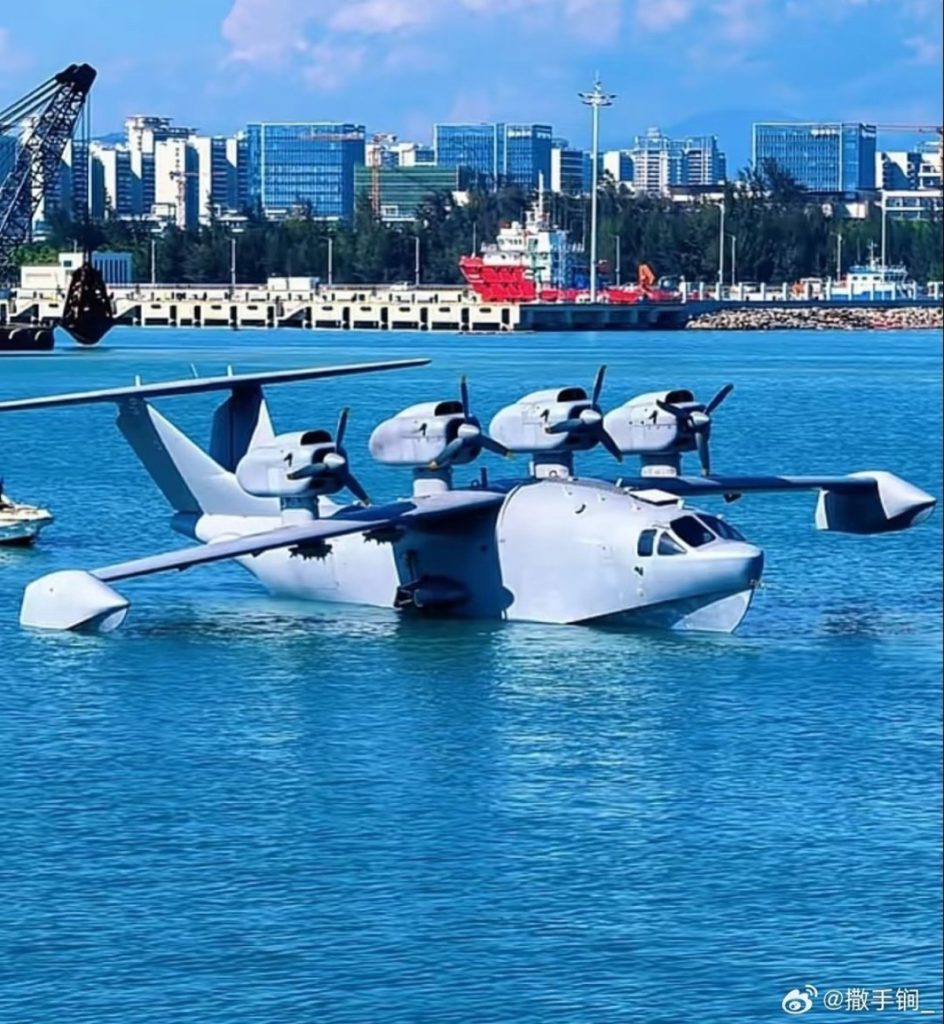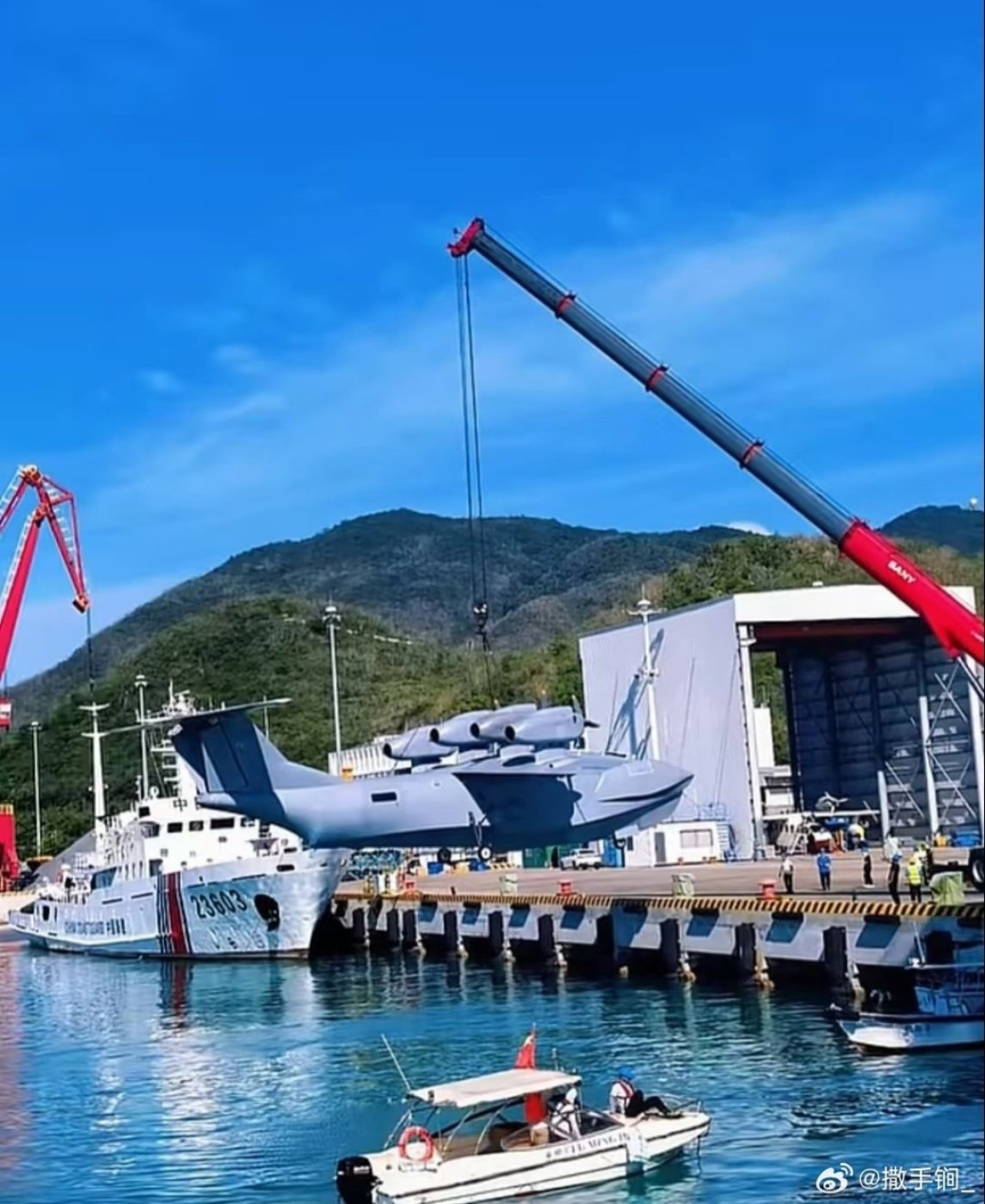
A model of the giant ekranoplan developed in the USSR in the late 1950s and early 1960s, dubbed the “Caspian Sea Monster” by the US Central Intelligence Agency (CIA), has been “resurrected” in China 60 years later.
Sea-news.az reports that US intelligence is currently in confusion regarding the purpose for which China has developed this model.
Ekranoplans are low-flying craft that fly directly above the water surface and combine the characteristics of ships, aircraft, and hovercraft.
According to Newsweek, in the late 1950s, US intelligence analysts observed a strange flying craft standing on the Caspian coast near a bridge. It resembled a modified Tu-95 “Bear” bomber equipped with floats.
Later, in 1966, an even larger and much more dangerous-looking craft appeared. In August 1967, new satellite imagery finally allowed American analysts to clearly see the Soviet-built aircraft. They saw the heaviest “aircraft” in history—a giant machine weighing over 600 tons from nose to tail.
Technically speaking, this was not an aircraft at all. It was a flying craft operating on the “surface effect” principle and known as an ekranoplan. It was designed to skim across the water surface and attack US ships at high speeds. Designers named it “Lun.”
This autumn marks 60 years since flight tests of that craft began. However, its history ended tragically. In December 1980, the craft crashed and sank into the water during a test flight.

Its designer, Rostislav Alekseyev, was injured during the ekranoplan’s tests in January of that year. A few days later, he was removed from his post as chief designer and passed away in February. Thus, the “monster” outlived its creator by only 10 months.
Following the end of the Cold War, the giant ekranoplan remained neglected on the shores of the Caspian Sea for some time. However, the “Caspian Sea Monster” periodically drew the attention of international media specializing in military and security issues.
Last year, reports emerged about the “resurrection of the monster in China.” The release of a blurry photo of a Chinese ekranoplan resembling the “Caspian Sea Monster” sparked a broad resonance on social networks and in international analytical circles.
Initially, the aircraft was dubbed the “Bohai Sea Monster” based on the area where its first photograph was taken in July 2025. The photo was captured in the northwestern part of the Yellow Sea. The initial, grainy, and incomplete image depicted a large four-engine flying craft moving over the water near a Chinese sea port. Analysts were able to determine only its main structure.
The second sighting in May 2026 revealed the clearest image of the craft to date. The image published by military analyst Andreas Rupprext on the “X” social network sparked great interest and astonishment.
According to the aviation-focused publication MiG Flug, the clearer photos show four suspension points under the wings. Two of them are clearly equipped with pylons under the right wing. Symmetry suggests the presence of two more such suspension points on the left wing.
These are not merely the characteristics of an ekranoplan intended for cargo transport. We are talking about attachment points designed for the placement of weapons—a detail first highlighted by Andreas Rupprext.
The second sighting confirmed another detail. Comparing it with the port infrastructure in the background, observers now believe it is significantly smaller than the Soviet “Lun” ekranoplan, which was approximately 73 meters long.
The recently discovered Chinese flying craft is not just a concept. It genuinely exists—a large-hulled craft designed for military purposes, painted in a low-visibility gray color, and equipped with four powerful jet engines placed above short wings.
The T-shaped tail construction with two vertical stabilizers indicates that it was created to ensure stability during flight close to the ground surface rather than maneuvering at high altitudes.
Ekranoplans fly just a few meters above sea level. One of their most important features is that they remain undetected by most radar systems.
Such a craft can move at a speed of 400–500 kilometers per hour, fly just 1–5 meters above the water, and transport cargo that would otherwise require a landing craft. The newly discovered weapon pylons on it indicate that a strike function is also intended.