
Azerbaijan’s strategic role in the development of the Middle Corridor is explained through the prism of neorealism in international relations theory. Anarchy in the global system and geopolitical shifts in the balance of power compel states to maximize their geostrategic opportunities to protect their foreign security, sovereignty, and strategic interests.
Sea-news.az reports that, in a statement to AZERTAG, international relations expert Bayram Aliyev noted that the weakening of the Northern transport route due to geostrategic risks against the backdrop of the Ukraine crisis has sharply increased the need for alternative transport and logistics lines in the Eurasian space. Under these structural changes, Azerbaijan uses its favorable geographical location as a geostrategic tool to strengthen its maneuvering capabilities among regional powers and its national security.

Middle Corridor and Azerbaijan’s geoeconomic infrastructure
The Middle Corridor is a multimodal transport route connecting China and Central Asia with Europe via the Caspian Sea basin, the South Caucasus, and Turkey. In this system, Azerbaijan acts not only as a geographical bridge, but also as an important initiator and transit country:
- Infrastructure investments: Large-scale investments in the Baku-Tbilisi-Kars railway, the Baku International Sea Trade Port, and modern road and maritime transport infrastructure have strengthened the country’s geoeconomic position.
- Expansion of the Baku Port: Within the framework of the second phase, it is planned to increase the port’s cargo handling capacity to 25 million tons and container handling capabilities to 500,000 TEUs.
- Strengthening of the BTQ line: As a result of modernization on the Georgian section of the Baku-Tbilisi-Kars railway, its annual throughput capacity has been raised from 1 million tons to 5 million tons.
- Zangezur corridor: The Zangezur corridor, to be realized via Nakhchivan, will further increase the route’s alternative options and cargo transportation capabilities.
Marine-logistics integration with Central Asia
Azerbaijan’s cooperation in the transport and logistics field with Central Asian states (Kazakhstan, Uzbekistan, Turkmenistan) has moved to a qualitatively new stage. Through the “Middle Corridor Multimodal Ltd.” joint venture established with Kazakhstan and Georgia, a unified tariff policy is being formed and the uninterrupted movement of block trains is ensured.
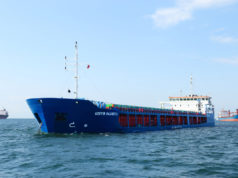
The expansion of ferry transport integrated with the Aktau, Kuryk, and Turkmenbashi sea ports, as well as the renewal of the tanker and ferry fleet of the “Azerbaijan Caspian Shipping” (ASCO), sharply increases the capabilities of the marine component of the Middle Corridor. For landlocked Uzbekistan and Kyrgyzstan, Azerbaijan’s infrastructure acts as the main transit gateway for access to European markets.
According to the expert, reducing cargo transit times from 35–45 days via maritime routes to 12–15 days through the Middle Corridor ensures the route’s competitive advantage in transporting high-value cargo. Meanwhile, the Alat Free Economic Zone serves the processing of raw materials and the formation of value-added production chains.