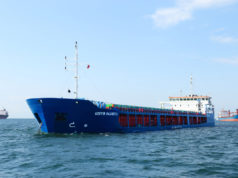

The ongoing military tension in the Middle East and the intensification of the Russia-Ukraine war in the Black Sea waters have caused serious problems in the global economy, particularly in the fields of maritime logistics and food security. While the crisis in the Middle East negatively affects energy transportation by sea and oil and gas prices, the strikes on the commercial fleet and sea ports in the Black Sea have paralyzed grain transportation by sea, creating a risk of a sharp rise in prices in the global grain market.
Sea-news.az reports that the mutual strikes inflicted by Russia and Ukraine on each other’s maritime and transport infrastructures, as well as logistics chains, have first of all weakened maritime transit and reduced production in agricultural sectors.
The targeting of grain-carrying cargo ships (bulk carriers/dry cargo) in the Black Sea waters via unmanned aerial vehicles (UAVs) has minimized navigation safety at sea. It is reported that nearly 200 Russian cargo ships have been hit and put out of action by Ukrainian UAVs so far. Against the background of these dangers, as shipowners refuse to enter the Black Sea, maritime freight tariffs have risen sharply, and the price of 1 ton of grain in international markets has reached $370, approaching a record high.
According to the analysis of the Belgian publication “EUalive.net,” because the grain terminal of the Taman sea port, located on the coast of the Sea of Azov and being one of Russia’s main maritime grain hubs, was seriously damaged by missile and UAV strikes, Moscow is forced to seek alternative, longer, and more expensive logistic routes to transport grain by sea. This will further increase maritime transport and insurance costs, as a result of which it is forecasted that the price of 1 ton of grain transported by sea will exceed $400 in the near future.
Along with the crisis in maritime logistics, domestic production capabilities in both countries have also been limited:
- Ukraine: A part of the grain-sowing areas is under occupation, while active military operations in other parts have suspended the activities of farms with access to the sea.
- Russia: Ukraine’s disabling of more than 30 Russian oil refineries (ORs) with UAVs has created a serious fuel shortage in the country. This makes it difficult to provide fuel for agricultural machinery harvesting grain, leading to the crop perishing in the fields.
The grain shortage in the market and the increase in the cost of maritime transport will first of all deal a major blow to Middle Eastern and African countries that are directly dependent on Russian and Ukrainian grain. Although Middle Eastern states can finance purchases by sea even at high prices, African countries with weak import capabilities face a severe humanitarian and food crisis in the coming years. The rise in the price of food products is also considered inevitable for traditional maritime importers such as Turkey, Egypt, Iran, and North African countries.