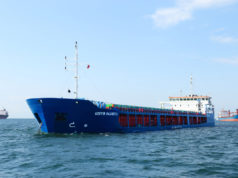

Russia has announced that it has drastically strengthened protection measures for commercial and cargo ships in the Azov-Black Sea basin and is developing alternative land-sea transport routes in parallel. This decision was made against the background of a sharp increase in attacks on ships and port infrastructure in the maritime waters of the Ukraine conflict zone.
Sea-news.az reports that the Ministry of Transport of the Russian Federation stated that due to the tension caused by drone attacks on ships in the Azov Sea, a special working group has been created to find new routes and redirect cargo flows to other modes of transport.
The official statement notes: “A number of stevedore and logistics companies have already stated their readiness within their operational capabilities to handle additional cargo volumes at their terminals and increase transportation speeds. Together with the Ministry of Defense, additional comprehensive measures are being implemented to ensure navigation safety and protect commercial vessels in the Azov-Black Sea maritime basin.”
Russia, the world’s largest wheat exporter, and Ukraine, a major agricultural supplier, have been striking each other’s maritime export facilities and transport vehicles in the Black Sea waters in recent weeks. This maritime crisis is causing a sharp rise in wheat and food prices on global exchanges.
Russia’s main grain lobby group has warned that Ukraine’s drone attacks on Russian vessels and port terminals could completely halt maritime grain exports via the Black Sea in the near future, drive up maritime freight rates, and lead to massive food shortages in Africa and the Middle East.
For its part, the Ukrainian Agrarian Council (UAC) also emphasized that Russia’s attacks in recent weeks near the port of Odesa and the Yuzhny sea ports, which endanger navigation, have restricted maritime exports during the main harvest period and negatively impacted the global food chain.