



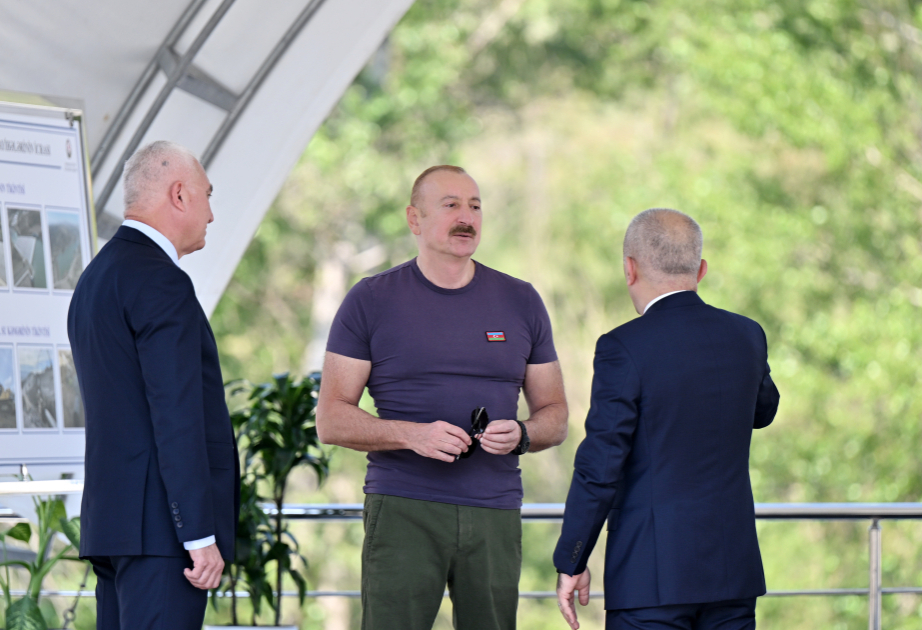
President Ilham Aliyevs latest visit to Karabakh and East Zangezur has once again demonstrated the scale of the restoration and reconstruction process in the liberated territories, as well as the successful implementation of the “Great Return” Program. During the visit, the head of state inaugurated strategic projects for the social, economic, tourism, and energy sectors in Khojavand and Lachin districts, as well as in the city of Shusha, and laid the foundations for new infrastructure facilities.
According to sea-news.az that the President’s visits to the villages of Kuzeykhirman and Guneykhirman in the Khojavand district, as well as to the village of Kichik Galadarasi in Shusha, highlighted the effectiveness of the work being carried out to revitalize these settlements. The establishment of a modern road-transport network and the full provision of electricity, water, gas, and communication services have created a foundation for accelerating the resettlement process.
During the visit, President Ilham Aliyev engaged directly with residents who have returned to their native lands, visiting their homes to inquire about their living conditions, employment opportunities, and their children’s education. The citizens’ satisfaction with the new conditions once again confirms that the “Great Return” process is yielding successful social outcomes.
The development of tourism infrastructure constitutes a leading line in the economic revival of Karabakh. The official openings of the “Khankendi” hotel and the new wings of the “Yasaman” hotel in Shusha serve directly to expand the region’s service sector and create new jobs. The commissioning of the restored house of the prominent musician Sadigjan in Shusha was another significant step, not only in preserving historical and cultural heritage but also in increasing the city’s tourism appeal.
On the other hand, projects implemented within the framework of public-private partnerships on Karabakh Street in Shusha demonstrate the increasing share of the private sector in the region’s development. This model shows that both state funds and business investments are being used effectively in the restoration of the territories.
In line with Azerbaijan’s green energy strategy, the most significant infrastructure steps of the visit were taken in the Lachin district. Hydroelectric power plants installed on the Hochaz River in Lachin were put into operation, strengthening the region’s sustainable and eco-friendly energy supply. This massive hydro-technical facility will serve to manage the region’s water resources on a scientific basis, promote agricultural development, and improve the irrigation of arable lands.
In conclusion, this multi-faceted visit and the groundbreaking ceremonies prove that the restoration process in Karabakh and East Zangezur is no longer just reconstruction; it has entered a new, high-quality phase where economic activity and prosperous living conditions are fully ensured in accordance with modern urban planning principles.



