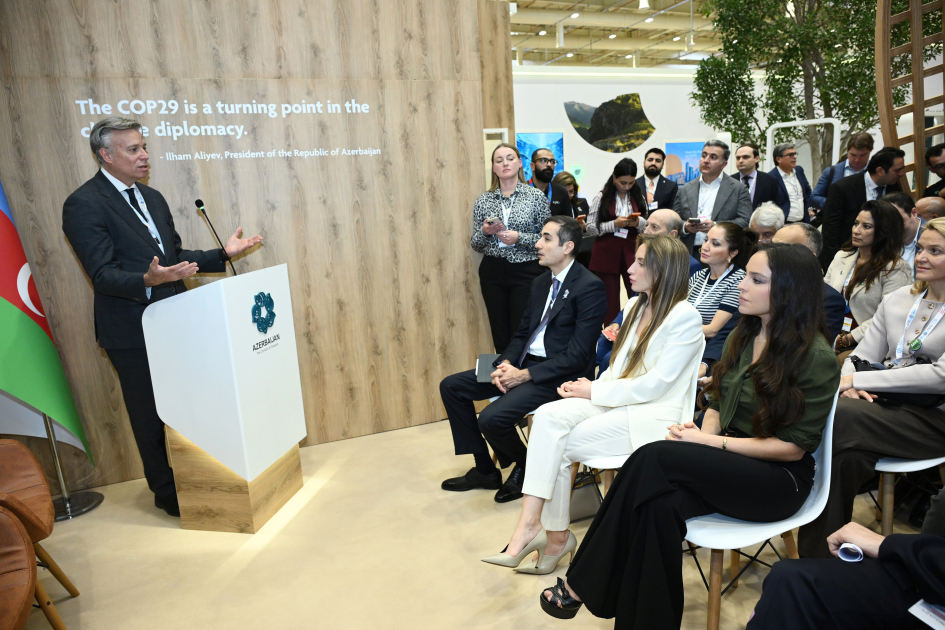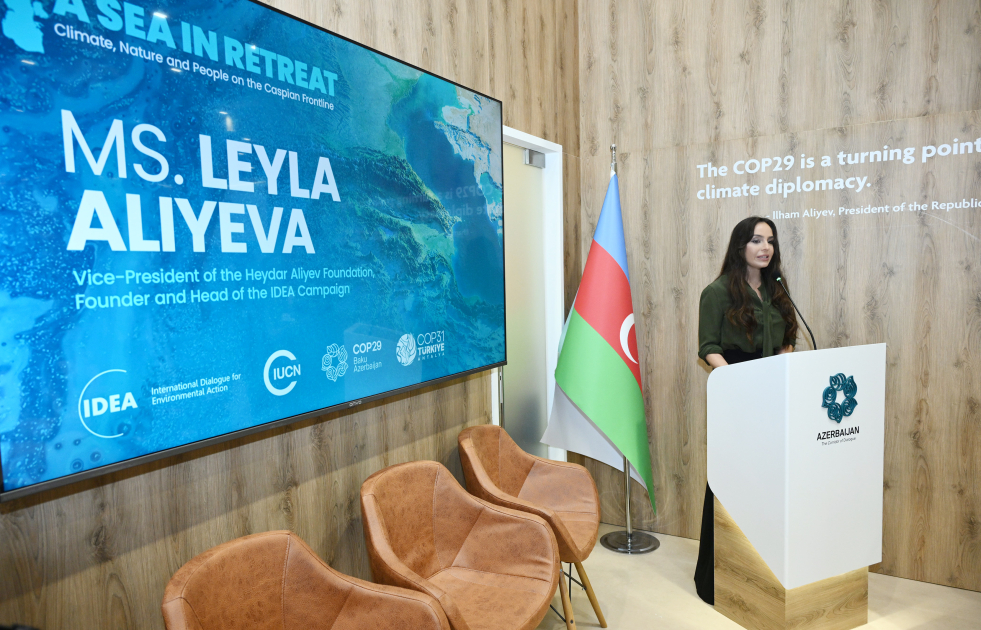
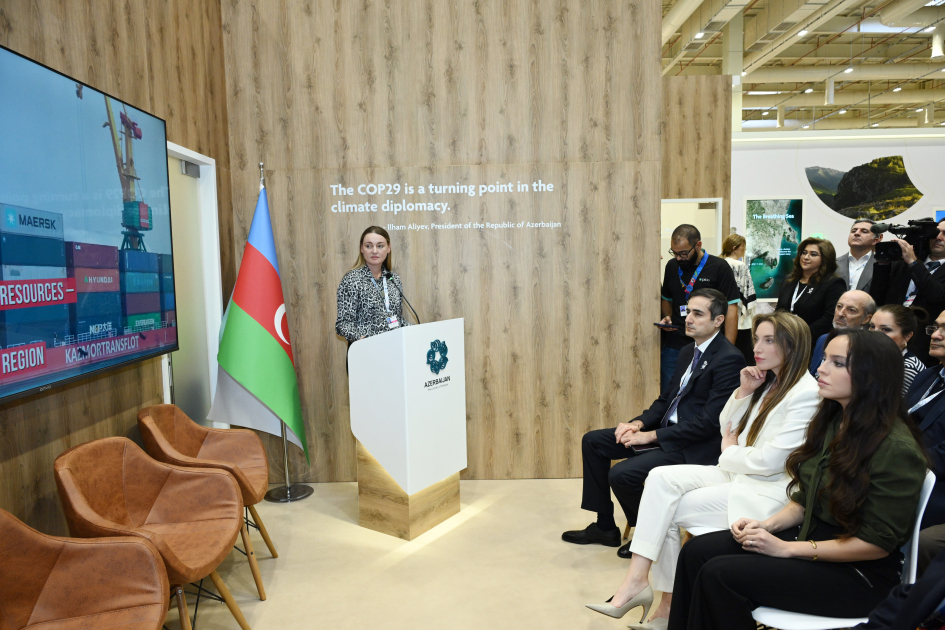
Within the framework of the 31st session of the Conference of the Parties to the UN Framework Convention on Climate Change (COP31), an event titled “A Receding Sea: Climate, Nature and People in the Caspian Region” was organized in partnership with the IDEA Public Union and the International Union for Conservation of Nature (IUCN).
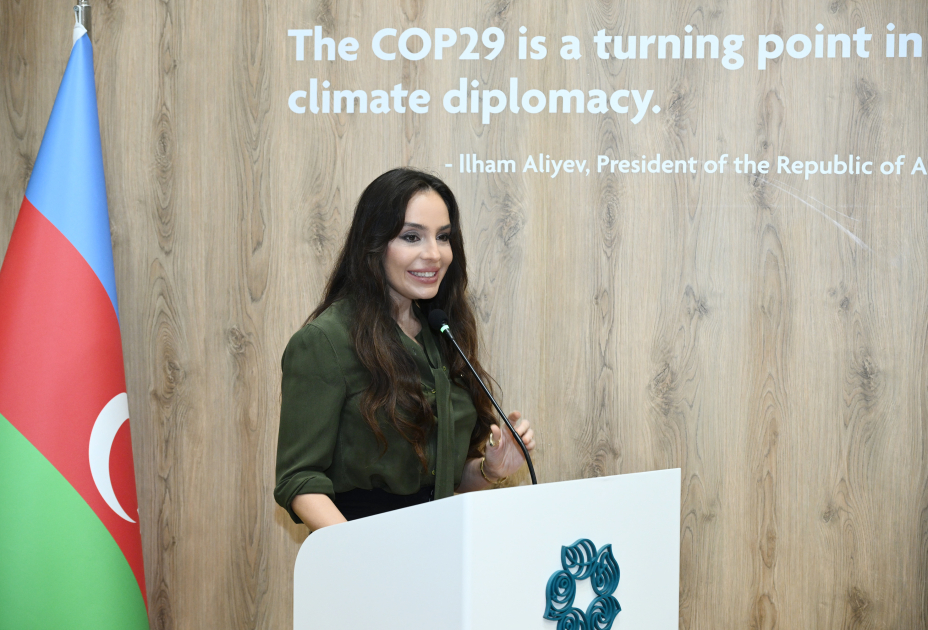
Sea-news.az reports that speaking at the opening of the event, Vice-President of the Heydar Aliyev Foundation, Founder and Head of the IDEA Public Union Leyla Aliyeva noted that the declining water level of the Caspian Sea threatens the survival of rare species inhabiting the area, including sturgeon and Caspian seals. She emphasized the importance of expanding scientific research, international cooperation, and joint action to address the sea’s environmental challenges.
Touching upon the projects implemented by the IDEA Public Union in this field, Leyla Aliyeva stated that scientific expeditions have been organized to investigate the causes behind the decline in the Caspian seal population, and fingerlings of various fish species have been released into water bodies to replenish fish stocks.
Leyla Aliyeva also provided information on IDEA’s coastal cleanup initiatives along the Caspian Sea. It was noted that since 2011, nearly 7,000 volunteers have joined coastal cleanup campaigns, collecting and sending over 120 tons of waste for recycling. Stressing that the future of the Caspian Sea depends on decisions made today, she called for protecting its rich nature for future generations.
Stewart Maginnis, Deputy Director General of IUCN, and Dario Liguti, Director of the Sustainable Energy Division at the United Nations Economic Commission for Europe (UNECE), also addressed the opening session.
The subsequent panel discussions featured Elnur Safarov, Caspian Research Expert at the IDEA Public Union; Simon Goodman, representative of the University of Leeds (UK); Michael Fishbach, Co-Founder and Executive Director of the Great Whale Conservancy; and Alexandre Hedjazi, representative of the University of Geneva and Chair of the Caspisnet network.
During the discussions, participants exchanged views on climatic factors driving the drop in the Caspian Sea’s water level, biodiversity conservation, adapting marine ecosystems to changing conditions, and strengthening regional cooperation.
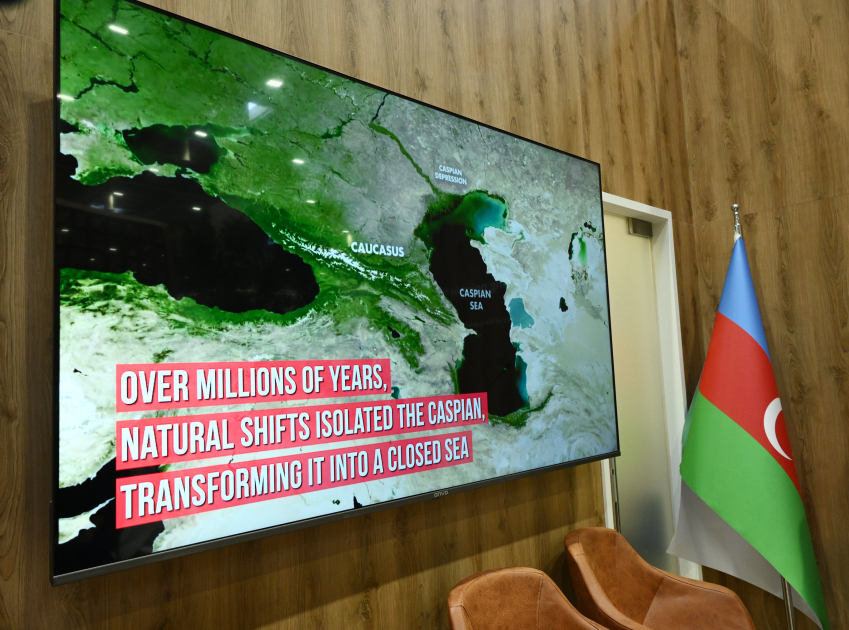
A short documentary film produced by the IDEA Public Union dedicated to the current ecological state of the Caspian Sea was also screened during the event.