Sea-news.az reports citing Report news agency, that Mukhtar Babayev, the Representative of the President of Azerbaijan on Climate Issues, made these statements during a session titled “Water Security at Scale — From Water Priorities to Bankable, Climate-Resilient Infrastructure” held at the Azerbaijan Pavilion during COP31.
According to him, a significant portion of Azerbaijan’s water resources originates beyond its borders, making transboundary cooperation critically important:
“Baku and the Absheron Peninsula also rely on external sources beyond the peninsula for fresh water supply. Therefore, diversifying these supply sources lies at the core of our long-term sustainability.
Under the leadership of President Ilham Aliyev, the State Program on Improving Water Supply, Wastewater, and Stormwater Systems in Baku City and the Absheron Peninsula covering 2026–2035 has been adopted in Azerbaijan. This program aligns infrastructure investments with more efficient water utilization and alternative supply sources.”
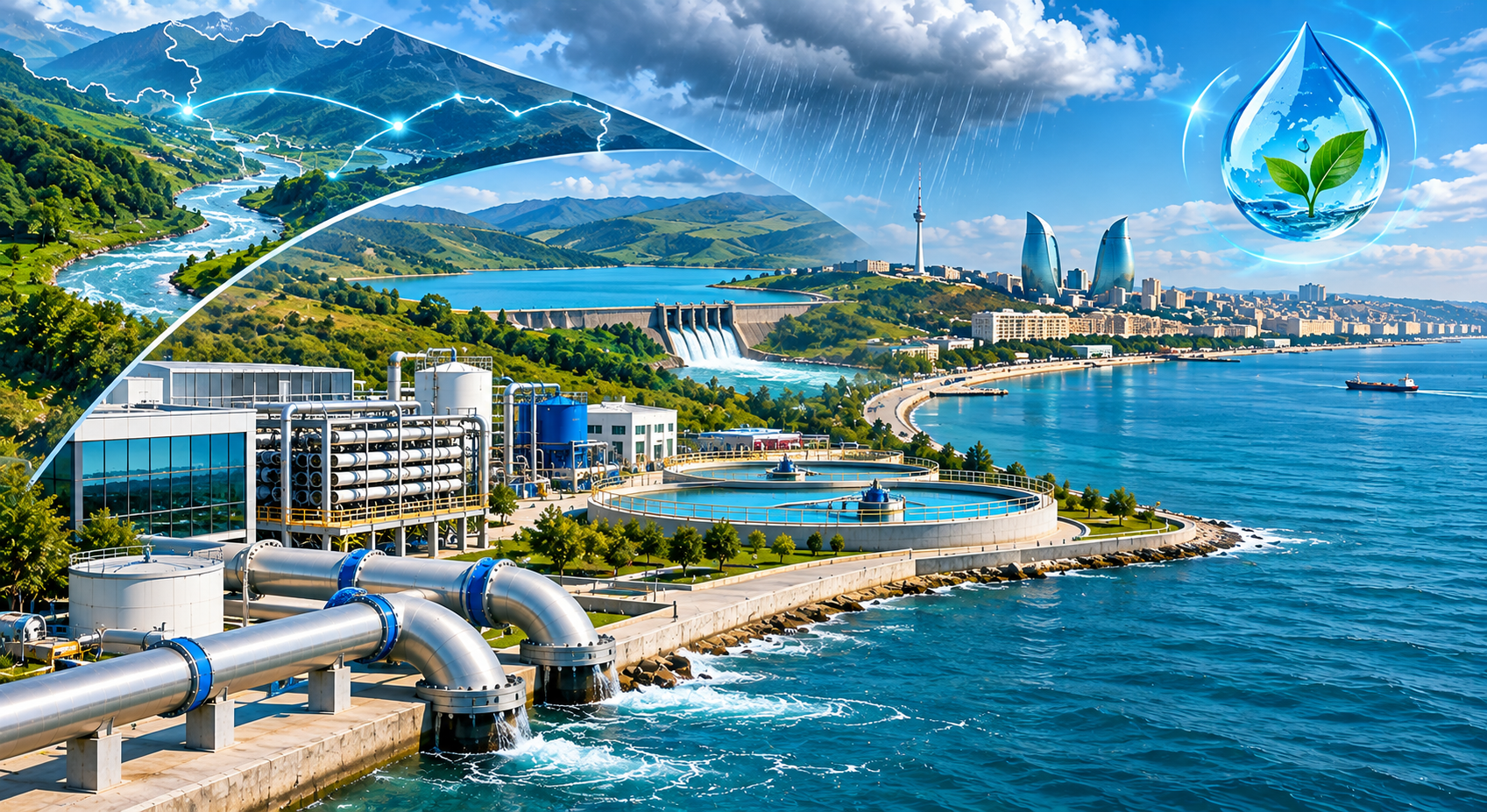
M. Babayev highlighted that the Caspian Sea desalination project, implemented in partnership with ACWA Power under a public-private partnership (PPP) model, puts this framework into practice:
“The planned capacity of the project is 300,000 cubic meters of potable water per day. By providing an additional water source for Baku and Absheron, this project will reduce reliance on existing fresh water reserves. It demonstrates how international cooperation can directly support national adaptation priorities.
The state identifies public demand, while private investment and expertise assist in bringing this infrastructure into service. The primary objective must remain explicit: reliable and accessible water supply for the population.
At COP29, we worked to place climate finance at the center of international action. Water security illustrates precisely where that financing needs to be directed: upfront investment before water scarcity poses an immediate threat to vital services and economic stability.
I invite participating governments, business representatives, and financial institutions to explore how this experience can support the funding of similar projects in other nations facing water scarcity. Realizing national priorities requires partners who are prepared to assist in their financing and execution.
Our goal is to ensure a resilient water supply capable of withstanding the pressures of a changing climate.”