
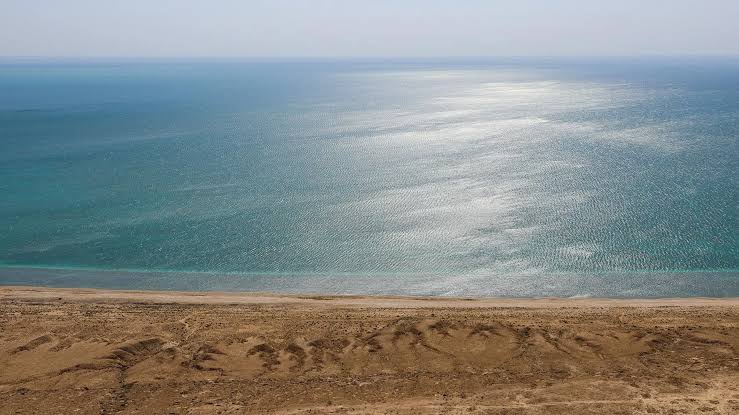
Sea-news.az reports that Between the 1930s and 1970s, a sharp decline in the level of the Caspian Sea was recorded. However, after 1977, a substantial rise in sea level prompted intensive scientific inquiry across various disciplines to determine its underlying causes.
Dr. Hasan Nabiyev, Senior Researcher at the Climate Department of the Institute of Geography under the Ministry of Science and Education, stated in a comment to AZERTAC that analytical disagreements arose among climatologists, hydrologists, and geologists during studies of Caspian Sea level variability. Climatologists and hydrologists attributed level fluctuations primarily to climate change dynamics within the basins of inflowing rivers, prioritizing the study of river discharge, direct precipitation over the sea surface, and evaporation rates. Conversely, geologists focused on vertical and horizontal tectonic movements along the seabed, sub-surface water absorption during alternating phases of crustal compression and expansion, as well as submarine groundwater discharge. Nabiyev emphasized that research in this domain must be integrated, with complementary approaches, as sea-level dynamics stem predominantly from water balance components alongside secondary geological factors.
According to the scientist, the Caspian Sea spans two distinct climatic zones—temperate and subtropical. The basin is systematically exposed to Arctic air masses, humid North Atlantic air currents, as well as subtropical air streams originating from the Mediterranean Sea and Asia Minor. These atmospheric interactions directly impact the moisture circulation over the Caspian and influence its overall water balance.
During winter, the convergence of contrasting air currents over the sea stimulates active cyclonic circulation, with an increased frequency of southern cyclones sweeping in from the Black Sea, Asia Minor, and the Eastern Mediterranean. Spring yields unstable and variable weather patterns as diverse air masses intrude upon the region. In summer, thermal gradients diminish, resulting in weakened atmospheric circulation.
Dr. Nabiyev noted that precipitation over the water body occurs predominantly when a mid-tropospheric high-pressure trough extends southward to the Caucasus and the Caspian, alongside a high-pressure ridge spanning from the Mediterranean to Scandinavia. Under these synoptic conditions, a broad surface anticyclone forms over Northern Europe, while cyclonic activity intensifies over the South Caucasus and the Caspian, creating favorable conditions for air mass intrusion and heavy rainfall.
“Cold-season precipitation accounts for 60 percent of the annual total falling on the Caspian Sea, while the warm period contributes 40 percent. Because direct atmospheric precipitation is lower in volume compared to total river inflow, its isolated effect on sea-level fluctuations remains secondary. Annual precipitation across the marine area averages 200 millimeters, with even lower values along the arid eastern coastline,” the scientist concluded.