



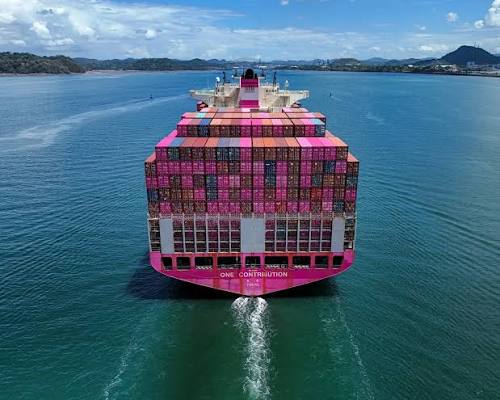
Despite ongoing risks to maritime transport, crude oil flows from the Middle East are returning to pre-war levels.
Sea-news.az reports that this is the view held by analysts at JPMorgan and Goldman Sachs.
According to JPMorgan analysts, the Middle East’s oil export arteries are flowing once again. Although the recovery process is not evenly distributed, it still represents a remarkable recovery for a region remains in a state of war.
It is reported that crude oil shipments in the region have reached 17.5 million barrels per day, or 98 percent of pre-war levels, while diesel and gasoline exports have reached 3 million barrels per day, representing 58 percent of pre-war levels. Over the past five days, compared to the 10-day average, the total volume stood at 89 percent of 2025 levels.
“Oil flows through the Strait of Hormuz, driven largely by Saudi Arabia, have returned to late-June levels of approximately 13 million barrels per day. However, the surge in shipments should not be interpreted as an improvement in security. On the contrary, it reflects the sector’s increased capability to operate under sustained risk,” analysts stated.
According to analysts from Goldman Sachs, one of the leading US investment banks, oil exports from the Gulf—including covert oil shipments known as “dark flows”—reached 23.3 million barrels per day over the past week, close to the 2025 average.
“In September, a gradual balance emerged in the global oil market. There is a contrast between Iran’s declining exports and the rising exports of other Gulf producers. Saudi Arabia’s exports more than doubled in September, rising above the 2025 average. Despite the recovery in Gulf exports, crude oil prices remain relatively high. We remain concerned about the potential for escalation that could further damage energy infrastructure,” Goldman Sachs analysts added.



