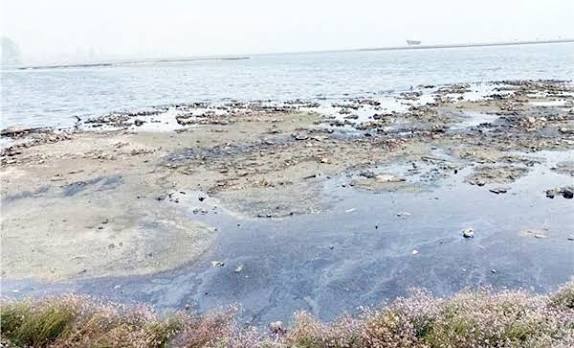
Declining water levels in the Caspian Sea severely impact shipping operations, warns ASCO official
The ongoing drop in the water level of the Caspian Sea is exerting significant negative pressure on maritime navigation and regional logistics. Currently, Azerbaijan Caspian Shipping CJSC (ASCO) cargo ferries are able to load only 80 percent of cargo capacities originating from Kazakhstan.
Sea-news.az reports that Alakbar Azizli, Director of Sustainability and Emissions Management at ASCO, made these remarks during panel discussions titled “Climate Change Challenges in Inland Water Bodies: The Case of the Caspian Sea” held within the framework of the Baku Climate Action Week.

According to Azizli, a 20 percent loss in cargo payload translates directly into severe financial repercussions:
“This is a pressing challenge not only for our shipping operations but equally for our commercial clients.”
Azizli noted that the situation is even more complex for the offshore support fleet operating across the Caspian. Specialized vessels—including reserve, supply, and geological survey ships—operate in close proximity to offshore platforms to service major energy operators in the basin.
“The exact same operational constraints are being observed in Turkmenistan, Kazakhstan, and at the Alat Port. We are simply unable to load vessels to full capacity,” the ASCO official stated.
He added that underwater remnants and pylons from decommissioned legacy drilling rigs pose an additional, critical hazard to navigation, substantially increasing the risk of hull damage.
“All of these factors combine to create daily hurdles, not just for ASCO, but for every market participant across the Caspian basin. This constitutes our primary risk and core operational bottleneck. On a daily basis, we strive to navigate our fleet with maximum safety protocols. Nevertheless, these risks persist, compounding the daily challenges we have faced over the past three to four years,” Azizli emphasized.
According to ASCO data, the water level in the Caspian Sea continues to recede by 15 to 20 centimeters annually. Experts warn that if this persistent downward trend continues, it will necessitate substantial structural adaptations across port infrastructure, shipping logistics, and allied coastal industries.