



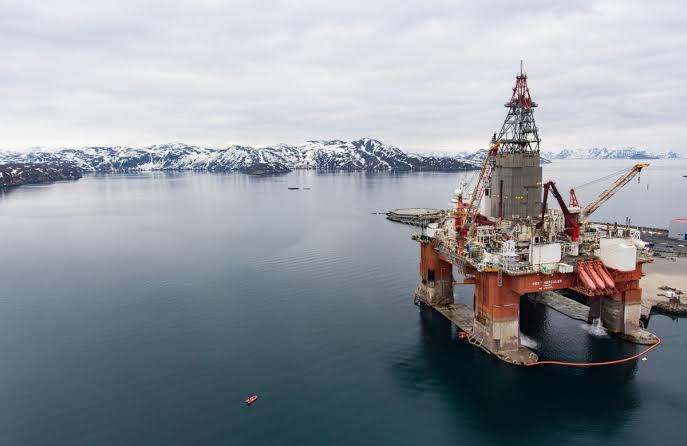
Despite the European Union’s ban on hydrocarbon supplies from the Arctic, Norway will continue to develop oil and gas reserves in the Barents Sea, with the Scandinavian nation no longer viewing itself solely as Europe’s “green battery.”
Sea-news.az reports that Norwegian Energy Minister Terje Aasland stated this in an interview with Reuters.
Following the outbreak of the Russia-Ukraine war in 2022, Norway became Europe’s largest natural gas supplier, meeting approximately 30 percent of the gas demand for both the European Union and the United Kingdom. Last year, Norwegian gas production approached record levels, while oil output reached its highest point since 2009.
However, Reuters notes that official projections indicate production will drop sharply after 2030 unless new reserves are discovered and developed.
“Taking into account the current geopolitical and security situation, as well as the reserve outlook, I believe that continuing activities in the Barents Sea serves the interests of both Norway and Europe,” Terje Aasland said on the sidelines of the biennial ONS energy conference in Stavanger, Norway.
Currently, the European Union supports banning new drilling operations in the Arctic for environmental reasons. Nevertheless, amid growing concerns over energy security, the bloc is reconsidering its policies.
According to the minister, Norway aims to maintain its oil production and export levels roughly where they are today through at least 2035, making exploration in the Barents Sea especially vital.
Norwegian officials argue that the open parts of the Barents Sea designated for oil production are ice-free, much like the North Sea, rendering them less vulnerable to oil spills and other environmental hazards. Furthermore, these industrial activities help preserve jobs and local populations in the country’s northern regions bordering Russia.
Alongside oil and gas, Norway generates an annual surplus of renewable energy through a vast hydroelectric power network utilizing extensive reservoirs and waterways, exporting this power to Europe via cross-border subsea cables.
While Norway previously marketed itself as Europe’s “green battery,” the minister noted that this concept is now outdated, as the nation alone cannot balance the entire European energy market.



