



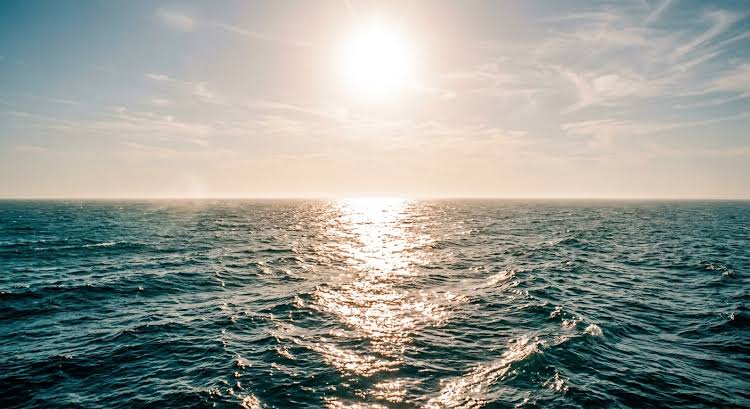
Scientists have determined that the waters surrounding Europe are warming at an accelerated rate due to climate change, intensifying impacts on nature, food systems, and coastal communities.
Sea-news.az reports that the international scientific group World Weather Attribution (WWA), comprising researchers from Switzerland, Sweden, the United States, Ireland, and Great Britain, analyzed the impact of climate change on rising sea surface temperatures.
According to the analysis, heatwaves were observed during the summer period across the region stretching from Ireland to the Mediterranean Sea, with sea surface temperatures in some areas exceeding the average by 6 degrees.
Scientists found that climate change driven by the use of fossil fuels has caused warming of approximately 2 degrees in the Mediterranean Sea, 1.4 degrees in the Bay of Biscay and surrounding areas of the Iberian Peninsula, and 1.3 degrees in the Celtic Sea region.
This year, 90% of the coastal areas in the Bay of Biscay and the Iberian Peninsula, 80% of the Western Mediterranean, and 70% of the Eastern Mediterranean are experiencing marine heatwave conditions. Studies show that without climate change, these figures would have stood at only 40% for the Bay of Biscay and the Western Mediterranean, and 9% for the Eastern Mediterranean.
Extremely high ocean temperatures can lead to the mass die-off of habitat-forming species such as corals, sponges, and macroalgae, which can trigger cascading effects throughout marine ecosystems. Marine heatwaves can also cause sharp declines in bird and mammal populations.
Friederike Otto, professor of climate science at Imperial College London’s Grantham Institute – Climate Change and the Environment, commented on the analysis, stating that seas are warming at a pace that outstrips global average temperature increases. “This situation directly impacts life both on land and at sea. By delaying our transition away from fossil fuels, we are pushing many ocean ecosystems closer to the brink of collapse,” she noted.



