



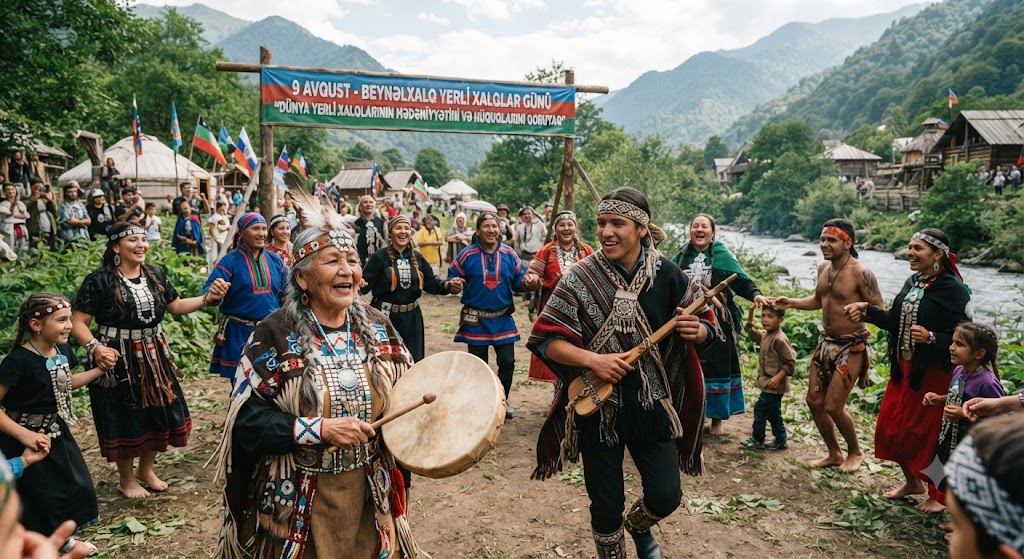
Every year on August 9, the International Day of the World’s Indigenous Peoples is observed in accordance with a relevant resolution adopted by the UN General Assembly in 1994. The goal is to respect the cultural heritage of indigenous peoples and draw global attention to the socio-economic problems they face.
Sea-news.az reports that there are currently approximately 476 million indigenous people living in 90 countries around the world. Although they make up 6 percent of the planet’s population, 15 percent of people living in global poverty belong to them.
According to the Declaration on the Rights of Indigenous Peoples adopted on September 13, 2007, the main criterion for considering any people as indigenous is that they consider themselves to be indigenous. The declaration recognizes their rights to freedom, to preserve their language and culture, and to own land and resources.
By decision of the UN, 2019 was declared the “International Year of Indigenous Languages,” and starting from 2022, the “International Decade of Indigenous Languages” (2022–2032) was launched based on UNESCO’s strategic roadmap.
The pandemic and global crises have further exacerbated the problem of the socio-economic isolation of indigenous peoples. Therefore, the UN calls on the international community to build inclusive social contracts and integrate indigenous peoples into decision-making processes.



