



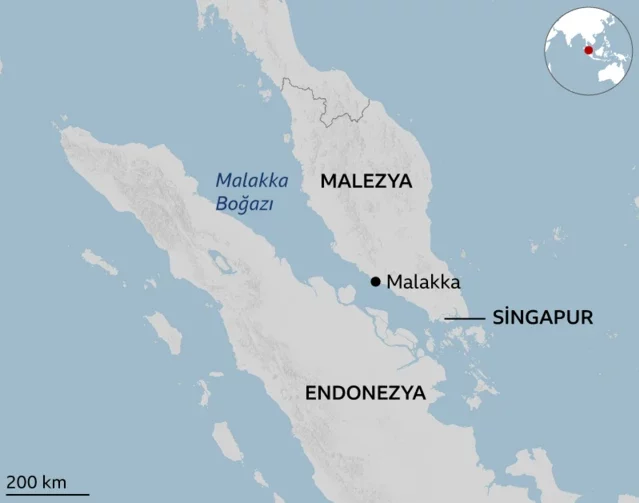
Markets are monitoring the situation in the Strait of Malacca with increasing concern, amid fears that transit fees or similar restrictions proposed for the Strait of Hormuz could also be applied to one of the world’s most critical global oil shipping routes.
According to sea-news.az that this is according to the OilPrice portal.
The article published by the portal notes that investors fear that if the collection of transit fees becomes a new norm in the Middle East, states along the Strait of Malacca might use this precedent to take similar action. In particular, there have been reports that Iran could impose high transit fees of $2 million on oil tankers passing through the Strait of Hormuz.
The Strait of Malacca is a waterway approximately 900 kilometers long, situated between the Malay Peninsula and the Indonesian island of Sumatra, bordering the coasts of Indonesia, Malaysia, and Thailand. It is the shortest maritime route connecting the Indian and Pacific Oceans. According to OilPrice, nearly 30 percent of global trade turnover and approximately half of all seaborne oil pass through this strait.
The article emphasizes that the Strait of Malacca is also the shortest route for transporting Middle Eastern oil to East Asia, supplying energy to the region’s largest economies, such as China, Japan, and South Korea.
In the event of the strait’s closure, tankers would be forced to navigate around Australia. According to OilPrice estimates, this would increase travel time by 10–15 days and significantly drive up fuel costs.



