The decline in the water level of the Caspian Sea, the world’s largest enclosed body of water, is no longer considered a temporary phenomenon but a long-term and persistent trend. According to a report by the United Nations Environment Programme (UNEP), a significant portion of the Caspian Sea could disappear in the coming decades.
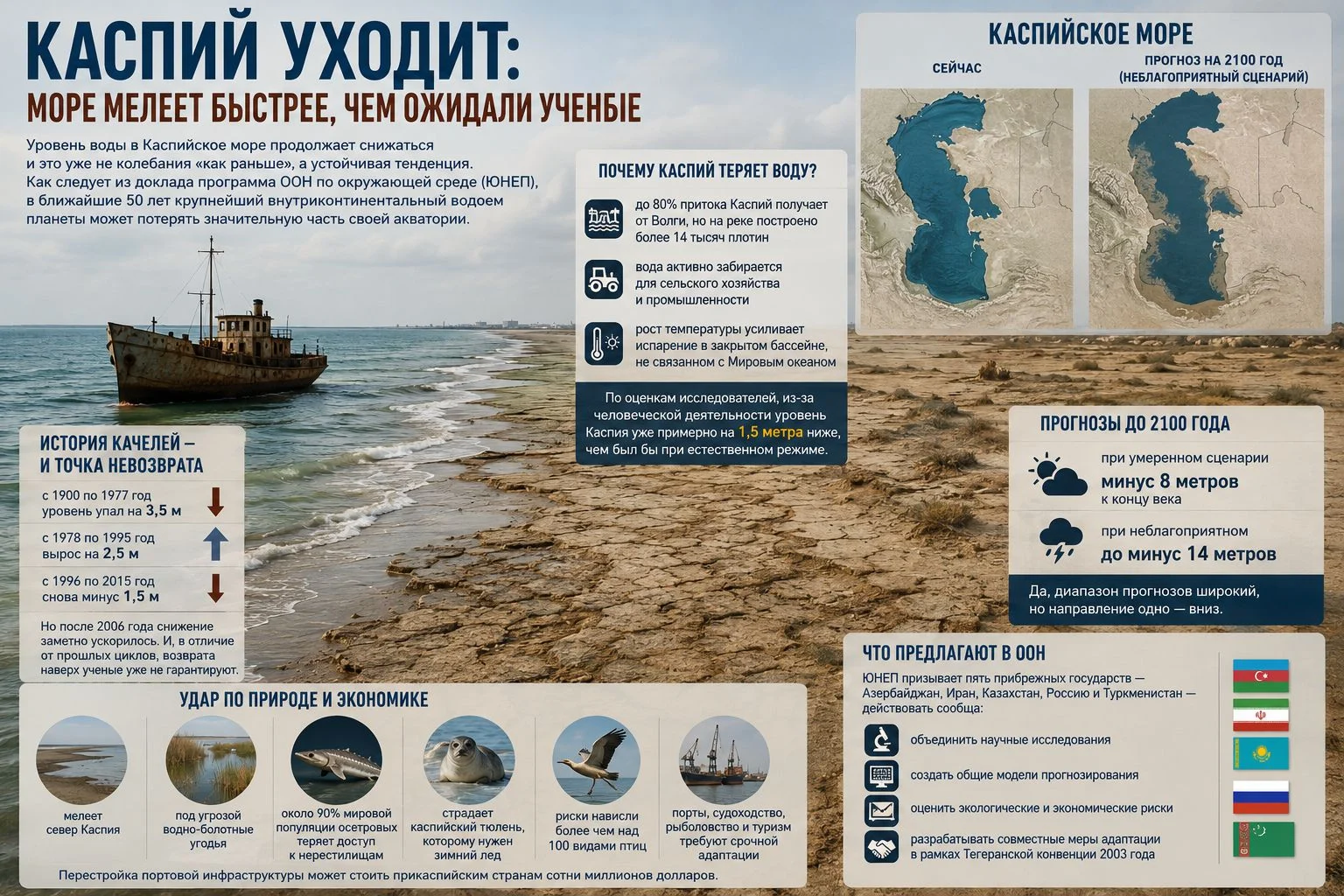
According to sea-news.az experts attribute the problem primarily to reduced inflow from the Volga River, the construction of thousands of dams across the river basin, intensive water use for agriculture and industry, and increased evaporation caused by global warming. Estimates suggest that human activities have lowered the Caspian Sea’s level by approximately 1.5 meters beyond what would have occurred under natural conditions.
Historical observations show that the Caspian Sea has undergone several major fluctuations over the past century. Between 1900 and 1977, the sea level fell by 3.5 meters; from 1978 to 1995, it rose by 2.5 meters; and between 1996 and 2015, it declined again by 1.5 meters. Scientists note that the retreat has accelerated since 2006, and unlike previous cycles, there are currently no signs of a significant recovery.
Climate models indicate that by the end of the century, the Caspian Sea’s level could fall by 8 meters under a moderate scenario and by as much as 14 meters under a pessimistic scenario, with serious environmental and economic consequences.
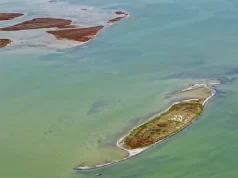
The northern part of the sea is already experiencing accelerated shallowing, putting wetlands and marsh ecosystems at risk. A large share of the world’s sturgeon populations is losing access to spawning grounds. The habitat of the endangered Caspian seal and more than 100 bird species is also under threat.
The falling water level is affecting economic sectors as well. Ports, shipping, fisheries, and tourism industries are being forced to adapt to changing conditions. Experts estimate that upgrading and relocating port infrastructure could cost Caspian littoral states hundreds of millions of dollars.
UNEP has called on Azerbaijan, Iran, Kazakhstan, Russia, and Turkmenistan to take coordinated action. The organization recommends strengthening scientific cooperation, developing unified forecasting models, conducting comprehensive risk assessments, and enhancing adaptation measures under the framework of the Tehran Convention.
Experts emphasize that the future of the Caspian Sea will depend on efforts to combat climate change, manage water resources more efficiently, and ensure close cooperation among the countries of the region.