The “Caspian Sea – Black Sea – Europe Green Energy Corridor” has the potential to become a sustainable source of export revenue.
Sea-news.az reports this was highlighted in a joint report titled “Energy Without Borders: The Architecture of Central Asian Energy Connectivity,” compiled by the Eurasian Development Bank, the “ENERGY” Coordination Dispatch Center, and the United Nations Economic and Social Commission for Asia and the Pacific (UNESCAP).
The authors of the report note that alongside its strategic significance, this route represents one of the most technically complex external transit vectors. The document stresses that the corridor should be viewed as a long-term strategic choice for exporting green power.
“This corridor is closely intertwined with the Middle Corridor strategy. It can enhance the investment appeal of renewable energy sources (RES), establish a robust export market, incentivize green electricity certification, and accelerate the technological modernization of national power grids. Provided that domestic grid and market infrastructure undergo proactive development, the corridor could turn into a resilient source of export earnings. Conversely, lagging domestic infrastructure could spark competition for transmission capacity, operational flexibility, and capital investments,” the report emphasizes.
Furthermore, the study underscores that green energy exports will require standardized certification rules, a registry for tracking energy origin, audit attestations, adherence to the principle of “additionality,” and volume alignment protocols.
“Without these mechanics, confirming the ‘green’ status of supplied energy to off-takers, European regulatory bodies, and international financial institutions will prove significantly more challenging,” the authors state.
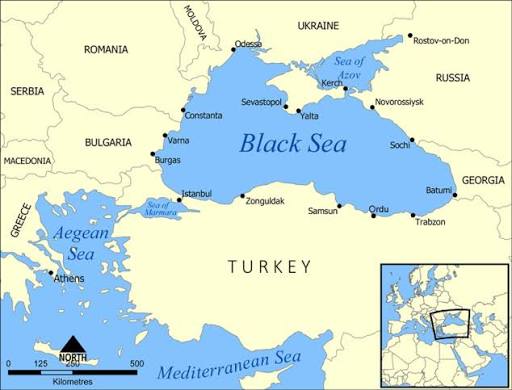
It should be noted that the “Caspian Sea – Black Sea – Europe Green Energy Corridor” is a cross-border power transmission initiative pursued jointly by Azerbaijan, Georgia, Romania, and Hungary. The foundation of the project was laid on December 17, 2022, in Bucharest through a Strategic Partnership Agreement signed in the presence of the European Commission.
The project envisions the creation of a transmission corridor with a total capacity of 3.9 gigawatts (GW), consisting of three power transmission lines rated at 1.3 GW each.
Project development is managed by the Bucharest-registered joint venture “Green Energy Corridor Power Company” (GECO), owned equally by the national transmission system operators of the four participating countries.
Each shareholder—Azerbaijan’s “AzerEnerji” JSC, Georgian State Electrosystem, Romania’s Transelectrica, and Hungary’s MVM—holds a 25 percent stake.
The project has been formally integrated into the European Network of Transmission System Operators for Electricity’s (ENTSO-E) 2026 Ten-Year Network Development Plan (TYNDP) under project reference numbers 1248 and 1244.
Total capital expenditure for the project is estimated at €22 billion. Of this amount, €14.3 billion will be dedicated to the power transmission infrastructure, while €7.8 billion will fund the construction of renewable power generation capacity.
The corridor is projected to reach its full operational throughput capacity by 2040.
The findings of the project’s technical and economic feasibility study were formally presented in Baku on October 22, 2026.