Today, the concept of the “Trans-Caspian Six” refers to the Central Asian republics alongside Azerbaijan, which together participate in and control all economic projects of international significance implemented across Eurasia.
Sea-news.az reports statement was made by Professor of Tashkent University and Doctor of Political Sciences Saifiddin Dzhuraev following Azerbaijan’s admission as a full member of the Consultative Meetings of Heads of State of Central Asia.
According to him, an analysis of the outcomes demonstrates that the Consultative Meetings of Heads of State of Central Asia achieved their goal of restoring intra-regional political dialogue and turning it into a regular mechanism. Seven meetings were held between 2018 and 2025. Crucially, the format maintained its momentum despite external shocks such as COVID-19, the conflict between Russia and Ukraine, and the changing situation in Afghanistan. In the initial stage, the primary objective was restoring trust. Subsequently, the format expanded to cover legal regulation, intersectoral cooperation, transport, water and energy resources, as well as green energy.
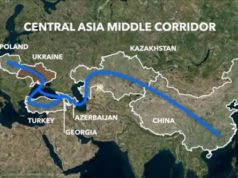
Azerbaijan’s admission as a full participant in the Consultative Meetings at the 2025 Tashkent event contributed to the further expansion of the format’s geographical and economic potential. The most important result is that in interactions with external forces, regional states no longer act in isolation from one another, but as a unified entity. Currently, dialogue has been established in the “Central Asia Plus” format with the US, China, Russia, the European Union, Japan, India, South Korea, and the Gulf states. This is particularly noticeable in trade, transit, and the elimination of existing technical barriers. Following Azerbaijan’s full membership, while the previous group of five relied mainly on cooperation within Central Asia, there is now an opportunity to establish direct links with the South Caucasus and Europe via the Caspian Sea. In this context, the Trans-Caspian Six model is considered one of the viable scenarios, opening extensive opportunities in transport and energy. Now, projects such as the Middle Corridor, the Caspian–Black Sea–Europe Green Energy Corridor, and green energy cooperation among Azerbaijan, Kazakhstan, and Uzbekistan can unite the economic interests of the six nations.
Consequently, the C5+1 format has evolved into a C6+1 format, and Central Asia lacks the capacity to build broad trade relations without Azerbaijan. Azerbaijan’s geographical position and existing port and railway infrastructure assign it a crucial role on this route. The C6 format can also facilitate political coordination with countries on the other end of the route. What does this mean from a geopolitical perspective?
First, the influence of the transit state — Azerbaijan — increases. As reliable and efficient routes for freight transport between countries emerge, Azerbaijan can secure a more significant position in global trade networks. Second, the importance of alternative routes grows. Alongside traditional transport routes passing through Russian territory, the Middle Corridor creates an alternative connection between Europe and Asia, which is essential for route diversification. Third, the shared interest of Central Asian states in cooperating with Azerbaijan strengthens. Expanding access to world markets for countries like Kazakhstan and Uzbekistan, and developing transit and logistics activities for Azerbaijan, generates mutual benefit.
The Middle Corridor creates a strategic balance between Russia, China, and the West. To understand the geopolitical significance of C6, one must consider the interests of major powers with influence in Central Asia.
Russia maintains historical, economic, security, and transport ties with Central Asia. The development of the Middle Corridor has created additional trade opportunities for regional countries bypassing Russia. However, the creation of C6 does not imply an inevitable weakening of relations with Russia or confrontation, given that the war between Russia and Ukraine has restricted transit capabilities.
China is one of Central Asia’s main economic partners and is interested in accessing Europe through the region. C6 is not used to halt trade with China, but to expand the transport, logistics, and investment capabilities of regional countries, reflecting the interests of all parties.
The European Union is interested in diversifying energy supplies and trade routes. Azerbaijan acts as a crucial mediator regarding access to European markets and links with Central Asia.
Türkiye is a primary partner in the western direction of the Middle Corridor. Coordinating transport and political cooperation between Azerbaijan and Türkiye with Central Asian countries boosts economic development by increasing integration opportunities stretching from the Caspian to Europe.
The United States shows interest in expanding diplomatic and economic ties in Central Asia, critical minerals, and alternative supply chains. C6 has created an additional opportunity to align these interests with the region’s own initiatives.
This picture demonstrates that the significance of C6 is not limited to relations among the six states themselves. The format has enabled them to have greater economic choices and regional initiative capabilities in their relations with major powers. Nevertheless, there is no basis to portray C6 as a block created against any major power.
The key issue for Azerbaijan is to expand cooperation opportunities with various partners and protect its national interests without being forced to choose between major powers. Thus, the term “Trans-Caspian Six” is not accidental. Central Asia, together with Azerbaijan, now forms a unified economic space. The implementation of any project of international or global character on the Eurasian continent cannot be realized without Azerbaijan.
At the beginning of the last century, renowned British geographer, Oxford University professor, and prominent geopolitical scholar Sir Halford John Mackinder, in his work “The Geographical Pivot of History,” referred to Eurasia as the heart of the Earth, stating that “who rules Eurasia commands the world.”