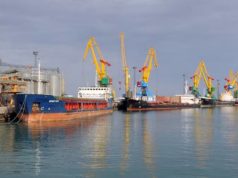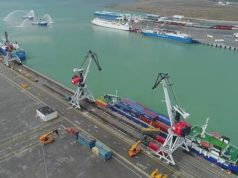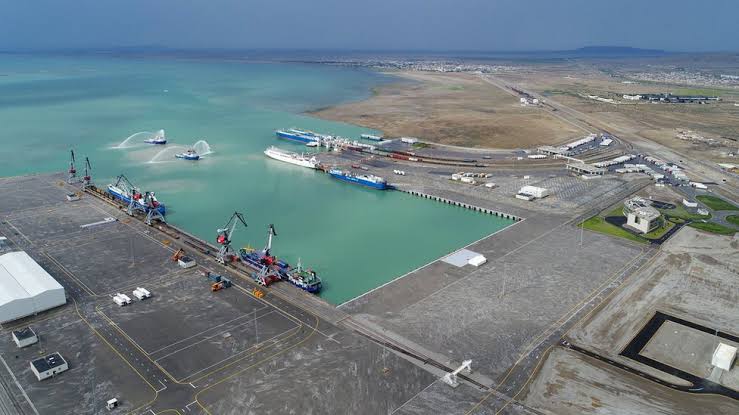
The establishment of a dry port and a multimodal logistics center in the Alat area will allow Azerbaijan to become the central cargo consolidation hub in the South Caucasus region.
Sea-news.az reports Report informs, citing the World Bank update titled “Integration: World-Class Trade Logistics along the Trans-Caspian Transport Corridor.”
The World Bank recommends that the State Customs Committee of Azerbaijan intensify efforts toward the mutual recognition of Authorized Economic Operator (AEO) status with customs authorities in Kazakhstan, Georgia, and Türkiye, which would reduce border crossing times to a minimum. Bank analysts also indicate that Azerbaijan should actively participate in implementing the single digital transit document T3 (Transport, Transit, and Trade), designed to replace numerous customs and transport waybills along the route from Asia to Europe.
Overall, the World Bank urges all states along the Trans-Caspian International Transport Route (TITR, or Middle Corridor) to consolidate multiple transport and customs documents into the single T3 framework. The report highlights that a standard container shipment on the TITR between Asian and European countries currently involves up to 10 entries and exits from customs transit regimes, 5 rail waybills, and 2 bills of lading.
The report notes that this represents an excessively redundant and inefficient procedure that increases delivery times and costs. Introducing a single electronic transit document T3 will enable cargo owners not only to execute single-window customs clearance, but also to utilize the document for trade financing and cargo resale while in transit. In addition, the World Bank advises implementing a digital transformation strategy for the corridor based on a distributed “hub of hubs” platform that ensures national data sovereignty is preserved.