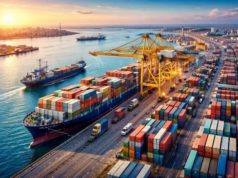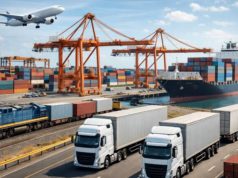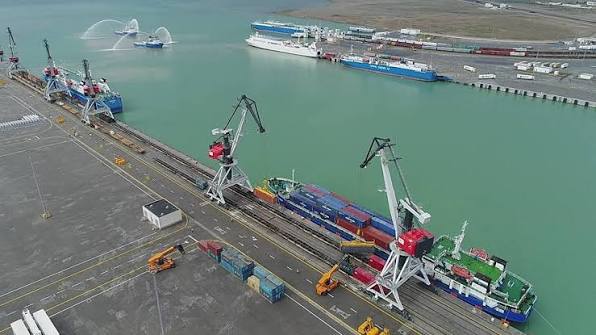
The Port of Baku is one of the most vital hubs of the Middle Corridor. There is no other universal cargo port of comparable capacity and operational capabilities on the territory of Azerbaijan and along the western coast of the Caspian Sea.
Sea-news.az reports this is stated in the World Bank report titled “Integration: Advanced Trade Logistics along the Trans-Caspian Transport Corridor.”
According to the document, the cargo handling capacity of the Port of Baku is expected to be expanded from the current 15 million tons to 25 million tons. The port’s container processing capacity will be increased from 150,000 TEU to 260,000 TEU in the first phase, and up to approximately 500,000–650,000 TEU in the subsequent phase.
The report notes that expansion work specifically includes dredging operations in the existing entrance channel, as well as works across current and planned berth areas.
“In 2025, the Port of Baku handled 8.2 million tons of cargo, including 107,000 TEU. The port’s container throughput increased by 39 percent year-on-year,” the report indicates.
The World Bank also points out that the Port of Baku possesses experience in public-private partnerships. A fertilizer terminal was established with private sector participation, and the involvement of private stevedoring companies in handling general and containerized cargoes has been expanded.
According to the World Bank’s evaluation, expanding the Port of Baku to 25 million tons and approximately 500,000–650,000 TEU alongside the construction of new terminals, including a specialized container terminal, creates an opportunity to transform the port’s management model.
The document states that within this process, principles of the “landlord-port” model could be utilized more extensively in port governance, while one or several leading international private operators could be brought in to manage the new terminals through competitively awarded long-term concession agreements.