Azerbaijan’s geographical location is considered one of the main advantages of its investment attractiveness. However, in the modern global economy, to convert this advantage into real economic value, it is essential to establish a system that complements it with transport infrastructure, access to international markets, sustainable supply chains, logistics capabilities, and a favorable business environment.
The agenda of the Second Azerbaijan International Investment Forum held in Baku gives special prominence to the role of the South Caucasus in global connectivity, the trade, industrial, and connectivity potential of the Middle Corridor, industrial platforms, free economic zones, regional supply chains, and investment opportunities.
Sea-news.az reports that these views were expressed in a commentary on the topic by Isa Gasimov, Head of Department at the Center for Analysis of Economic Reforms and Communication.
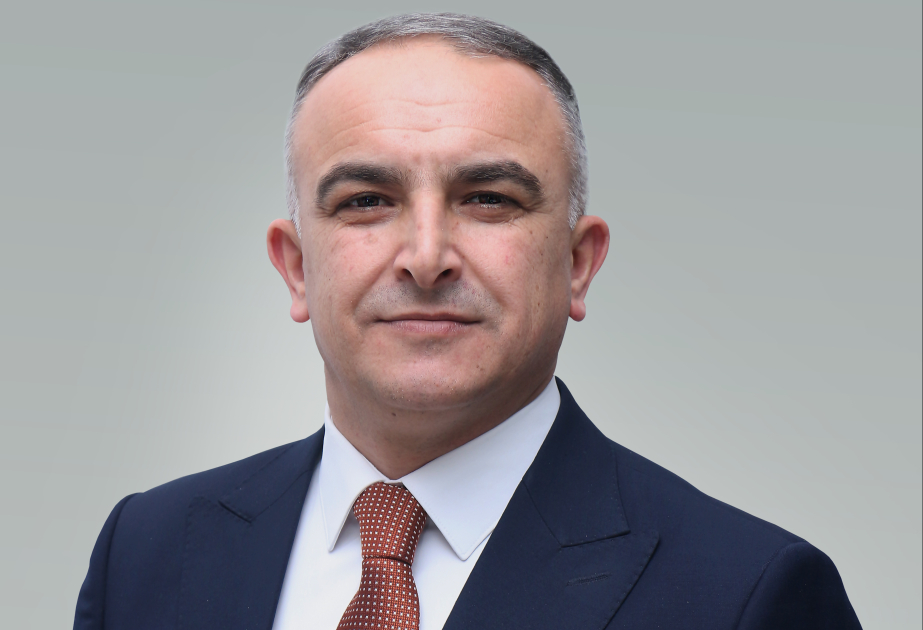
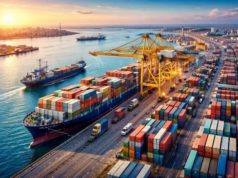
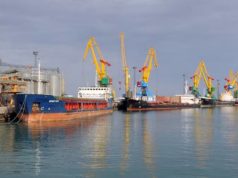
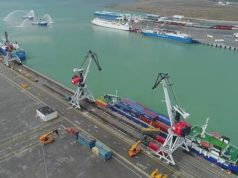
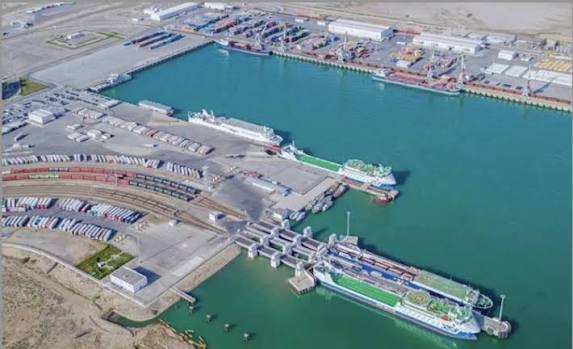
He stated that the Baku International Sea Trade Port, located in the Alat settlement, is a strategic multimodal logistics hub connecting Azerbaijan’s railways and highways with the Caspian Sea. The port serves as one of the key infrastructure components of the Middle Corridor, which develops along the China–Central Asia–Caspian–Azerbaijan–South Caucasus–Turkey–Europe route.
According to official data, the current cargo handling capacity of the Baku Port stands at 15 million tons of cargo and 100,000 TEU. In the next phase of development, these figures are planned to reach 25 million tons and 500,000 TEU.
In January–August 2026, more than 5.5 million tons of cargo and over 85,000 TEU containers were handled at the Baku Port. Container turnover increased by 22% compared to the same period last year, while dry cargo handling reached 1.6 million tons, rising by 80%.
According to Isa Gasimov, the investment significance of the Baku Port is not limited merely to receiving cargo. The connections established by the port create opportunities to host logistics, warehousing, distribution, processing, packaging, and other value-added activities in Azerbaijan.
In this regard, the establishment of the Alat Free Economic Zone near the Baku Port carries special importance. While the Baku Port provides multimodal access to international markets, the Alat FEZ creates a specialized economic and legal environment for production, investment, and business operations. Such integration enables Azerbaijan to complement its transit function with manufacturing and export capabilities.
The expert noted that the role of the Baku Port in investment attractiveness cannot be considered separately from the Middle Corridor. The primary goal is not just to ensure that cargo flows pass through Azerbaijani territory, but to transform those flows into investment, production, processing, logistics, and export activities within the country.
Isa Gasimov emphasized that investment attractiveness is not limited solely to creating new infrastructure. The functioning of the port, railways, highways, customs, border procedures, and logistics services as a unified system is a crucial factor for investors.
Following the integration of the Baku Port into the structure of Azerbaijan Railways in 2025, coordinating port and railway operations under a unified management model, as well as establishing a Unified Transit Center at the port, is considered one of the steps taken in this direction.
Thus, Azerbaijan’s strategic geographical position is now viewed not merely as a transit advantage, but together with opportunities for regional connectivity, production, investment, and the creation of additional economic value.