



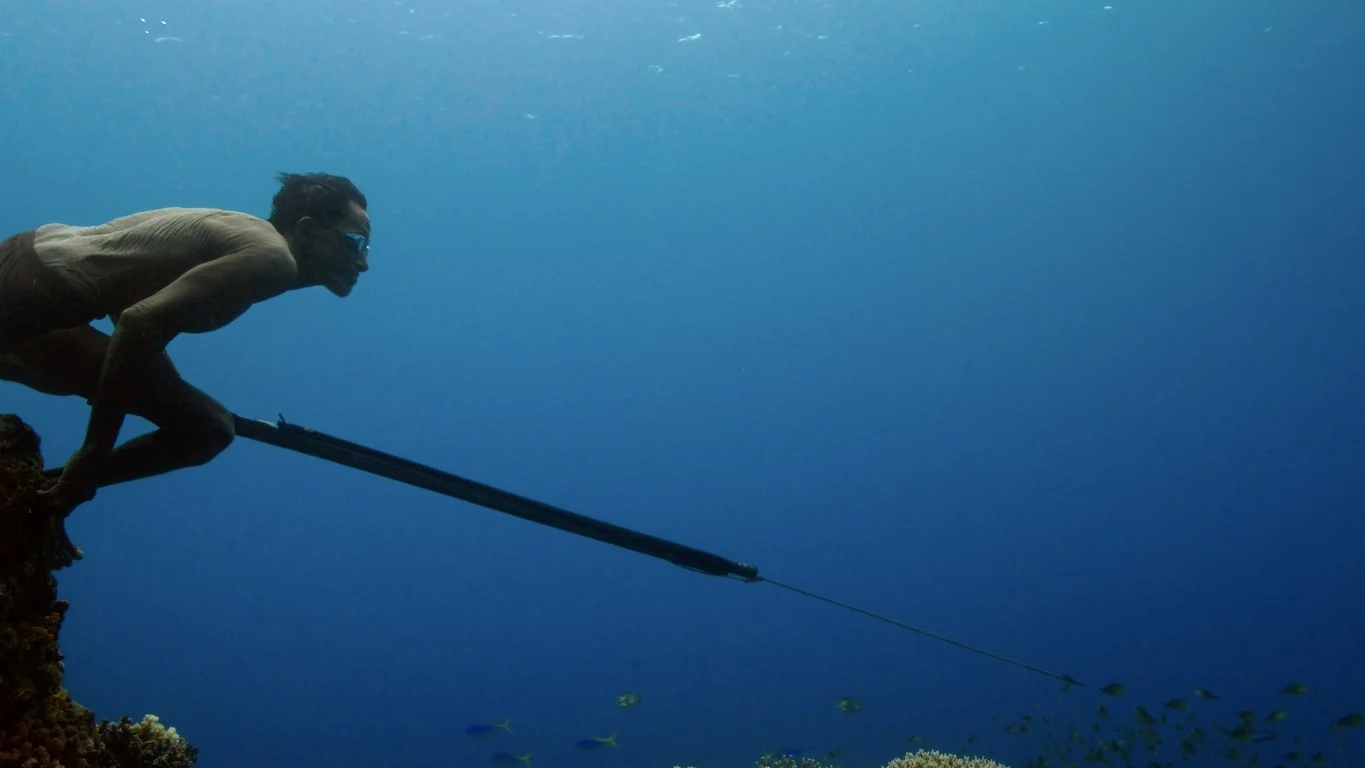
The Bajau tribe, who live in Southeast Asia, have developed the ability to hold their breath for up to 13 minutes and dive to depths of 60 meters as a result of genetic adaptation. Their spleens are larger than those of ordinary people, but when they return to land, they can experience various physical discomforts.
Sea-news.az reports that the extraordinary lifestyle of the Bajau tribe, whose bodies have undergone genetic changes, amazes those who hear about it. These remarkable people can descend to a depth of 60 meters without using oxygen tanks and can reportedly spend up to seven days in the water while holding their breath for as long as 13 minutes. However, when they set foot on land, they can experience bouts of dizziness.
In the untouched waters of Southeast Asia, the Bajau tribe has devoted its entire way of life to the sea, demonstrating a remarkable example of human adaptation. The community spends most of its life on the water, living in wooden huts and boats and having almost completely severed its connection with the land.
While even staying underwater for a few minutes can be challenging for an ordinary person, members of the Bajau tribe can hold their breath for as long as 13 minutes without any breathing equipment. Using simple wooden goggles and spears, they can dive to depths of up to 60 meters and hunt on the ocean floor as comfortably as if they were on land. Scientists investigating the secret behind this extraordinary ability have identified the effects of a genetic mutation.
The Bajau people, who have lived closely connected to the sea for generations, have undergone significant biological changes. Genetic analysis has shown that their spleens are approximately 50 percent larger than those of ordinary people.
This enlarged spleen acts as a kind of oxygen reservoir when the body is submerged in water. It helps release a greater amount of red blood cells into the bloodstream, allowing them to remain underwater for longer periods.
It is also reported that there is a tradition of intentionally rupturing the eardrums during childhood in order to withstand the pressure of deep water and move more comfortably underwater.
The pupils of the Bajau people have adapted to the refraction of light underwater. This gives them exceptionally sharp underwater vision, similar to that of fish.
However, this adaptation has an unusual side effect: when they return to land, they may experience dizziness and nausea — essentially a kind of “land sickness.”
This people, who live largely isolated from the modern world, reportedly have no precise records of their identities or ages. They measure time based only on the movement of the Moon and the tides.



