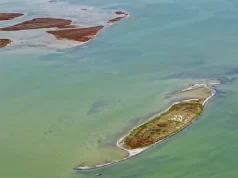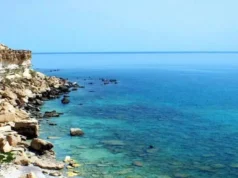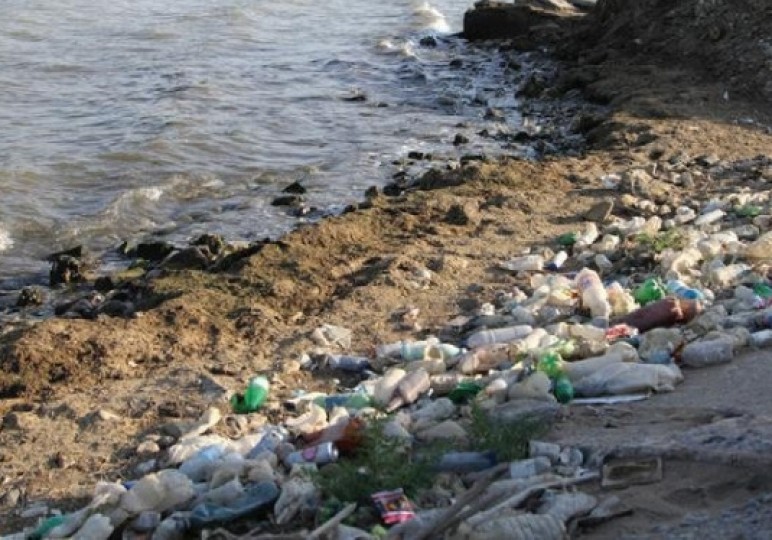
One of the most pressing ecological challenges facing the region is the rapid decline in the level of the Caspian Sea in recent years. This shallowing is widely regarded as one of the severe environmental consequences of global climate change. As the world’s largest landlocked body of water with no direct connection to the oceans, the Caspian’s water level is primarily determined by river inflow and precipitation.
Global warming is considered a primary risk factor threatening the future of the Caspian Sea. As temperatures rise, surface water evaporation intensifies, widening the gap between incoming and lost water volumes. Climate modeling published three years ago indicates that during the 21st century, the increase in evaporation across the Caspian basin could significantly outpace the increase in precipitation. If this alarming forecast materializes, the sea’s water balance will shift even further toward a negative state.
Sea-news.az reports that Elman Jafarli, chairman of the “Green World” Ecological Enlightenment Public Union, made these remarks in a statement to AZERTAC.
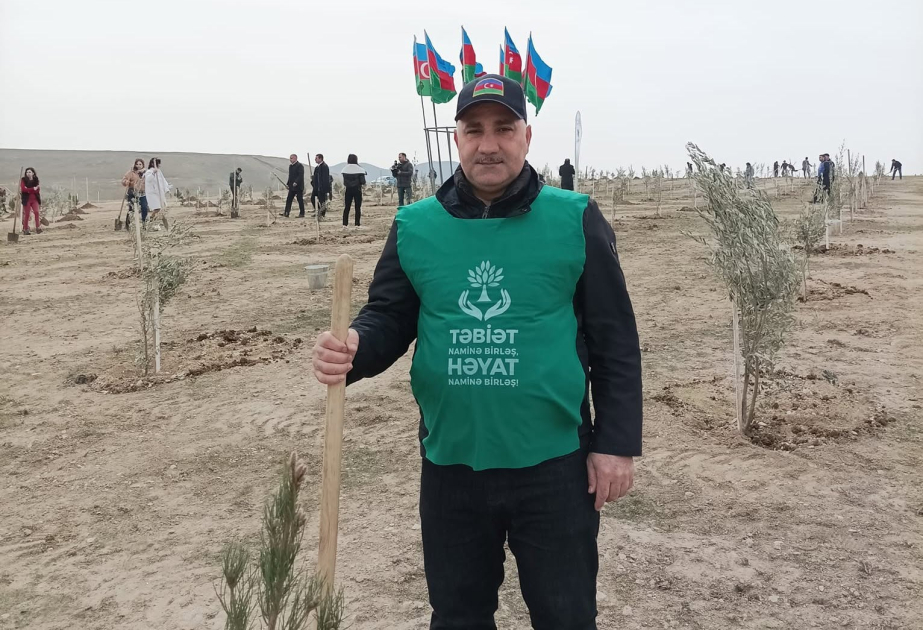
He noted that rivers play a crucial role in the Caspian’s water balance: “Approximately 130 rivers flow into the sea, with the vast majority of water inflow coming from the Volga and Ural rivers. Consequently, changes in the water resources of these rivers directly impact the Caspian’s level. Most of the precipitation entering the Volga basin originates from air masses arriving from the Atlantic Ocean. A reduction in precipitation falling in the Volga basin directly affects the water level in the Caspian. According to a new study published in 2026, the average annual volume of water flowing into the Caspian from five major rivers—the Volga, Ural, Kura, Terek, and Sefidrud—decreased by approximately 41.9 cubic kilometers when comparing two periods between 1991 and 2019.”
Elman Jafarli pointed out that the Caspian’s problems are not limited to rising temperatures over the sea itself; changes in the massive river systems that feed it are also weakening its water balance: “Another key factor contributing to the drop in the Caspian’s water level is the intensifying pressure on water resources within the basin. Over the past 20 years, population growth, the expansion of major megacities, and agricultural intensification have led to increased water abstraction from rivers for industrial, energy production, agricultural, and drinking water supply purposes. In recent years, reservoirs aimed at energy generation and agricultural needs have been constructed along the rivers feeding the Caspian. An analysis of 40 rivers in Iran’s Caspian coastal region alone yielded concerning results, showing a trend of declining river flows amid rising temperatures and increased evaporation.”
According to him, the Kura River is also one of the vital sources feeding the Caspian Sea: “A reduction in the Kura’s flow negatively impacts both our country’s water security, agriculture, and ecosystems, as well as the overall water balance of the Caspian.”
The decline in the Caspian Sea level is not merely an environmental issue; it can also trigger severe economic consequences. The retreating shoreline will impact the operations of ports, terminals, fisheries, tourism facilities, and other coastal infrastructure. Official bodies have sounded the alarm on this matter repeatedly. As navigable depths in shallow waters decrease, additional dredging operations will become necessary.
The region’s mounting ecological problems, including the recession of the Caspian, cannot be solved by a single state alone; regional cooperation is essential for the sea’s future. The shallowing of the Caspian should concern all four other littoral nations—Russia, Kazakhstan, Turkmenistan, and Iran.
In his view, a control mechanism for water abstraction from rivers feeding the Caspian must be developed, climate observations expanded, and joint monitoring conducted. The transition to coordinated water management among the five countries must be accelerated. The primary task facing Azerbaijan is to strengthen mitigation and adaptation measures to soften the impacts of climate change. Protecting water resources in the major rivers feeding the Caspian must remain a top priority. To safeguard water reserves in rivers, the transition to water-saving irrigation technologies must be expedited, and losses within urban water supply networks reduced.