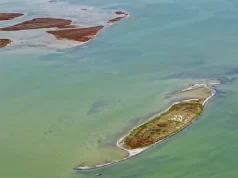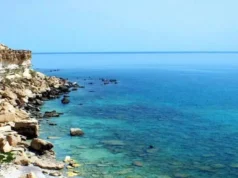

The intensive decline in the level of the Caspian Sea in recent years remains a core issue drawing the attention of scientists.
Sea-news.az reports that Saida Zeynalova, Scientific Secretary of the Institute of Geography named after Academician H. Aliyev of the Ministry of Science and Education and PhD in Geography, stated in an interview with AZERTAC that although various models and scenarios regarding the sea’s future state have been developed, providing an exact long-term forecast remains difficult.
Increased evaporation, a decrease in river water inflow into the sea, and climate change are currently cited among the primary causes. While the Central Caspian is relatively stable, tectonic processes in the seismically active southern and western water areas must also be taken into account.
Although the sea level has repeatedly risen and fallen throughout history, what distinguishes the modern era is the significantly intensified impact of human activity. Sharing noteworthy findings from research conducted in the Kenarmesha area of the Lankaran region, the scientist noted:
As a result of the sea receding, ancient forest remains—approximately 30 tree stumps—have surfaced along the coast, from which samples were gathered. It was observed that almost none of the stumps had previously remained on the surface. Vegetation adapted to continental conditions has once again become submerged. Saida Zeynalova emphasized that this dynamic indicates certain fluctuations (oscillations) occurring in the sea level, suggesting that a rise in the sea level may be observed again after a certain period.
To achieve more precise conclusions regarding the future state of the Caspian, complex research combining field observations with remote sensing and Geographic Information Systems (GIS) analyses is being continued.