The Iranian authorities have sent the 2018 Caspian Sea security agreement, signed in Aktau, Kazakhstan, to parliament for ratification.
According to the Middle East Forum, the decision was made against the backdrop of heightened attention to Caspian security following a Ukrainian strike on an Iranian cargo ship heading to Russia.
Sea-news.az reports that the five Caspian littoral states—Azerbaijan, Russia, Kazakhstan, Turkmenistan, and Iran—were originally scheduled to hold their next meeting in Tehran in May. However, due to the war, the event was postponed to August 23, 2026.
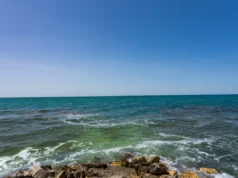
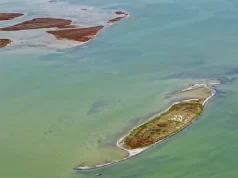
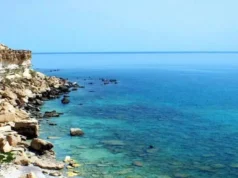
One of the main topics of the upcoming summit was set to be the receding coastline of the Caspian Sea. In recent years, fluctuations in sea levels have created serious problems for coastal infrastructure and navigation.
The Convention on the Legal Status of the Caspian Sea was signed by the five states in Aktau in 2018. The document regulates security issues and prohibits the presence of armed forces from non-Caspian states in the sea.
Iran had remained the only participating country that had not yet ratified the agreement. Iranian President Masoud Pezeshkian submitted the document to parliament eight years after its signing.
Iranian Foreign Ministry spokesperson Esmaeil Baghaei stated that the ratification of the agreement can prevent the legal loophole from being “interfered with and abused by extra-regional actors.”
Tehran’s decision follows a July 25 strike by Ukraine on an Iranian cargo vessel bound for Russia, which reports suggested may have been carrying military cargo.
Iranian media have also linked the necessity of ratifying the agreement to ensuring the security of the Caspian Sea, specifically voicing concerns regarding the potential presence of forces from non-littoral countries in the Caspian.
At the same time, discussions surrounding the agreement continue within Iran. Critics of the document argue that the baselines necessary for the delimitation of maritime spaces have not been precisely defined.
Another critical issue is the ecological situation. Climate change, dam construction, and the excessive use of groundwater are causing the Caspian’s water resources to decline and its coastline to retreat, making it difficult for ships to access ports and forcing them to navigate through shallower waters.
Against this backdrop, the upcoming meeting of the five Caspian littoral states in Tehran gains additional significance, as issues related to security, the legal status of the Caspian, and ecological changes are closely tied to the region’s growing role in trade and transport routes.